Ethiopia Sweet Biscuits Market Growth Rate Analysis (2025 - 2031)
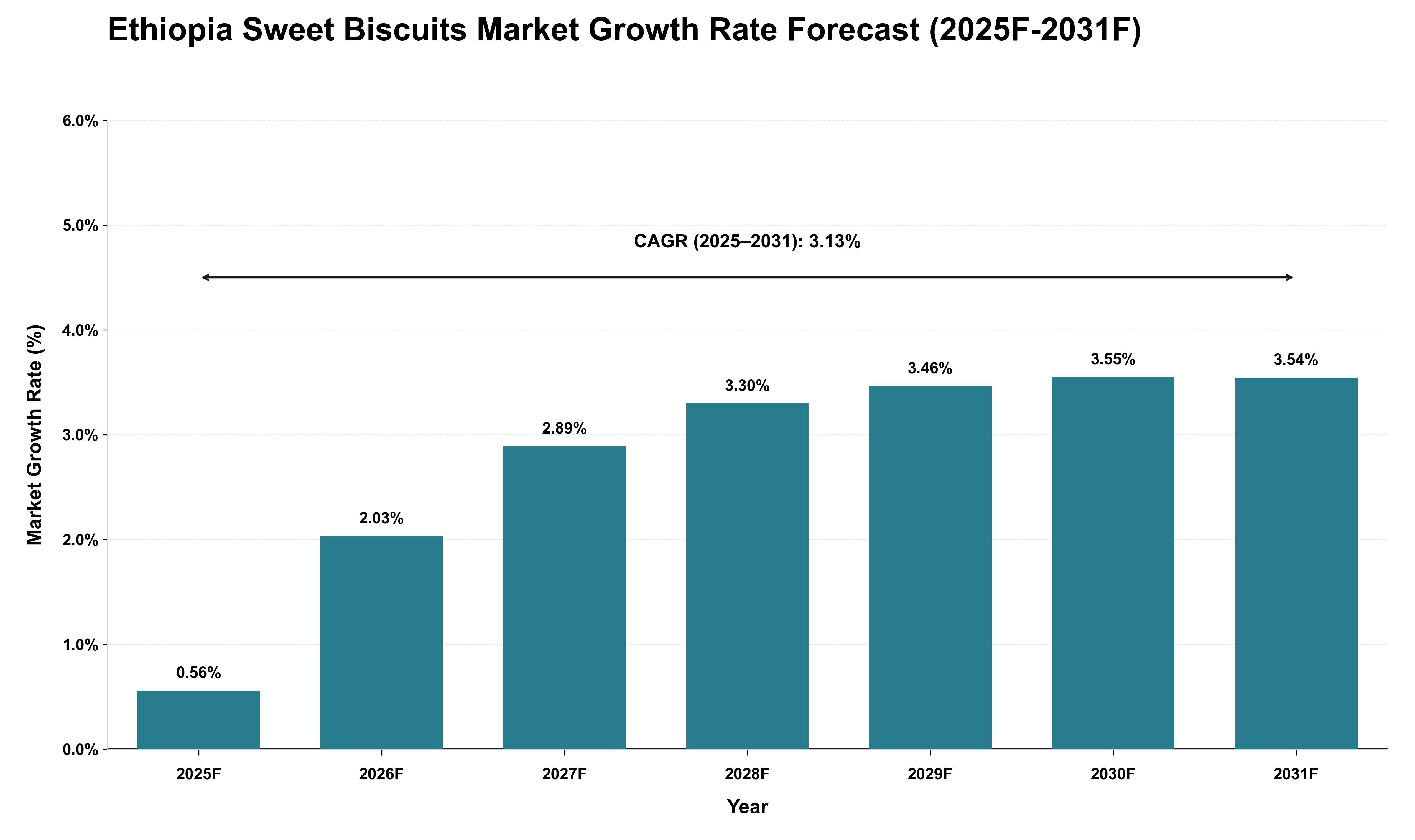
The Ethiopian sweet biscuits market will experience a gradual growth trajectory driven by increasing urbanization and rising disposable incomes, which will enhance consumer spending on convenience foods. The forecasted CAGR of 3.13% from 2025 to 2031 indicates a steady demand increase, with annual growth rates peaking at 3.55% in 2030 before slightly declining in 2031. This trend reflects an evolving competitive landscape where local producers may expand capacity to meet rising demand, while import dependencies could influence pricing dynamics and product variety. As global supply chains stabilize post-pandemic, Ethiopia's sweet biscuit sector is likely to benefit from improved access to raw materials and innovative production techniques, further supporting growth. Additionally, the anticipated cyclical trends in consumer preferences towards healthier snack options may prompt manufacturers to diversify their offerings, thereby enhancing market competitiveness during this period.
Key Highlights of the Report:
- Ethiopia Sweet Biscuits Market Outlook
- Market Size of Ethiopia Sweet Biscuits Market, 2024
- Forecast of Ethiopia Sweet Biscuits Market, 2031
- Historical Data and Forecast of Ethiopia Sweet Biscuits Revenues & Volume for the Period 2021-2031
- Ethiopia Sweet Biscuits Market Trend Evolution
- Ethiopia Sweet Biscuits Market Drivers and Challenges
- Ethiopia Sweet Biscuits Price Trends
- Ethiopia Sweet Biscuits Porter`s Five Forces
- Ethiopia Sweet Biscuits Industry Life Cycle
- Historical Data and Forecast of Ethiopia Sweet Biscuits Market Revenues & Volume By Product Type for the Period 2021-2031
- Historical Data and Forecast of Ethiopia Sweet Biscuits Market Revenues & Volume By Chocolate-coated Biscuits for the Period 2021-2031
- Historical Data and Forecast of Ethiopia Sweet Biscuits Market Revenues & Volume By Cookies for the Period 2021-2031
- Historical Data and Forecast of Ethiopia Sweet Biscuits Market Revenues & Volume By Filled Biscuits for the Period 2021-2031
- Historical Data and Forecast of Ethiopia Sweet Biscuits Market Revenues & Volume By Plain Biscuits for the Period 2021-2031
- Historical Data and Forecast of Ethiopia Sweet Biscuits Market Revenues & Volume By Sandwich Biscuits for the Period 2021-2031
- Historical Data and Forecast of Ethiopia Sweet Biscuits Market Revenues & Volume By Other Sweet Biscuits for the Period 2021-2031
- Historical Data and Forecast of Ethiopia Sweet Biscuits Market Revenues & Volume By Distribution Channel for the Period 2021-2031
- Historical Data and Forecast of Ethiopia Sweet Biscuits Market Revenues & Volume By Supermarkets/Hypermarkets for the Period 2021-2031
- Historical Data and Forecast of Ethiopia Sweet Biscuits Market Revenues & Volume By Specialist Retailers for the Period 2021-2031
- Historical Data and Forecast of Ethiopia Sweet Biscuits Market Revenues & Volume By Convenience Stores for the Period 2021-2031
- Historical Data and Forecast of Ethiopia Sweet Biscuits Market Revenues & Volume By Online Stores for the Period 2021-2031
- Historical Data and Forecast of Ethiopia Sweet Biscuits Market Revenues & Volume By Other Distribution Channels for the Period 2021-2031
- Ethiopia Sweet Biscuits Import Export Trade Statistics
- Market Opportunity Assessment By Product Type
- Market Opportunity Assessment By Distribution Channel
- Ethiopia Sweet Biscuits Top Companies Market Share
- Ethiopia Sweet Biscuits Competitive Benchmarking By Technical and Operational Parameters
- Ethiopia Sweet Biscuits Company Profiles
- Ethiopia Sweet Biscuits Key Strategic Recommendations






































