Ethiopia Wine Market Growth Rate Analysis (2025 - 2031)
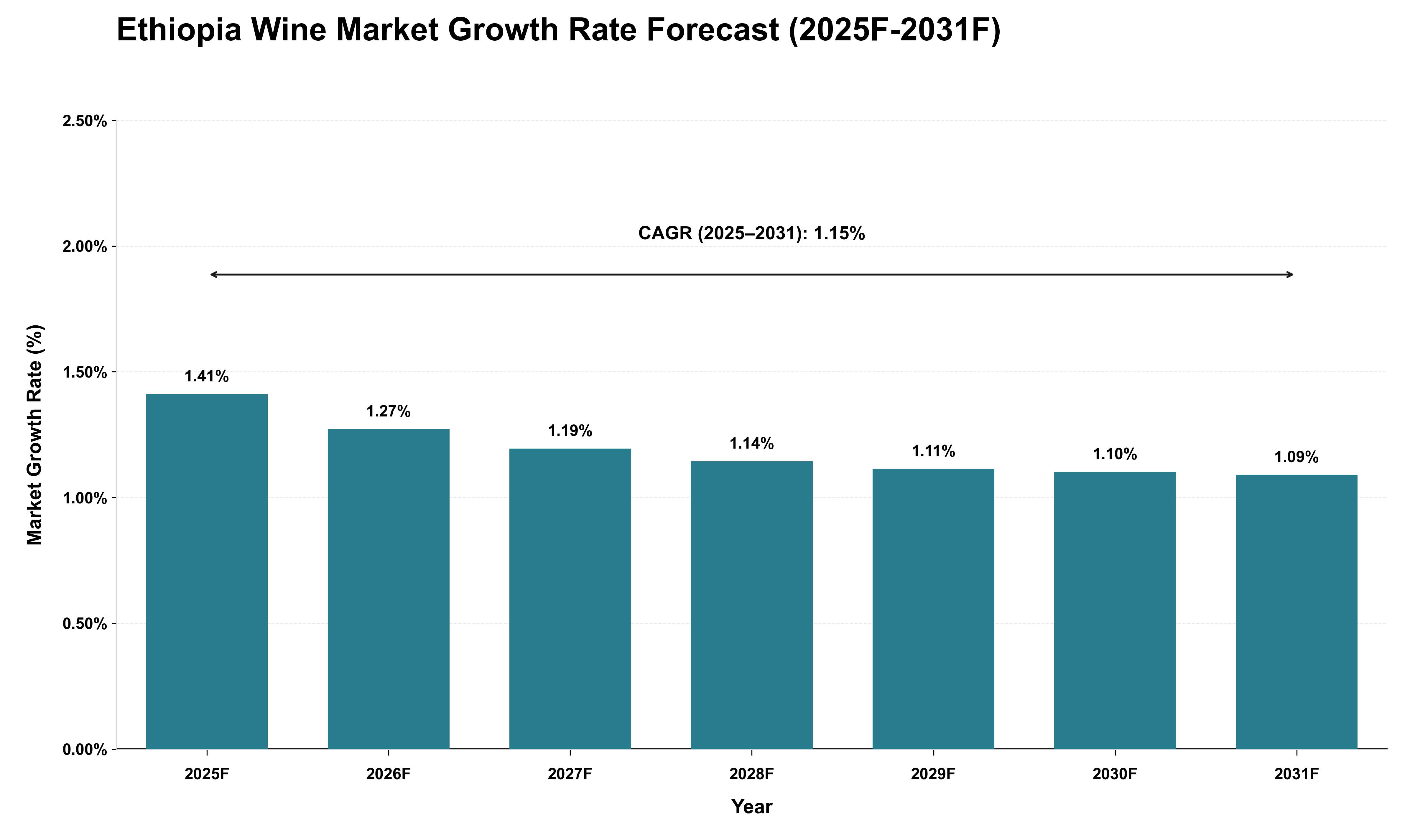
The Ethiopian wine market will experience a modest growth trajectory from 2025 to 2031, driven primarily by evolving consumer preferences and increasing urbanization. The forecasted CAGR of 1.15% reflects a gradual expansion influenced by supply chain dynamics and input costs, particularly as the country navigates its import dependencies for quality grape varieties and production equipment. As global supply chains stabilize post-pandemic, Ethiopia may see fluctuations in input costs that could impact pricing strategies within the wine sector. Additionally, cyclical trends in agricultural output will play a crucial role; any adverse weather conditions or shifts in agricultural policy could constrain local production capabilities, further affecting market availability. Consequently, while growth remains positive, it will likely be tempered by these structural challenges and the need for strategic investments in local production infrastructure to enhance resilience against external shocks.
Key Highlights of the Report:
- Ethiopia Wine Market Outlook
- Market Size of Ethiopia Wine Market, 2024
- Forecast of Ethiopia Wine Market, 2031
- Historical Data and Forecast of Ethiopia Wine Revenues & Volume for the Period 2021-2031
- Ethiopia Wine Market Trend Evolution
- Ethiopia Wine Market Drivers and Challenges
- Ethiopia Wine Price Trends
- Ethiopia Wine Porter`s Five Forces
- Ethiopia Wine Industry Life Cycle
- Historical Data and Forecast of Ethiopia Wine Market Revenues & Volume By Product Types for the Period 2021-2031
- Historical Data and Forecast of Ethiopia Wine Market Revenues & Volume By Still Wine for the Period 2021-2031
- Historical Data and Forecast of Ethiopia Wine Market Revenues & Volume By Sparkling Wine for the Period 2021-2031
- Historical Data and Forecast of Ethiopia Wine Market Revenues & Volume By Dessert Wine for the Period 2021-2031
- Historical Data and Forecast of Ethiopia Wine Market Revenues & Volume By Fortified Wine for the Period 2021-2031
- Historical Data and Forecast of Ethiopia Wine Market Revenues & Volume By Colors for the Period 2021-2031
- Historical Data and Forecast of Ethiopia Wine Market Revenues & Volume By Red Wine for the Period 2021-2031
- Historical Data and Forecast of Ethiopia Wine Market Revenues & Volume By Rose Wine for the Period 2021-2031
- Historical Data and Forecast of Ethiopia Wine Market Revenues & Volume By White Wine for the Period 2021-2031
- Historical Data and Forecast of Ethiopia Wine Market Revenues & Volume By Other Colors for the Period 2021-2031
- Historical Data and Forecast of Ethiopia Wine Market Revenues & Volume By Distribution Channel for the Period 2021-2031
- Historical Data and Forecast of Ethiopia Wine Market Revenues & Volume By Offline for the Period 2021-2031
- Historical Data and Forecast of Ethiopia Wine Market Revenues & Volume By Online for the Period 2021-2031
- Ethiopia Wine Import Export Trade Statistics
- Market Opportunity Assessment By Product Types
- Market Opportunity Assessment By Colors
- Market Opportunity Assessment By Distribution Channel
- Ethiopia Wine Top Companies Market Share
- Ethiopia Wine Competitive Benchmarking By Technical and Operational Parameters
- Ethiopia Wine Company Profiles
- Ethiopia Wine Key Strategic Recommendations






































