Fiji Antifreeze Market Growth Rate Analysis (2025 - 2031)
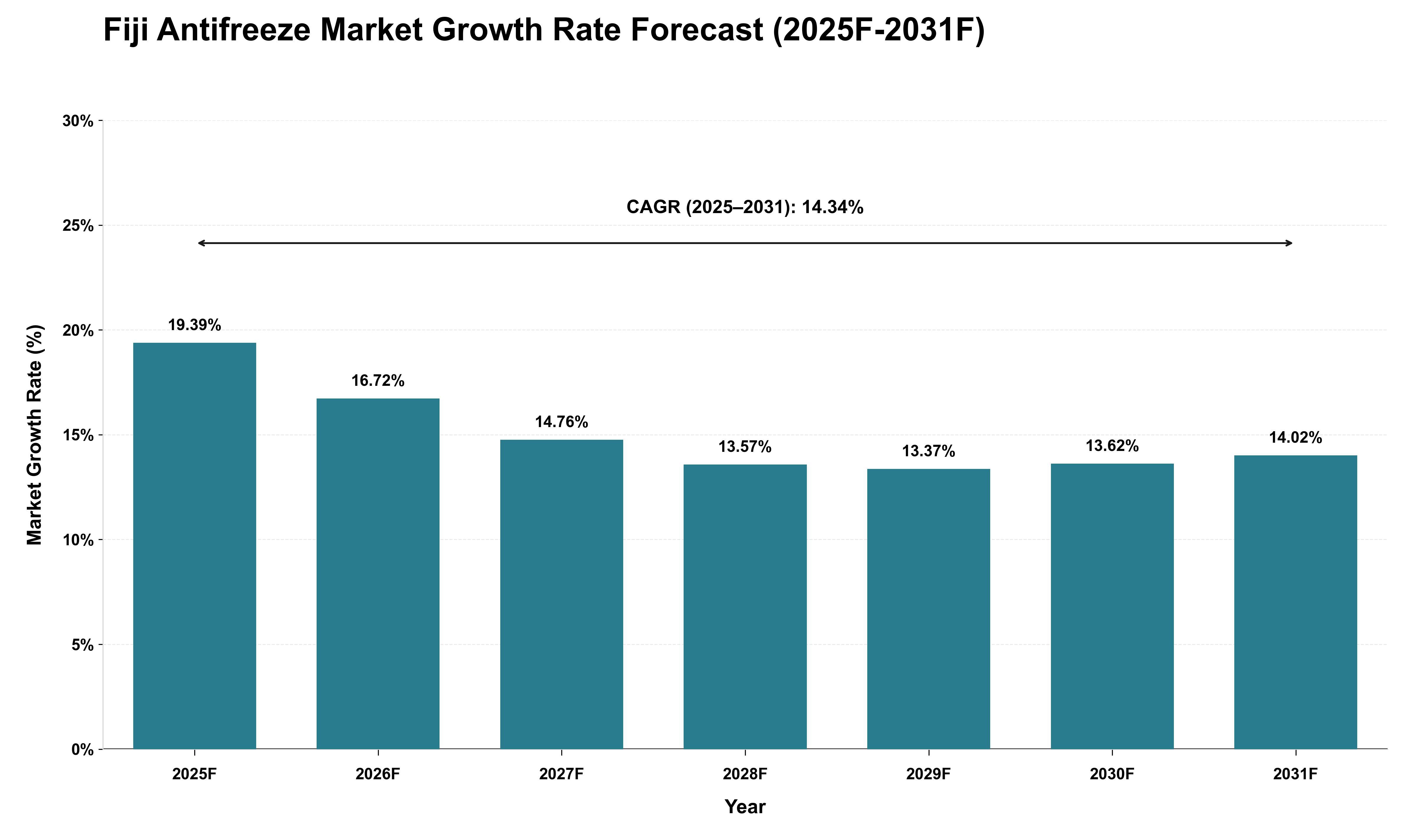
The Fiji antifreeze market is projected to experience a robust compound annual growth rate of 14.34% from 2025 to 2031, driven by increasing demand for automotive and industrial applications. The anticipated annual growth rates indicate a strong initial surge in 2025 at 19.39%, likely fueled by heightened vehicle production and maintenance needs, followed by a gradual decline in growth rates as the market stabilizes. This trend reflects the cyclical nature of antifreeze consumption, which is closely tied to seasonal weather patterns and automotive sales cycles. Additionally, Fiji's reliance on imported raw materials for antifreeze production may influence pricing dynamics and supply chain resilience, impacting overall market performance. As technological advancements in formulation improve product efficiency and environmental compliance, the substitution of traditional antifreeze products with more sustainable alternatives will further shape competitive dynamics within this sector throughout the forecast period.
Key Highlights of the Report:
- Fiji Antifreeze Market Outlook
- Market Size of Fiji Antifreeze Market, 2024
- Forecast of Fiji Antifreeze Market, 2031
- Historical Data and Forecast of Fiji Antifreeze Revenues & Volume for the Period 2021-2031
- Fiji Antifreeze Market Trend Evolution
- Fiji Antifreeze Market Drivers and Challenges
- Fiji Antifreeze Price Trends
- Fiji Antifreeze Porter`s Five Forces
- Fiji Antifreeze Industry Life Cycle
- Historical Data and Forecast of Fiji Antifreeze Market Revenues & Volume By Product for the Period 2021-2031
- Historical Data and Forecast of Fiji Antifreeze Market Revenues & Volume By Ethylene Glycol for the Period 2021-2031
- Historical Data and Forecast of Fiji Antifreeze Market Revenues & Volume By Propylene Glycol for the Period 2021-2031
- Historical Data and Forecast of Fiji Antifreeze Market Revenues & Volume By Glycerine for the Period 2021-2031
- Historical Data and Forecast of Fiji Antifreeze Market Revenues & Volume By Application for the Period 2021-2031
- Historical Data and Forecast of Fiji Antifreeze Market Revenues & Volume By Automotive for the Period 2021-2031
- Historical Data and Forecast of Fiji Antifreeze Market Revenues & Volume By Aerospace for the Period 2021-2031
- Historical Data and Forecast of Fiji Antifreeze Market Revenues & Volume By Industrial heat transfer and cooling applications for the Period 2021-2031
- Historical Data and Forecast of Fiji Antifreeze Market Revenues & Volume By Technology for the Period 2021-2031
- Historical Data and Forecast of Fiji Antifreeze Market Revenues & Volume By OAT for the Period 2021-2031
- Historical Data and Forecast of Fiji Antifreeze Market Revenues & Volume By HOAT for the Period 2021-2031
- Historical Data and Forecast of Fiji Antifreeze Market Revenues & Volume By IAT for the Period 2021-2031
- Fiji Antifreeze Import Export Trade Statistics
- Market Opportunity Assessment By Product
- Market Opportunity Assessment By Application
- Market Opportunity Assessment By Technology
- Fiji Antifreeze Top Companies Market Share
- Fiji Antifreeze Competitive Benchmarking By Technical and Operational Parameters
- Fiji Antifreeze Company Profiles
- Fiji Antifreeze Key Strategic Recommendations






































