Fiji Christmas Tree Market Top 5 Importing Countries and Market Competition (HHI) Analysis
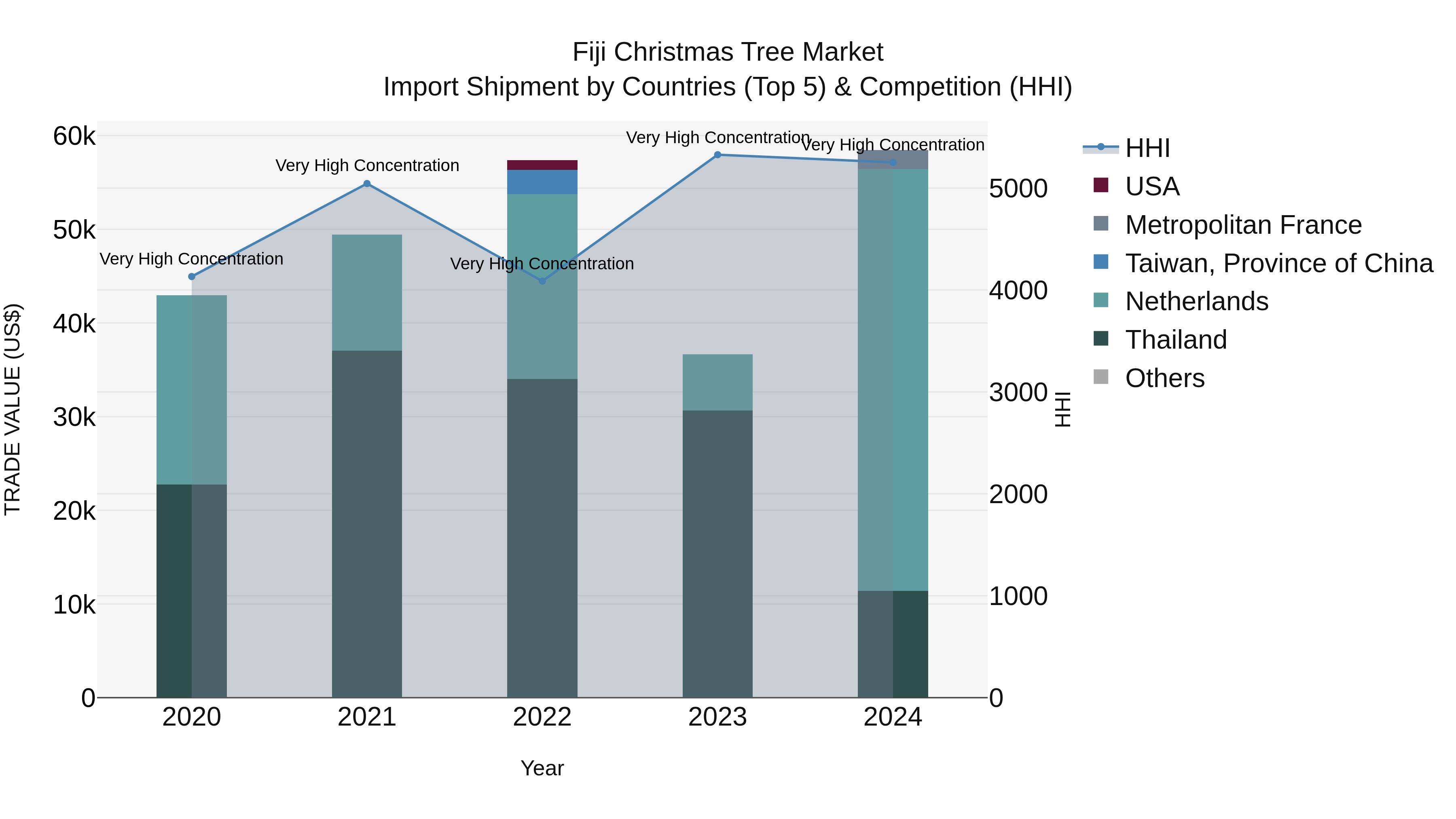
In 2024, Fiji saw a significant increase in Christmas tree imports, with top exporting countries including Netherlands, Thailand, Metropolitan France, Australia, and Taiwan, Province of China. The market remained highly concentrated, indicating strong competition among suppliers. The compound annual growth rate (CAGR) from 2020 to 2024 was a healthy 7.99%, with a remarkable growth rate of 59.44% from 2023 to 2024. This data suggests a growing demand for Christmas trees in Fiji, potentially driven by changing consumer preferences and festive traditions.
Fiji Christmas Tree Market Overview
The Christmas tree market in Fiji is expanding, driven by growing consumer demand for both real and artificial trees, particularly during the holiday season. With an increase in tourism and seasonal demand for decorations, the market for Christmas trees, including real trees, artificial trees, and accessories, is expected to continue to rise in Fiji.
Drivers of the market
The Christmas tree market in Fiji is experiencing growth due to the increasing popularity of Christmas celebrations and the cultural significance of holiday traditions. Both artificial and real Christmas trees are in demand, with artificial trees gaining traction due to their reusability and eco-friendly nature. The rise in festive retail sales and tourism during the holiday season is fueling demand for Christmas trees and related decorations in Fiji.
Challenges of the market
The Christmas tree market in Fiji faces challenges due to the small size of the local market and limited cultural demand for real or artificial Christmas trees. The cost of importing high-quality Christmas trees, coupled with a preference for more traditional holiday decorations, limits the market`s potential. Additionally, there are environmental concerns regarding the disposal of real trees and the use of non-biodegradable artificial trees.
Government Policy of the market
The Christmas tree market in Fiji is influenced by government policies concerning agriculture, tourism, and environmental sustainability. Policies that promote local farming and encourage the growth of ornamental plants, as well as those that support tourism, contribute to the market for Christmas trees. Additionally, government regulations on environmental protection, particularly regarding the sustainability of tree farming and the disposal of non-biodegradable decorations, shape the demand for Christmas trees in Fiji. The growing tourism industry and festive season-driven consumer demand further influence this market in Fiji.
Key Highlights of the Report:
- Fiji Christmas Tree Market Outlook
- Market Size of Fiji Christmas Tree Market, 2024
- Forecast of Fiji Christmas Tree Market, 2031
- Historical Data and Forecast of Fiji Christmas Tree Revenues & Volume for the Period 2021-2031
- Fiji Christmas Tree Market Trend Evolution
- Fiji Christmas Tree Market Drivers and Challenges
- Fiji Christmas Tree Price Trends
- Fiji Christmas Tree Porter`s Five Forces
- Fiji Christmas Tree Industry Life Cycle
- Historical Data and Forecast of Fiji Christmas Tree Market Revenues & Volume By Type for the Period 2021-2031
- Historical Data and Forecast of Fiji Christmas Tree Market Revenues & Volume By Horizontal Tree for the Period 2021-2031
- Historical Data and Forecast of Fiji Christmas Tree Market Revenues & Volume By Vertical Tree for the Period 2021-2031
- Historical Data and Forecast of Fiji Christmas Tree Market Revenues & Volume By Location of Deployment for the Period 2021-2031
- Historical Data and Forecast of Fiji Christmas Tree Market Revenues & Volume By Onshore for the Period 2021-2031
- Historical Data and Forecast of Fiji Christmas Tree Market Revenues & Volume By Offshore for the Period 2021-2031
- Fiji Christmas Tree Import Export Trade Statistics
- Market Opportunity Assessment By Type
- Market Opportunity Assessment By Location of Deployment
- Fiji Christmas Tree Top Companies Market Share
- Fiji Christmas Tree Competitive Benchmarking By Technical and Operational Parameters
- Fiji Christmas Tree Company Profiles
- Fiji Christmas Tree Key Strategic Recommendations






































