Fiji Cinnamon Market Growth Rate Analysis (2025 - 2031)
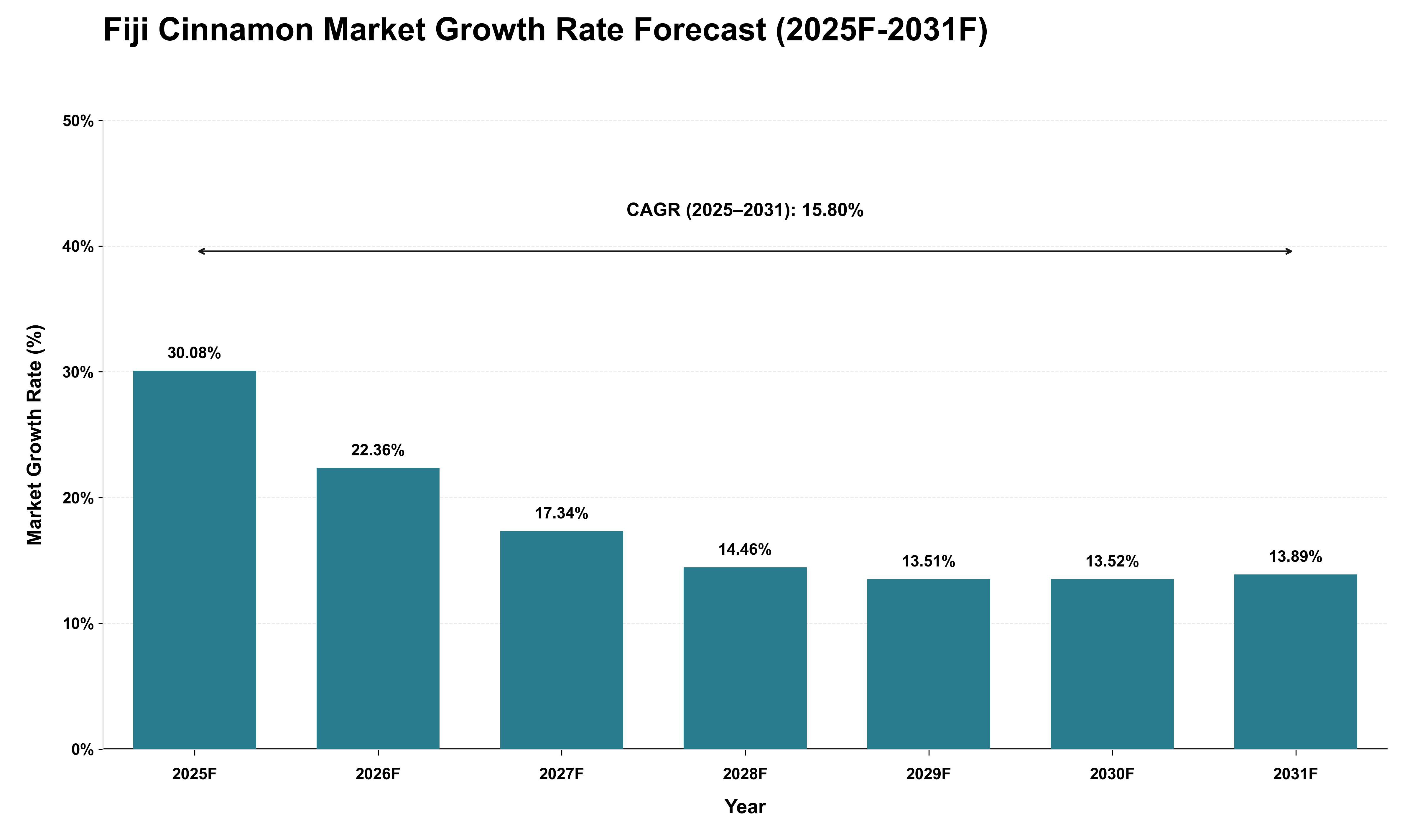
From 2025 onward, the Fiji cinnamon market will experience robust growth driven by increasing global demand for natural flavorings and health products. The projected compound annual growth rate (CAGR) of 15.80% reflects a strong upward trajectory, with initial annual growth peaking at 30.08% in 2025 before gradually moderating to approximately 13.89% by 2031. This trend indicates a dynamic export environment where Fiji's cinnamon will likely benefit from heightened import dependencies in key markets seeking sustainable and organic alternatives to synthetic flavorings. As consumer preferences shift towards health-conscious choices, Fiji's strategic positioning as a premium supplier will enhance its trade flows, fostering stronger international partnerships. Additionally, cyclical trends in agricultural production and global supply chain adjustments will play critical roles in shaping export volumes, ensuring that Fiji remains competitive amidst evolving market demands throughout the forecast period.
Key Highlights of the Report:
- Fiji Cinnamon Market Outlook
- Market Size of Fiji Cinnamon Market, 2024
- Forecast of Fiji Cinnamon Market, 2031
- Historical Data and Forecast of Fiji Cinnamon Revenues & Volume for the Period 2021-2031
- Fiji Cinnamon Market Trend Evolution
- Fiji Cinnamon Market Drivers and Challenges
- Fiji Cinnamon Price Trends
- Fiji Cinnamon Porter`s Five Forces
- Fiji Cinnamon Industry Life Cycle
- Historical Data and Forecast of Fiji Cinnamon Market Revenues & Volume By Product for the Period 2021-2031
- Historical Data and Forecast of Fiji Cinnamon Market Revenues & Volume By Ceylon for the Period 2021-2031
- Historical Data and Forecast of Fiji Cinnamon Market Revenues & Volume By Cassia for the Period 2021-2031
- Historical Data and Forecast of Fiji Cinnamon Market Revenues & Volume By Saigon for the Period 2021-2031
- Historical Data and Forecast of Fiji Cinnamon Market Revenues & Volume By Korintje for the Period 2021-2031
- Historical Data and Forecast of Fiji Cinnamon Market Revenues & Volume By Application for the Period 2021-2031
- Historical Data and Forecast of Fiji Cinnamon Market Revenues & Volume By Residential for the Period 2021-2031
- Historical Data and Forecast of Fiji Cinnamon Market Revenues & Volume By Commercial for the Period 2021-2031
- Fiji Cinnamon Import Export Trade Statistics
- Market Opportunity Assessment By Product
- Market Opportunity Assessment By Application
- Fiji Cinnamon Top Companies Market Share
- Fiji Cinnamon Competitive Benchmarking By Technical and Operational Parameters
- Fiji Cinnamon Company Profiles
- Fiji Cinnamon Key Strategic Recommendations






































