Fiji Wine Market Growth Rate Analysis (2025 - 2031)
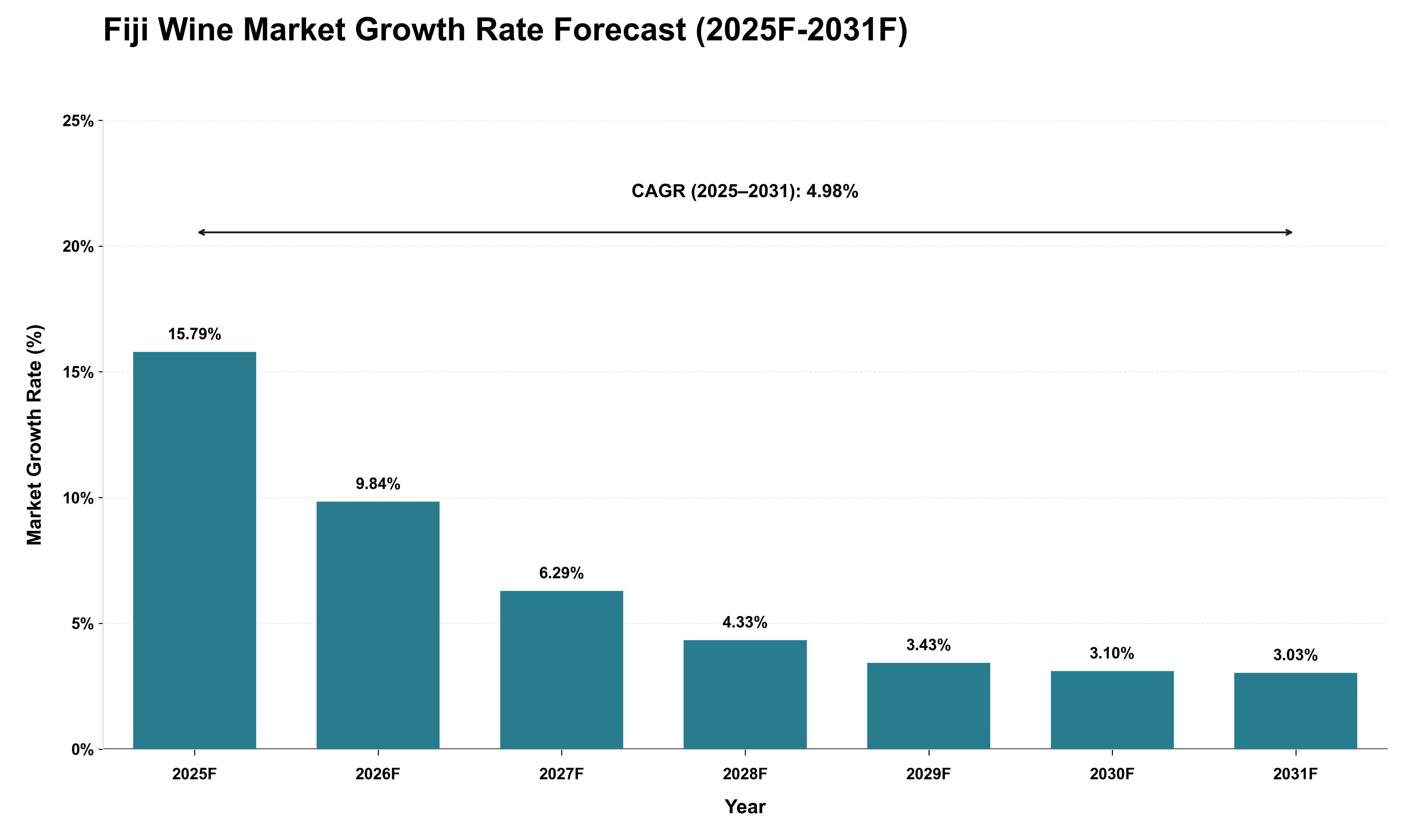
The forecast for the Fiji wine market indicates a notable deceleration in growth rates from 15.79% in 2025 to 3.03% by 2031, reflecting a shift in end-use demand dynamics. Initially, robust growth can be attributed to increasing consumer interest in premium and imported wines, driven by rising disposable incomes and changing preferences towards diverse beverage options. However, as the market evolves, the anticipated decline in annual growth rates suggests that import dependencies may become more pronounced, potentially influenced by global supply chain fluctuations and competitive pressures from other beverage categories. The projected CAGR of 4.98% underscores a transition towards more stable consumption patterns as consumers become discerning about quality over quantity. This trend will likely prompt producers to innovate and adapt their offerings to maintain relevance amidst shifting consumer tastes and economic conditions throughout the forecast period.
Key Highlights of the Report:
- Fiji Wine Market Outlook
- Market Size of Fiji Wine Market, 2024
- Forecast of Fiji Wine Market, 2031
- Historical Data and Forecast of Fiji Wine Revenues & Volume for the Period 2021-2031
- Fiji Wine Market Trend Evolution
- Fiji Wine Market Drivers and Challenges
- Fiji Wine Price Trends
- Fiji Wine Porter`s Five Forces
- Fiji Wine Industry Life Cycle
- Historical Data and Forecast of Fiji Wine Market Revenues & Volume By Product Types for the Period 2021-2031
- Historical Data and Forecast of Fiji Wine Market Revenues & Volume By Still Wine for the Period 2021-2031
- Historical Data and Forecast of Fiji Wine Market Revenues & Volume By Sparkling Wine for the Period 2021-2031
- Historical Data and Forecast of Fiji Wine Market Revenues & Volume By Dessert Wine for the Period 2021-2031
- Historical Data and Forecast of Fiji Wine Market Revenues & Volume By Fortified Wine for the Period 2021-2031
- Historical Data and Forecast of Fiji Wine Market Revenues & Volume By Colors for the Period 2021-2031
- Historical Data and Forecast of Fiji Wine Market Revenues & Volume By Red Wine for the Period 2021-2031
- Historical Data and Forecast of Fiji Wine Market Revenues & Volume By Rose Wine for the Period 2021-2031
- Historical Data and Forecast of Fiji Wine Market Revenues & Volume By White Wine for the Period 2021-2031
- Historical Data and Forecast of Fiji Wine Market Revenues & Volume By Other Colors for the Period 2021-2031
- Historical Data and Forecast of Fiji Wine Market Revenues & Volume By Distribution Channel for the Period 2021-2031
- Historical Data and Forecast of Fiji Wine Market Revenues & Volume By Offline for the Period 2021-2031
- Historical Data and Forecast of Fiji Wine Market Revenues & Volume By Online for the Period 2021-2031
- Fiji Wine Import Export Trade Statistics
- Market Opportunity Assessment By Product Types
- Market Opportunity Assessment By Colors
- Market Opportunity Assessment By Distribution Channel
- Fiji Wine Top Companies Market Share
- Fiji Wine Competitive Benchmarking By Technical and Operational Parameters
- Fiji Wine Company Profiles
- Fiji Wine Key Strategic Recommendations






































