Finland Milk Chocolate Market Size (2020-2030)
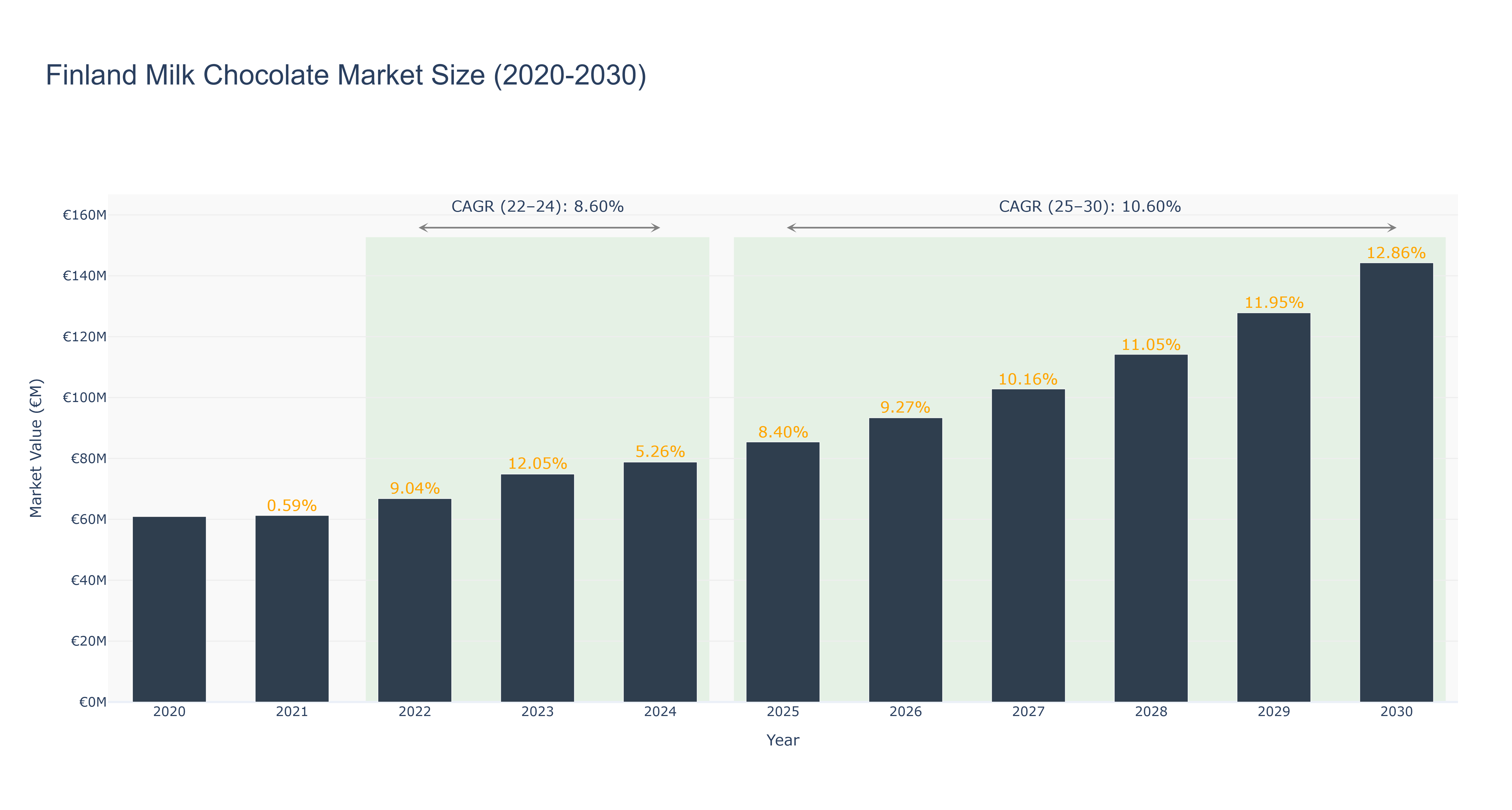
Finland Milk Chocolate Market has shown a steady growth trajectory over the years. The peak market size was €144.25 million in 2030, with a notable increase in market size from €60.91 million in 2020 to €78.80 million in 2024. The forecasted market size is expected to reach €180.23 million by 2030, with a CAGR of 10.60% from 2025 to 2030. The market experienced a significant growth spurt from 2022 to 2024, driven by increased consumer demand for premium milk chocolate products. The subsequent growth from 2025 to 2030 can be attributed to strategic marketing initiatives and product innovation by key market players. Looking ahead, Finland Milk Chocolate Market is poised for further expansion with upcoming collaborations between local chocolate manufacturers and sustainable cocoa producers to enhance product quality and sustainability practices.
Finland Milk Chocolate Market: Production & Trade Performance (2019-2025)
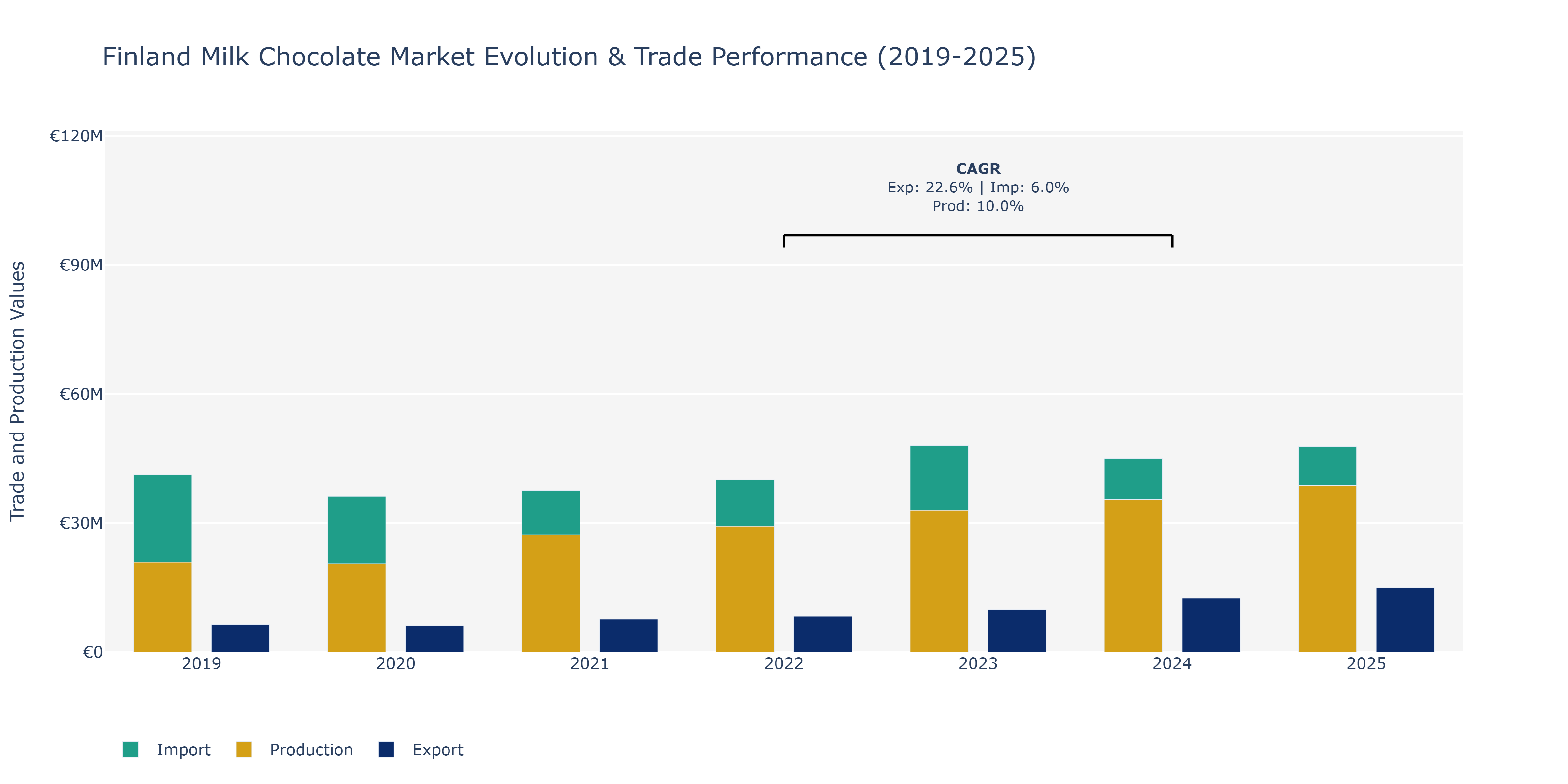
Between 2019 and 2025, Finland's Milk Chocolate Market demonstrated notable shifts in key metrics. Exports saw a consistent upward trajectory, reaching €14.92 million in 2025, with peaks in 2024 and 2025. Imports, on the other hand, fluctuated, showing a peak in 2023 at €48.02 million before decreasing slightly in 2024 and rebounding in 2025 to €47.84 million. Production displayed steady growth, increasing to €38.74 million in 2025, with the highest growth rate observed between 2022 and 2024. These fluctuations can be attributed to various factors such as changes in consumer preferences, global market demands, and fluctuations in raw material prices. The surge in exports could be due to successful marketing strategies, product innovation, and increased demand for Finnish milk chocolate internationally. Imports may have fluctuated due to changes in trade agreements, currency fluctuations, and global supply chain disruptions affecting the availability of raw materials. The consistent growth in production signals the industry's commitment to meeting rising demand and maintaining competitiveness in the market.
Finland Milk Chocolate Market Overview
The milk chocolate market in Finland is expanding as consumer demand for high-quality, indulgent confectionery products increases. Finland`s strong food industry and emphasis on premium ingredients contribute to the growth of milk chocolate products. The market is driven by consumer preferences for premium, organic, and ethically produced chocolates.
Drivers of the market
The milk chocolate market in Finland is growing as consumer preferences shift toward indulgent yet affordable treat options. Increasing demand for high-quality, locally produced chocolate, combined with the popularity of premium and artisanal varieties, is driving the market.
Challenges of the market
The milk chocolate market in Finland faces challenges related to fluctuating cocoa prices, which directly affect production costs. The increasing demand for healthier and more sustainable products drives innovation but also adds complexity to production processes. Additionally, competition from alternative confectionery options and growing concerns over sugar content in chocolates create market pressures.
Government Policy of the market
Finlands milk chocolate market benefits from government policies that regulate food safety and quality standards, ensuring consumer health and product integrity. The countrys emphasis on sustainable agriculture and fair trade practices influences the sourcing of ingredients like cocoa and milk. Additionally, Finlands consumer preferences for high-quality, sustainable chocolates drive market trends.
Key Highlights of the Report:
- Finland Milk Chocolate Market Outlook
- Market Size of Finland Milk Chocolate Market, 2024
- Forecast of Finland Milk Chocolate Market, 2031
- Historical Data and Forecast of Finland Milk Chocolate Revenues & Volume for the Period 2021-2031
- Finland Milk Chocolate Market Trend Evolution
- Finland Milk Chocolate Market Drivers and Challenges
- Finland Milk Chocolate Price Trends
- Finland Milk Chocolate Porter`s Five Forces
- Finland Milk Chocolate Industry Life Cycle
- Historical Data and Forecast of Finland Milk Chocolate Market Revenues & Volume By Type for the Period 2021-2031
- Historical Data and Forecast of Finland Milk Chocolate Market Revenues & Volume By Nuts Milk Chocolate for the Period 2021-2031
- Historical Data and Forecast of Finland Milk Chocolate Market Revenues & Volume By Liqueur Milk Chocolate for the Period 2021-2031
- Historical Data and Forecast of Finland Milk Chocolate Market Revenues & Volume By Other for the Period 2021-2031
- Historical Data and Forecast of Finland Milk Chocolate Market Revenues & Volume By Distribution Channel for the Period 2021-2031
- Historical Data and Forecast of Finland Milk Chocolate Market Revenues & Volume By Supermarkets/Hypermarkets for the Period 2021-2031
- Historical Data and Forecast of Finland Milk Chocolate Market Revenues & Volume By Specialty Stores for the Period 2021-2031
- Historical Data and Forecast of Finland Milk Chocolate Market Revenues & Volume By Convenience Stores for the Period 2021-2031
- Historical Data and Forecast of Finland Milk Chocolate Market Revenues & Volume By Online Stores for the Period 2021-2031
- Historical Data and Forecast of Finland Milk Chocolate Market Revenues & Volume By Others for the Period 2021-2031
- Historical Data and Forecast of Finland Milk Chocolate Market Revenues & Volume By Application for the Period 2021-2031
- Historical Data and Forecast of Finland Milk Chocolate Market Revenues & Volume By Residential for the Period 2021-2031
- Historical Data and Forecast of Finland Milk Chocolate Market Revenues & Volume By Commercial for the Period 2021-2031
- Finland Milk Chocolate Import Export Trade Statistics
- Market Opportunity Assessment By Type
- Market Opportunity Assessment By Distribution Channel
- Market Opportunity Assessment By Application
- Finland Milk Chocolate Top Companies Market Share
- Finland Milk Chocolate Competitive Benchmarking By Technical and Operational Parameters
- Finland Milk Chocolate Company Profiles
- Finland Milk Chocolate Key Strategic Recommendations






































