Georgia Managed Mobility Services Market Size & Growth Rate (2026-2032)
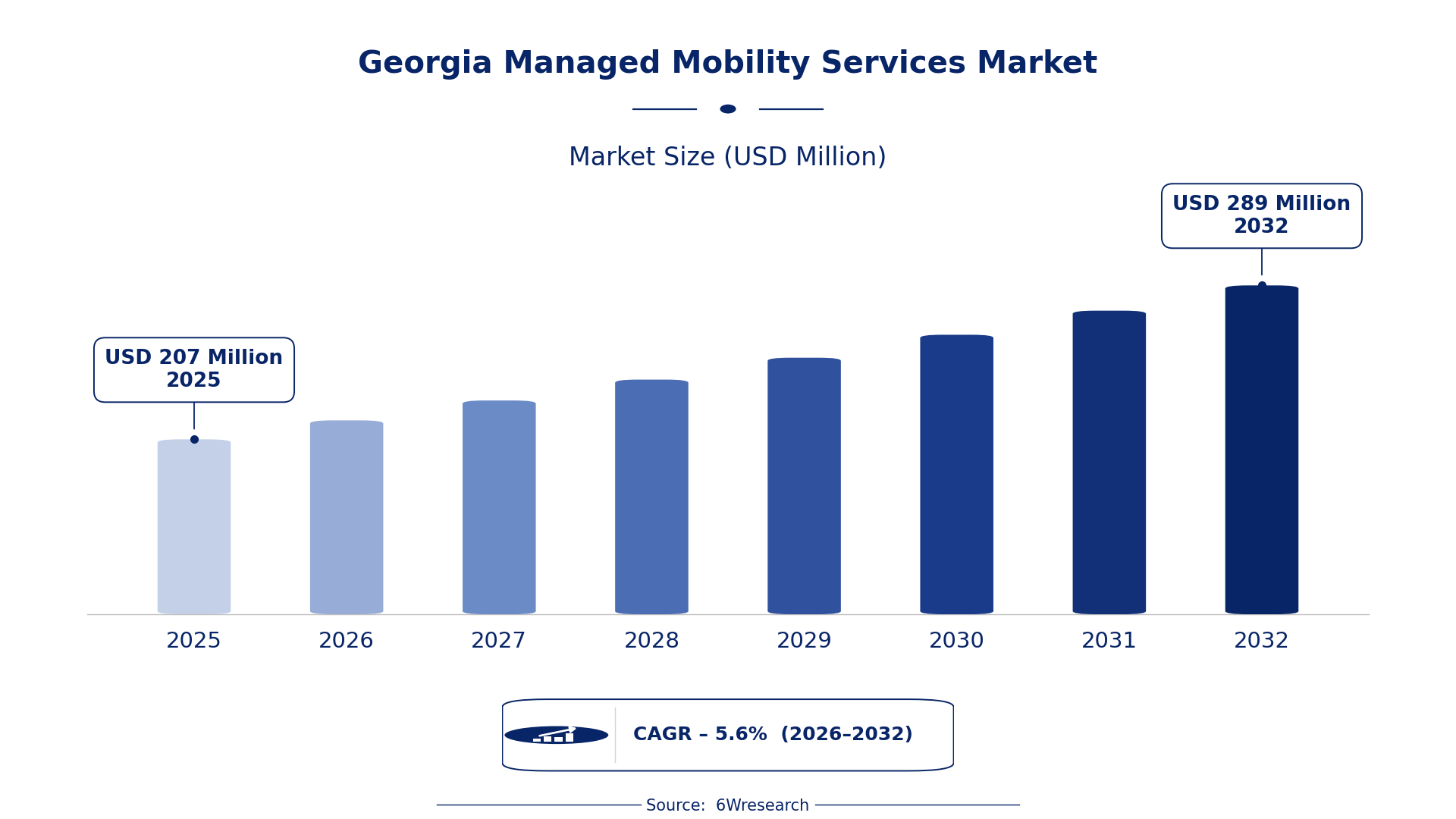
The Georgia Managed Mobility Services Market was estimated at USD 207 Million in 2025 and is projected to reach USD 289 Million by 2032, growing at a CAGR of 5.6% from 2026 to 2032.
Georgia Managed Mobility Services Market Synopsis
In Georgia, businesses are increasingly investing in managed mobility services to streamline operations and safeguard their mobile ecosystems. This investment is largely driven by the uptick in remote work, the adoption of bring-your-own-device (BYOD) policies, and the urgent need for enhanced data security. As organizations strive for efficiency, the demand for tailored mobility solutions continues to soar.
The influx of mobile devices in the workplace has led to a complex landscape that requires robust management solutions. Managed mobility services providers are responding to these challenges by offering specialized services such as mobile device management (MDM) and mobile application management (MAM). In an environment that values productivity, these services are not merely supplemental; they are becoming essential for maintaining competitive advantage.
Georgia Managed Mobility Services Market Year-wise Growth Rate and Key Drivers
This graph illustrates the annual growth rates of the Georgia Managed Mobility Services Market from 2021 to 2032, highlighting a steady upward trajectory and projected expansion over the forecast period.
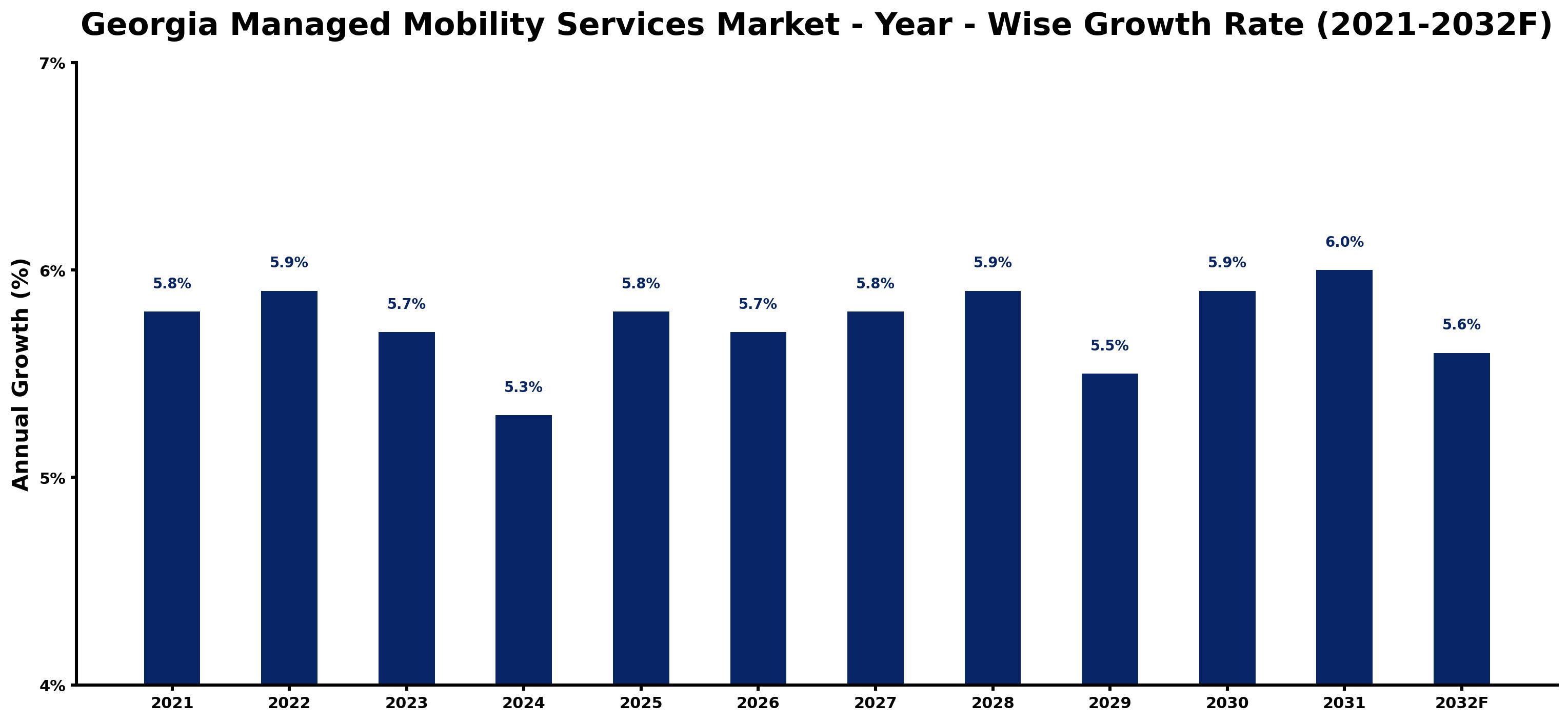
The table below presents the year‑wise growth rates along with the key drivers influencing the market
| Year | Growth Rate | Major Drivers |
| 2021 | 5.8% | Launch of nationwide mobile payment platforms boosting adoption. |
| 2022 | 5.9% | Increased smartphone penetration among Georgian consumers. |
| 2023 | 5.7% | Government initiatives promoting digital services for SMEs. |
| 2024 | 5.3% | Growth in remote work driving managed mobility demand. |
| 2025 | 5.8% | Adoption of 5G networks enhancing mobile service capabilities. |
| 2026 | 5.7% | Emergence of local tech startups fueling service innovations. |
| 2027 | 5.8% | Tbilisi hosting regional tech conferences attracting investments. |
| 2028 | 5.9% | Incentives for businesses adopting managed mobility solutions. |
| 2029 | 5.5% | Rising e-commerce trends boosting logistics and mobility needs. |
| 2030 | 5.9% | Supportive regulatory frameworks encouraging mobile service partnerships. |
| 2031 | 6.0% | Investments in cybersecurity enhancing trust in mobile services. |
| 2032 | 5.6% | Collaboration with academic institutions fostering tech advancements. |
Note: Market size estimations and growth projections presented in this report are based on 6Wresearch's proprietary forecasting methodology, utilizing the latest available industry data, government publications, and primary research inputs.
Georgia Managed Mobility Services Market Key Takeaways
Below are some of the specific key takeaways from the market, including:
- The increasing adoption of BYOD policies is driving demand for mobile security solutions.
- Organizations seek integrated services that connect seamlessly with existing IT frameworks.
- Rapid technological advancements are compelling service providers to continuously innovate their offerings.
- Data privacy regulations are shaping the operational strategies of managed mobility service providers.
- Businesses in Georgia recognize the direct correlation between mobility management and employee productivity.
Evaluation of Restraints in Georgia Managed Mobility Services Market
The Georgia Managed Mobility Services Market faces notable hurdles that could impede its growth trajectory. A significant concern is the fast-paced nature of technological change, which demands that providers remain agile and continuously upgrade their service offerings. There is an ongoing challenge to ensure that these services integrate effectively with existing IT infrastructures while simultaneously upholding stringent data security standards. Furthermore, the market is characterized by heightened competition and pricing pressures, which compel companies to differentiate their services and create added value for clients.
Georgia Managed Mobility Services Market Trends
Current trends show an increasing focus on the convergence of mobile and cloud technologies, enhancing the capabilities of managed mobility services. Additionally, enterprises are leaning towards customizable solutions that cater to their unique operational needs. The rise of artificial intelligence and machine learning is also making waves, as these technologies offer improved data analytics and predictive insights. This trend is expected to enhance decision-making processes significantly, further driving the demand for managed mobility services.
Georgia Managed Mobility Services Market Opportunities
The market is ripe with opportunities for growth and investment. Companies that innovate in mobile security solutions are particularly well-positioned to capture market share, as security remains a top priority. Additionally, strategic partnerships between managed mobility service providers and technology firms can lead to the development of advanced solutions tailored to meet specific business needs. There's also a notable opportunity for educational initiatives that can help businesses understand and implement effective managed mobility strategies.
Government Initiatives in the Georgia Managed Mobility Services Market
Government policy is playing a pivotal role in shaping the Georgia Managed Mobility Services Market. With a focus on boosting technological adoption, state authorities are implementing various initiatives that encourage innovation and compliance within the sector. By fostering a supportive regulatory environment, the government aims to enhance efficiency and security in the management of mobile services.
- A data privacy regulation introduced in 2025 mandates that businesses adopt specific measures to safeguard user information.
- A technology incentive program launched recently aims to encourage startups in the managed mobility services sector.
- Ongoing workforce training programs are designed to equip employees with the skills needed to leverage mobile technologies effectively.
- A planned public-private initiative seeks to enhance telecom infrastructure by 2028, benefiting managed mobility service providers and their clients.
Future Insights of the Georgia Managed Mobility Services Market
Looking ahead to 2026-2032, the Georgia Managed Mobility Services Market is expected to see robust growth driven by technological advancements and changing workplace dynamics. As organizations increasingly recognize the strategic importance of mobile management, service providers will be called upon to deliver even more sophisticated and integrated solutions. The interplay between technological innovation and regulatory compliance will be crucial for shaping the market’s future landscape.
Georgia Managed Mobility Services Market Latest Developments
In the past year, the Georgia Managed Mobility Services Market has witnessed several notable developments. Companies are actively expanding their offerings, with many focusing on enhancing mobile security and device management capabilities. This surge in activity reflects an urgency among businesses to refine their mobile operations in a dynamic digital environment.
- A major technology vendor launched a new mobile security solution in Q1 2025, aimed at improving compliance with data privacy regulations.
- A regional operator is currently undertaking an initiative to upgrade its mobile device management tools, expected to complete by mid-2026.
- A partnership between a local enterprise and a cloud services provider was announced in late 2025, intending to deliver comprehensive mobility solutions.
- An upcoming service enhancement scheduled for early 2026 aims to integrate artificial intelligence into mobile application management.
Georgia Managed Mobility Services Market - Key Attractiveness of the Report
- 10 Years of Market Numbers
- Historical Data Starting from 2022 to 2025
- Base Year: 2025
- Forecast Data until 2032
- Key Performance Indicators Impacting the Market
- Major Upcoming Developments and Projects
Key Highlights of the Report:
- Georgia Managed Mobility Services Market Outlook
- Market Size of Georgia Managed Mobility Services Market, 2025
- Forecast of Georgia Managed Mobility Services Market, 2032
- Historical Data and Forecast of Georgia Managed Mobility Services Revenues & Volume for the Period 2022-2032F
- Georgia Managed Mobility Services Market Trend Evolution
- Georgia Managed Mobility Services Market Drivers and Challenges
- Georgia Managed Mobility Services Price Trends
- Georgia Managed Mobility Services Porter's Five Forces
- Georgia Managed Mobility Services Industry Life Cycle
- Historical Data and Forecast of Georgia Managed Mobility Services Market Revenues & Volume By Function for the Period 2022-2032F
- Historical Data and Forecast of Georgia Managed Mobility Services Market Revenues & Volume By Device Management for the Period 2022-2032F
- Historical Data and Forecast of Georgia Managed Mobility Services Market Revenues & Volume By Application Management for the Period 2022-2032F
- Historical Data and Forecast of Georgia Managed Mobility Services Market Revenues & Volume By Security Management for the Period 2022-2032F
- Historical Data and Forecast of Georgia Managed Mobility Services Market Revenues & Volume By Maintenance & Support for the Period 2022-2032F
- Historical Data and Forecast of Georgia Managed Mobility Services Market Revenues & Volume By Organization Size for the Period 2022-2032F
- Historical Data and Forecast of Georgia Managed Mobility Services Market Revenues & Volume By SMEs for the Period 2022-2032F
- Historical Data and Forecast of Georgia Managed Mobility Services Market Revenues & Volume By Large Enterprises for the Period 2022-2032F
- Historical Data and Forecast of Georgia Managed Mobility Services Market Revenues & Volume By Industry Vertical for the Period 2022-2032F
- Historical Data and Forecast of Georgia Managed Mobility Services Market Revenues & Volume By Healthcare for the Period 2022-2032F
- Historical Data and Forecast of Georgia Managed Mobility Services Market Revenues & Volume By Manufacturing for the Period 2022-2032F
- Historical Data and Forecast of Georgia Managed Mobility Services Market Revenues & Volume By Logistics and Transportation for the Period 2022-2032F
- Historical Data and Forecast of Georgia Managed Mobility Services Market Revenues & Volume By Retail for the Period 2022-2032F
- Historical Data and Forecast of Georgia Managed Mobility Services Market Revenues & Volume By Financial Services for the Period 2022-2032F
- Historical Data and Forecast of Georgia Managed Mobility Services Market Revenues & Volume By Telecom and IT for the Period 2022-2032F
- Historical Data and Forecast of Georgia Managed Mobility Services Market Revenues & Volume By Media and Entertainment for the Period 2022-2032F
- Historical Data and Forecast of Georgia Managed Mobility Services Market Revenues & Volume By Travel and Hospitality for the Period 2022-2032F
- Georgia Managed Mobility Services Import Export Trade Statistics
- Market Opportunity Assessment By Function
- Market Opportunity Assessment By Organization Size
- Market Opportunity Assessment By Industry Vertical
- Georgia Managed Mobility Services Top Companies Market Share
- Georgia Managed Mobility Services Competitive Benchmarking By Technical and Operational Parameters
- Georgia Managed Mobility Services Company Profiles
- Georgia Managed Mobility Services Key Strategic Recommendations






































