Germany Cocoa Products Market Size (2020-2030)
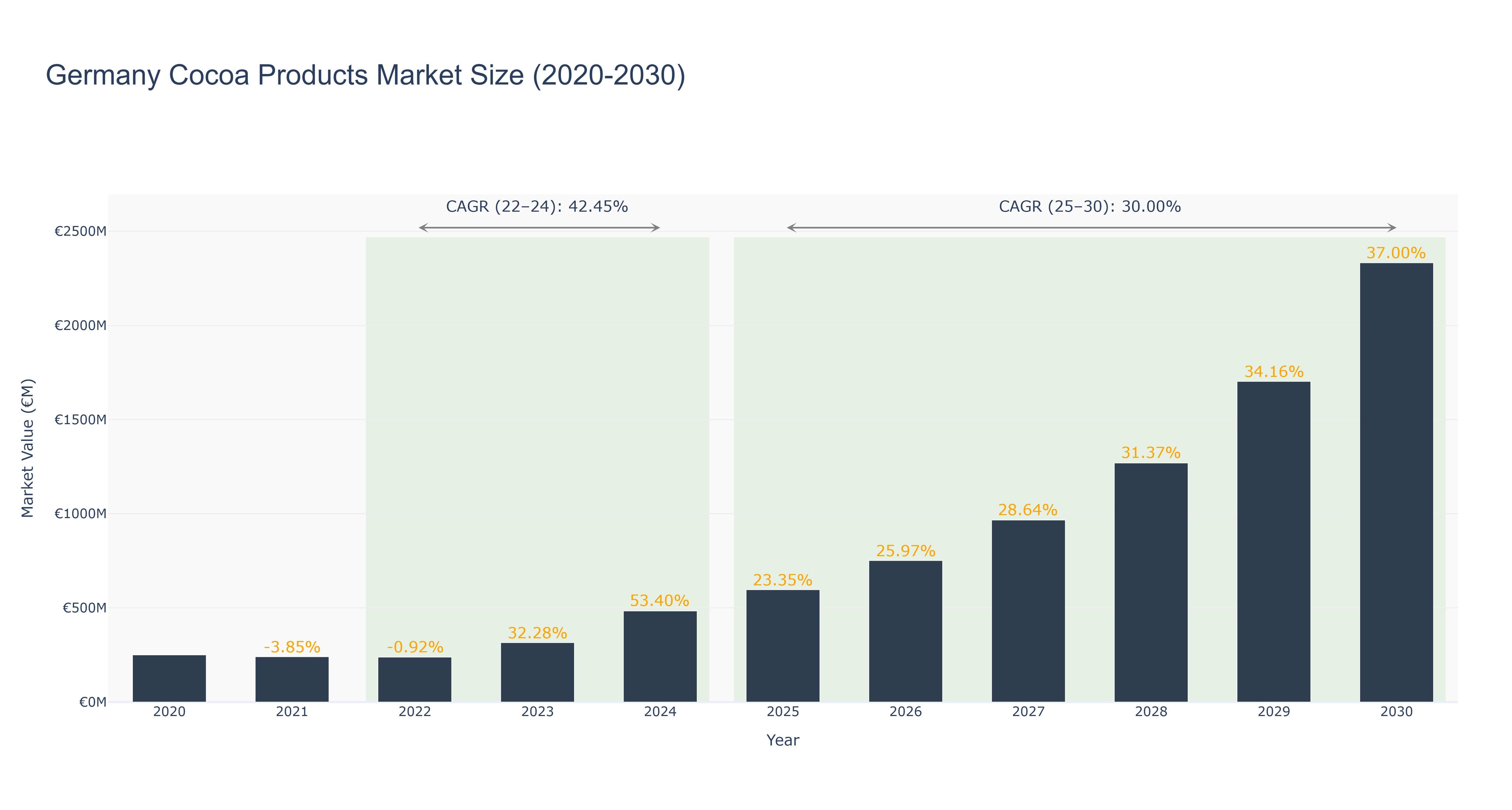
The Germany Cocoa Products Market has experienced notable fluctuations from 2020 to 2024, with a peak market size of €249.97 million in 2020, followed by a decline to €238.12 million in 2022, before surging to €483.18 million in 2024, reflecting a remarkable compound annual growth rate (CAGR) of 42.45% during the actual period from 2022 to 2024. This growth can be attributed to increasing consumer demand for premium cocoa products and a shift towards healthier, sustainable options. Looking ahead to the forecasted period from 2025 to 2030, the market is projected to continue its robust expansion, reaching €2.33 billion by 2030, with a CAGR of 30.00%. Key industry drivers, including innovations in product formulations and rising interest in artisanal chocolate, are expected to sustain this momentum. As companies invest in sustainable sourcing and processing technologies, the market is poised for significant evolution in the coming years.
Germany Cocoa Products Market: Production & Trade Performance (2019-2025)
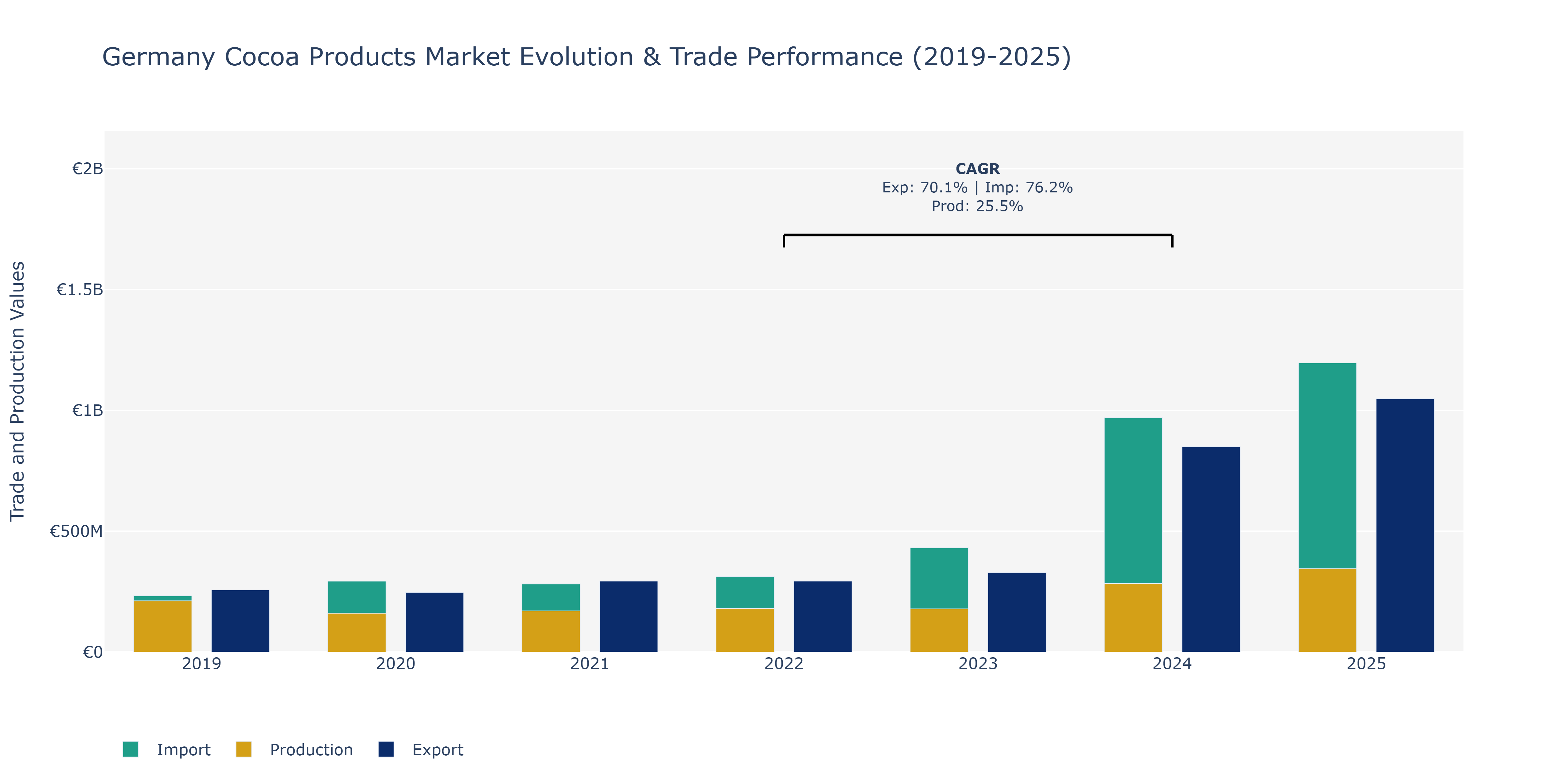
Over the years, the Germany Cocoa Products Market has shown notable shifts in Exports, Imports, and Production. In 2019, Exports stood at €257.01 million, followed by a slight dip in 2020 to €246.46 million. However, a substantial recovery and growth pattern emerged in the following years, with Exports peaking at €1.05 billion in 2025. Imports experienced a similar trend, starting at €232.78 million in 2019, reaching a peak of €1.2 billion in 2025. Production levels also displayed growth, starting at €211 million in 2019 and climbing steadily to €344.71 million in 2025. The surge in Exports and Imports can be attributed to increasing global demand for cocoa products, coupled with enhanced production capabilities in Germany. The rise in Production reflects the industry's response to consumer preferences for high-quality cocoa products. These trends align with the general growth of the global chocolate market, where Germany plays a significant role as a key exporter and importer of cocoa products.
Germany Cocoa Products Market Overview
The Germany Cocoa Products Market encompasses a wide range of cocoa-based goods, including chocolate bars, confectionery, beverages, and bakery items. With a rich history of chocolate consumption, Germany is a key market for cocoa products in Europe. Manufacturers in the country focus on product diversification and innovation to cater to evolving consumer preferences and dietary trends. Additionally, the rising popularity of premium and artisanal chocolates contributes to market growth, with consumers willing to pay a premium for high-quality cocoa products. Health and wellness trends also influence product development, leading to the introduction of healthier alternatives and functional cocoa products. Overall, the Germany Cocoa Products Market continues to thrive, driven by a combination of tradition, innovation, and changing consumer lifestyles.
Drivers of the market
The cocoa products market in Germany is driven by the growing consumer demand for chocolate and cocoa-based confectionery items. Germany is one of the largest consumers of chocolate globally, driving significant demand for cocoa products such as chocolate bars, candies, and truffles. Additionally, the increasing popularity of premium and artisanal chocolate products contributes to market growth. Moreover, the introduction of innovative cocoa-based products, including functional chocolates and organic cocoa treats, further stimulates market expansion. Furthermore, the emphasis on sustainable sourcing and fair trade practices influences consumer purchasing decisions in the cocoa products market in Germany.
Challenges of the market
The Germany Cocoa Products market faces challenges related to consumer preferences, market competition, and regulatory compliance. Cocoa products, including chocolate, confectionery, bakery, and beverage products, are subject to changing consumer tastes and preferences, requiring continuous innovation and product differentiation to meet market demand. Moreover, the competitive landscape, characterized by the presence of multinational corporations and local manufacturers offering diverse cocoa products, intensifies pricing pressures and marketing efforts. Additionally, regulatory requirements related to food safety, labeling, and sustainability add complexity to the production and marketing of cocoa products in the Germany market. Furthermore, the increasing awareness of health and wellness among consumers influences purchasing decisions, driving demand for healthier and ethically sourced cocoa products. Addressing these challenges requires investment in research and development, brand building, supply chain transparency, and compliance with regulatory standards to capitalize on market opportunities and maintain competitiveness in the Germany Cocoa Products market.
Government Policy of the market
The cocoa products market in Germany encompasses a wide range of confectionery, bakery, and beverage products, reflecting diverse consumer preferences and culinary traditions. Market dynamics are influenced by factors such as flavor trends, health consciousness, and ethical sourcing practices. Government policies on food labeling, advertising, and nutrition standards impact product formulations, marketing strategies, and market competition. Collaboration between industry stakeholders and regulatory authorities is essential for ensuring product safety and consumer trust.
Key Highlights of the Report:
- Germany Cocoa Products Market Outlook
- Market Size of Germany Cocoa Products Market, 2024
- Forecast of Germany Cocoa Products Market, 2031
- Historical Data and Forecast of Germany Cocoa Products Revenues & Volume for the Period 2018 - 2031
- Germany Cocoa Products Market Trend Evolution
- Germany Cocoa Products Market Drivers and Challenges
- Germany Cocoa Products Price Trends
- Germany Cocoa Products Porter's Five Forces
- Germany Cocoa Products Industry Life Cycle
- Historical Data and Forecast of Germany Cocoa Products Market Revenues & Volume By Type for the Period 2018 - 2031
- Historical Data and Forecast of Germany Cocoa Products Market Revenues & Volume By Cocoa Beans for the Period 2018 - 2031
- Historical Data and Forecast of Germany Cocoa Products Market Revenues & Volume By Cocoa Butter for the Period 2018 - 2031
- Historical Data and Forecast of Germany Cocoa Products Market Revenues & Volume By Cocoa Powder & Cake for the Period 2018 - 2031
- Historical Data and Forecast of Germany Cocoa Products Market Revenues & Volume By Cocoa Paste & Liquor for the Period 2018 - 2031
- Historical Data and Forecast of Germany Cocoa Products Market Revenues & Volume By Chocolate for the Period 2018 - 2031
- Historical Data and Forecast of Germany Cocoa Products Market Revenues & Volume By Application for the Period 2018 - 2031
- Historical Data and Forecast of Germany Cocoa Products Market Revenues & Volume By Confectionery for the Period 2018 - 2031
- Historical Data and Forecast of Germany Cocoa Products Market Revenues & Volume By Food & Beverages for the Period 2018 - 2031
- Historical Data and Forecast of Germany Cocoa Products Market Revenues & Volume By Cosmetics for the Period 2018 - 2031
- Historical Data and Forecast of Germany Cocoa Products Market Revenues & Volume By Pharmaceutical for the Period 2018 - 2031
- Germany Cocoa Products Import Export Trade Statistics
- Market Opportunity Assessment By Type
- Market Opportunity Assessment By Application
- Germany Cocoa Products Top Companies Market Share
- Germany Cocoa Products Competitive Benchmarking By Technical and Operational Parameters
- Germany Cocoa Products Company Profiles
- Germany Cocoa Products Key Strategic Recommendations






































