Germany Couscous Market: Import Trend Analysis
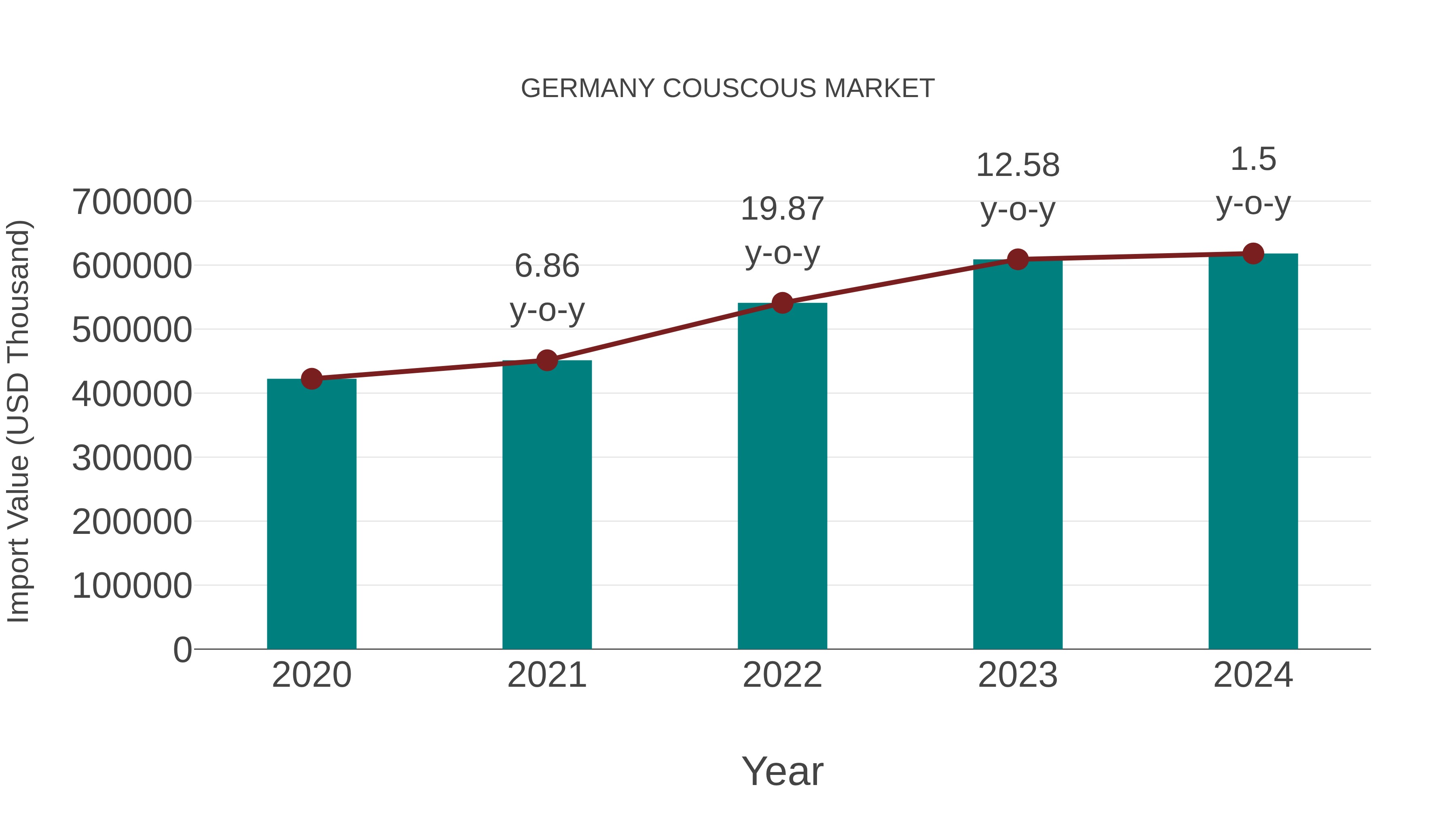
In the Germany couscous market, the import trend exhibited a 1.5% growth rate from 2023 to 2024, with a compound annual growth rate (CAGR) of 9.99% from 2020 to 2024. This momentum can be attributed to evolving consumer preferences towards diverse cuisines, indicating a shift in demand dynamics impacting import volumes.
Germany Couscous Market Overview
The Germany Couscous Market is experiencing steady growth due to a rising demand for convenient and healthy food options. Couscous, a traditional North African dish made from steamed and dried granules of semolina wheat, has gained popularity in Germany as a versatile and easy-to-prepare meal option. Consumers are increasingly seeking out couscous for its quick cooking time, nutritional benefits, and ability to be customized with various ingredients. The market is characterized by a wide range of product offerings, including organic, whole grain, flavored, and ready-to-eat couscous options. Key players in the Germany Couscous Market are focusing on product innovation, packaging enhancements, and marketing strategies to cater to the evolving preferences of health-conscious consumers. Overall, the Germany Couscous Market is poised for further growth as the trend towards convenient and nutritious meal solutions continues to rise.
Germany Couscous Market Trends
In the Germany couscous market, there is a noticeable trend towards increased demand for organic and gluten-free options. Consumers are becoming more health-conscious and are seeking out products that are perceived as healthier and more natural. This has led to a rise in the availability and variety of organic and gluten-free couscous products in stores across Germany. Additionally, there is a growing interest in flavored couscous varieties, such as lemon-infused or herb-seasoned options, as consumers look for convenient yet flavorful meal solutions. Manufacturers are also focusing on sustainability and ethical sourcing practices to appeal to environmentally conscious consumers. Overall, the Germany couscous market is evolving to cater to the changing preferences and priorities of consumers towards healthier, more diverse, and sustainably sourced products.
Germany Couscous Market Challenges
In the Germany couscous market, one of the main challenges is the competition from other popular grains and pasta varieties that are traditionally more ingrained in German cuisine. German consumers tend to be more familiar with products like wheat pasta or rice, making it difficult for couscous to gain widespread acceptance. Additionally, couscous is often perceived as a foreign or exotic food, which can further limit its appeal to mainstream consumers. Furthermore, the lack of awareness about the versatility and health benefits of couscous poses a challenge in marketing and promoting the product effectively in Germany. Overcoming these challenges would require targeted marketing campaigns, education about the benefits of couscous, and innovative product offerings to cater to the preferences of the German market.
Germany Couscous Market Investment Opportunities
In the Germany couscous market, there are several investment opportunities worth considering. With the increasing consumer demand for healthy and convenient food options, there is a growing trend towards ethnic and Mediterranean cuisine, of which couscous is a popular component. Investors could explore opportunities in the production and distribution of high-quality, organic couscous products to cater to health-conscious consumers. Additionally, there is potential for innovation in the form of flavored or pre-packaged couscous varieties to target busy urban populations seeking quick meal solutions. Collaborating with retailers or food service providers to introduce couscous-based meal kits or ready-to-eat options could also be a lucrative investment avenue. Overall, the Germany couscous market offers opportunities for growth and diversification in response to changing consumer preferences.
Germany Couscous Market Government Policy
The Germany Couscous Market is influenced by various government policies, including food safety regulations, import/export tariffs, and agricultural subsidies. The German government has strict standards for food safety and quality control, which impact the production and distribution of couscous in the market. Additionally, import and export tariffs imposed on couscous can affect the pricing and availability of products for both consumers and producers. Agricultural subsidies provided by the government can also influence the production levels and competitiveness of couscous in the market. Overall, government policies play a significant role in shaping the Germany Couscous Market by ensuring food safety, regulating trade, and providing support to the agricultural sector.
Germany Couscous Market Future Outlook
The Germany couscous market is expected to show steady growth in the coming years, driven by increasing consumer awareness of healthy and convenient food options. With a rising trend towards plant-based diets and international cuisines, couscous is gaining popularity as a versatile and nutritious alternative to traditional staples. The market is likely to witness new product innovations and flavor variations to cater to evolving consumer preferences. Additionally, the growing focus on sustainability and ethical sourcing practices is expected to influence purchasing decisions, leading to a demand for organic and locally sourced couscous products. Overall, the Germany couscous market presents opportunities for manufacturers and retailers to capitalize on the shifting consumer trends towards healthier and globally inspired food choices.
Key Highlights of the Report:
- Germany Couscous Market Outlook
- Market Size of Germany Couscous Market, 2021
- Forecast of Germany Couscous Market, 2031
- Historical Data and Forecast of Germany Couscous Revenues & Volume for the Period 2018 - 2031
- Germany Couscous Market Trend Evolution
- Germany Couscous Market Drivers and Challenges
- Germany Couscous Price Trends
- Germany Couscous Porter's Five Forces
- Germany Couscous Industry Life Cycle
- Historical Data and Forecast of Germany Couscous Market Revenues & Volume By Thickness for the Period 2018 - 2031
- Historical Data and Forecast of Germany Couscous Market Revenues & Volume By Fine Couscous for the Period 2018 - 2031
- Historical Data and Forecast of Germany Couscous Market Revenues & Volume By Medium Couscous for the Period 2018 - 2031
- Historical Data and Forecast of Germany Couscous Market Revenues & Volume By Thick Couscous for the Period 2018 - 2031
- Historical Data and Forecast of Germany Couscous Market Revenues & Volume By Distribution Channel for the Period 2018 - 2031
- Historical Data and Forecast of Germany Couscous Market Revenues & Volume By Supermarkets and Hypermarkets for the Period 2018 - 2031
- Historical Data and Forecast of Germany Couscous Market Revenues & Volume By Independent Retailers for the Period 2018 - 2031
- Historical Data and Forecast of Germany Couscous Market Revenues & Volume By Convenience Stores for the Period 2018 - 2031
- Historical Data and Forecast of Germany Couscous Market Revenues & Volume By Speciality Stores for the Period 2018 - 2031
- Historical Data and Forecast of Germany Couscous Market Revenues & Volume By Online for the Period 2018 - 2031
- Historical Data and Forecast of Germany Couscous Market Revenues & Volume By Others for the Period 2018 - 2031
- Germany Couscous Import Export Trade Statistics
- Market Opportunity Assessment By Thickness
- Market Opportunity Assessment By Distribution Channel
- Germany Couscous Top Companies Market Share
- Germany Couscous Competitive Benchmarking By Technical and Operational Parameters
- Germany Couscous Company Profiles
- Germany Couscous Key Strategic Recommendations






































