Germany Ginseng Market: Import Trend Analysis
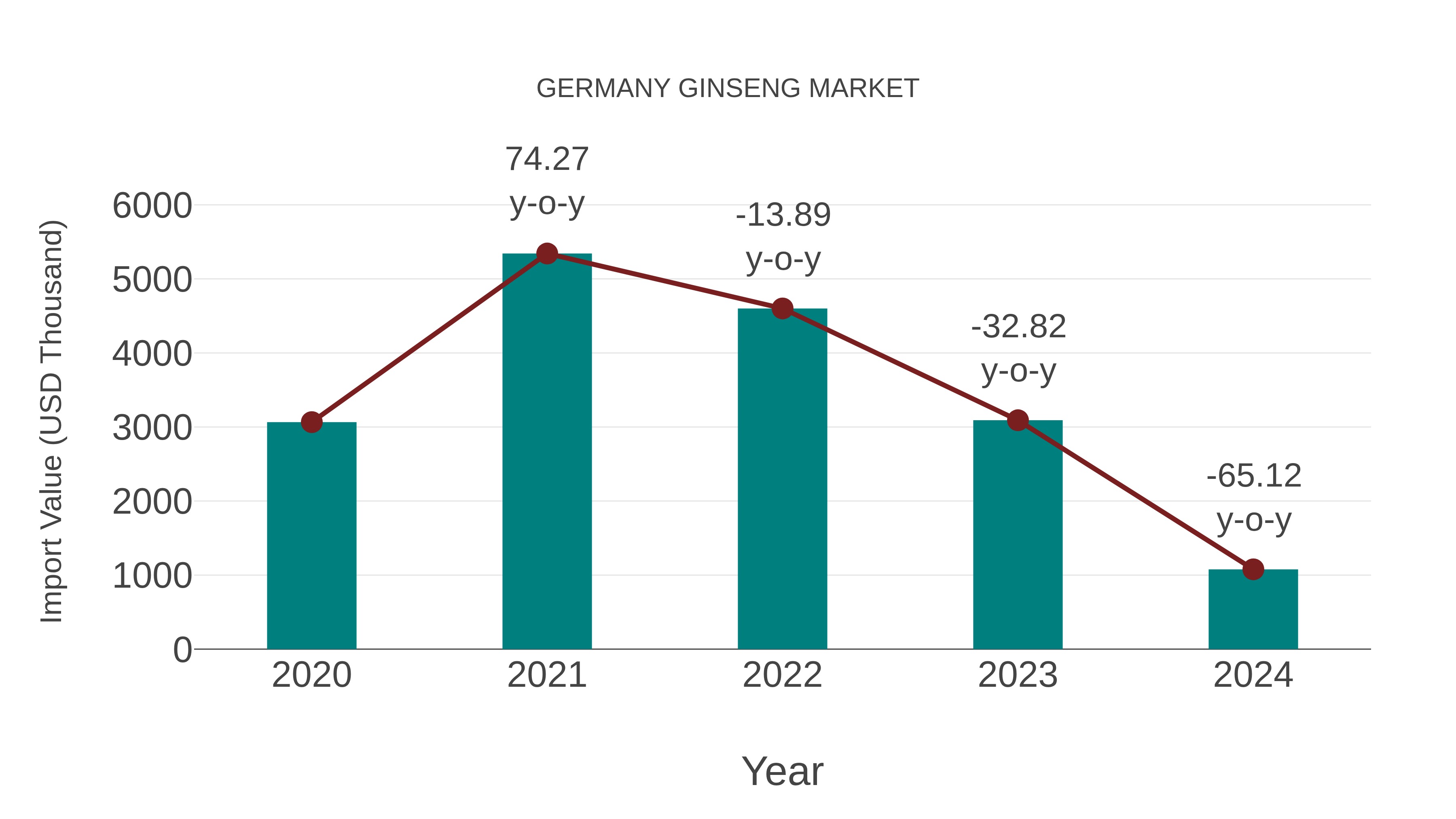
In 2024, Germany`s ginseng market saw a notable increase in imports. The trend indicated a growing demand for ginseng products among German consumers. This surge in imports suggests a potential shift in preferences towards ginseng-based goods in the market.
Germany Ginseng Market Market Overview
The Germany ginseng market is experiencing steady growth, driven by increasing consumer awareness of the health benefits associated with ginseng consumption. Ginseng is widely recognized for its adaptogenic properties, which help in reducing stress, boosting energy levels, and improving cognitive function. The market is primarily driven by the growing demand for natural health supplements and traditional medicine practices. Key players in the Germany ginseng market include both domestic and international companies offering a wide range of ginseng products such as supplements, teas, and extracts. As consumers seek natural remedies to support their overall well-being, the Germany ginseng market is expected to continue expanding, with a focus on product innovation and marketing strategies to cater to the diverse preferences of consumers.
Germany Ginseng Market Trends
In the Germany ginseng market, there is a growing trend towards health and wellness products, leading to an increased demand for ginseng-based supplements and natural remedies. Consumers are increasingly seeking out ginseng products for their perceived health benefits, such as improving energy levels, reducing stress, and boosting immunity. Organic and sustainably sourced ginseng products are also gaining popularity among environmentally conscious consumers. Additionally, there is a rising interest in traditional herbal medicines and alternative therapies, driving the demand for ginseng in various forms including capsules, powders, teas, and skincare products. With a focus on holistic well-being and natural solutions, the Germany ginseng market is expected to continue growing as consumers prioritize self-care and preventive health measures.
Germany Ginseng Market Challenges
In the Germany ginseng market, some challenges include increasing competition from other herbal supplements, concerns about sustainability and ethical sourcing practices, and fluctuating prices due to factors like weather conditions and global demand. There is also the challenge of educating consumers about the benefits of ginseng and distinguishing high-quality products from lower-grade alternatives. Additionally, regulatory issues related to labeling, quality control, and health claims can pose obstacles for ginseng producers and sellers in Germany. Overall, navigating these challenges requires a combination of strategic marketing, product differentiation, sustainable sourcing practices, and compliance with regulations to maintain a competitive edge in the Germany ginseng market.
Germany Ginseng Market Investment Opportunities
The Germany ginseng market offers various investment opportunities due to the growing demand for natural health supplements and traditional medicine. Investing in ginseng cultivation or production facilities in Germany can be lucrative, as the country has a reputation for high-quality ginseng products. Additionally, there is a rising trend of consumers seeking natural remedies for health and wellness, creating a strong market potential for ginseng-based products. Partnering with local farmers or manufacturers to establish a supply chain for ginseng products can also be a profitable investment strategy. Furthermore, with the increasing popularity of ginseng in the global market, exporting German ginseng products to other countries can further expand the investment opportunities in the industry.
Germany Ginseng Market Government Policy
In Germany, the cultivation and trade of ginseng are regulated by the Federal Ministry of Food and Agriculture. The government has implemented strict regulations to ensure the quality and safety of ginseng products in the market. Farmers need to adhere to specific cultivation guidelines to maintain the authenticity and effectiveness of ginseng. Additionally, there are regulations governing the labeling and marketing of ginseng products to protect consumers from misleading information. The government also supports research and development in the ginseng industry to promote innovation and sustainable practices. Overall, the government policies related to the Germany ginseng market aim to uphold high standards of quality, safety, and transparency to benefit both producers and consumers.
Germany Ginseng Market Future Outlook
The future outlook for the Germany ginseng market looks promising as the demand for natural health supplements continues to rise. Consumers are increasingly seeking alternative remedies and wellness products, driving the growth of the ginseng market. With a growing awareness of the health benefits associated with ginseng, including improved cognitive function, reduced stress, and enhanced immunity, the market is expected to see steady growth in the coming years. Additionally, the rise of e-commerce platforms and online retail channels has made ginseng products more accessible to a wider consumer base, further fueling market expansion. As a result, the Germany ginseng market is poised for continued growth and presents opportunities for both existing players and new entrants to capitalize on the growing demand for natural health solutions.
Key Highlights of the Report:
- Germany Ginseng Market Outlook
- Market Size of Germany Ginseng Market,2025
- Forecast of Germany Ginseng Market, 2032
- Historical Data and Forecast of Germany Ginseng Revenues & Volume for the Period 2022-2032F
- Germany Ginseng Market Trend Evolution
- Germany Ginseng Market Drivers and Challenges
- Germany Ginseng Price Trends
- Germany Ginseng Porter's Five Forces
- Germany Ginseng Industry Life Cycle
- Historical Data and Forecast of Germany Ginseng Market Revenues & Volume By Origin for the Period 2022-2032F
- Historical Data and Forecast of Germany Ginseng Market Revenues & Volume By American Ginseng for the Period 2022-2032F
- Historical Data and Forecast of Germany Ginseng Market Revenues & Volume By Asian Ginseng for the Period 2022-2032F
- Historical Data and Forecast of Germany Ginseng Market Revenues & Volume By Nature for the Period 2022-2032F
- Historical Data and Forecast of Germany Ginseng Market Revenues & Volume By Cultivated for the Period 2022-2032F
- Historical Data and Forecast of Germany Ginseng Market Revenues & Volume By Wild for the Period 2022-2032F
- Historical Data and Forecast of Germany Ginseng Market Revenues & Volume By Source for the Period 2022-2032F
- Historical Data and Forecast of Germany Ginseng Market Revenues & Volume By Fresh for the Period 2022-2032F
- Historical Data and Forecast of Germany Ginseng Market Revenues & Volume By Processed for the Period 2022-2032F
- Historical Data and Forecast of Germany Ginseng Market Revenues & Volume By End use for the Period 2022-2032F
- Historical Data and Forecast of Germany Ginseng Market Revenues & Volume By Dietary Supplements & Functional Food for the Period 2022-2032F
- Historical Data and Forecast of Germany Ginseng Market Revenues & Volume By Food & Beverage Processing for the Period 2022-2032F
- Historical Data and Forecast of Germany Ginseng Market Revenues & Volume By Distribution Channel for the Period 2022-2032F
- Historical Data and Forecast of Germany Ginseng Market Revenues & Volume By Offline for the Period 2022-2032F
- Historical Data and Forecast of Germany Ginseng Market Revenues & Volume By Online for the Period 2022-2032F
- Germany Ginseng Import Export Trade Statistics
- Market Opportunity Assessment By Origin
- Market Opportunity Assessment By Nature
- Market Opportunity Assessment By Source
- Market Opportunity Assessment By End use
- Market Opportunity Assessment By Distribution Channel
- Germany Ginseng Top Companies Market Share
- Germany Ginseng Competitive Benchmarking By Technical and Operational Parameters
- Germany Ginseng Company Profiles
- Germany Ginseng Key Strategic Recommendations






































