Germany Meat Packaging Market Summary
The germany meat packaging market was estimated at USD 144 Million in 2025 and is projected to reach USD 155 Million by 2032, growing at a CAGR of 0.9% from 2026 to 2032.
Germany Meat Packaging Market Year-wise Growth Rate and Key Drivers
This graph highlights how the Germany Meat Packaging Market has steadily grown over the past five years, supported by major growth factors.
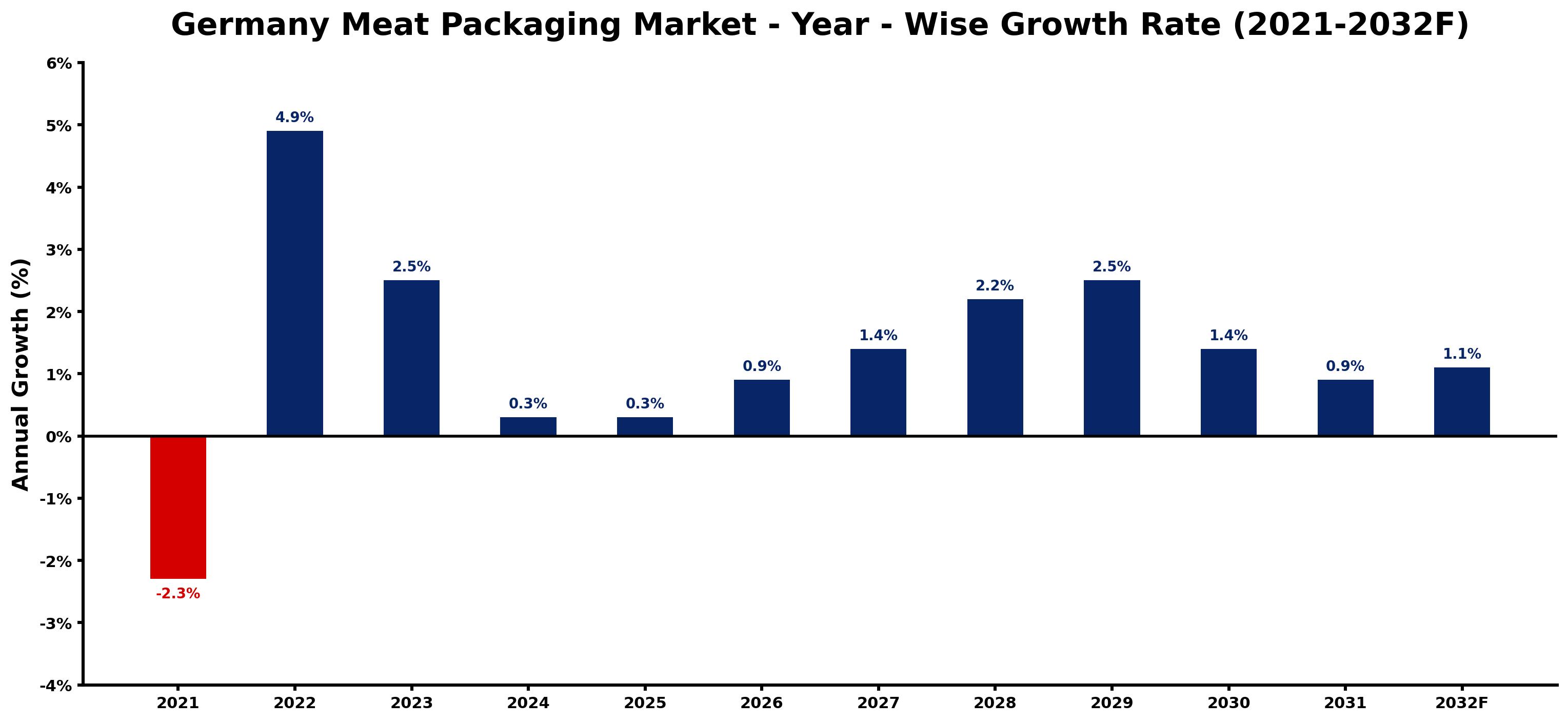
The table below presents the year wise growth rates along with the key drivers influencing the market
| Year | Growth Rate | Major Drivers |
| 2021 | -2.3% | Increased concern over health and environmental impacts led consumers to seek alternatives to meat products. |
| 2022 | 4.9% | Consumer preferences shift towards sustainable packaging, influencing material selection significantly. |
| 2023 | 2.5% | Technological integration in production lines enhances efficiency and reduces operational costs. |
| 2024 | 0.3% | Increased awareness of food safety elevates standards across packaging processes and materials. |
| 2025 | 0.3% | E-commerce growth necessitates innovation in packaging solutions for direct-to-consumer deliveries. |
| 2026 | 0.9% | Automation technologies gain traction, transforming traditional meat packaging workflows and labor needs. |
| 2027 | 1.4% | Demands for traceability and transparency reshape packaging designs and labeling requirements. |
| 2028 | 2.2% | Competition among brands pushes investments in premium packaging solutions to attract consumers. |
| 2029 | 2.5% | R&D initiatives focus on biodegradable materials, responding to environmental sustainability pressures. |
| 2030 | 1.4% | Urbanization drives packaging innovations tailored for convenience and urban consumer lifestyles. |
| 2031 | 0.9% | Collaborations among food producers and packaging firms enhance product differentiation strategies. |
| 2032 | 1.1% | Market consolidation occurs as larger players acquire smaller firms for competitive advantages. |
Note - Market size estimations and growth projections presented in this report are based on 6Wresearch's advanced forecasting approach, validated with industry datasets as of June 2026.
Germany Meat Packaging Market Synopsis
The Germany Meat Packaging Market is projected to reach 0.9% and witness significant growth during the forecast period (2026-2032). This market is characterized by evolving consumer preferences that prioritize sustainability, convenience, and food safety. As the demand for meat products continues to rise, the packaging industry is adapting to meet these changing requirements, offering innovative solutions that enhance product quality and extend shelf life.
Germany Meat Packaging Market Trends and Opportunities
In recent years, the Germany Meat Packaging Market has seen considerable shifts towards sustainable packaging solutions. Key trends include:
- Increased adoption of biodegradable materials, driven by consumer demand for eco-friendly packaging options. This shift aligns with global sustainability goals, encouraging meat producers to explore alternatives to traditional plastics.
- Growing interest in convenience packaging formats, such as pre-portioned and ready-to-cook solutions, which cater to busy consumers and help reduce food waste.
- The implementation of advanced technologies like modified atmosphere packaging (MAP) and vacuum packaging, which play a crucial role in maintaining product freshness and extending shelf life.
- Developments in e-commerce packaging solutions, addressing the need for protective and tamper-evident designs. As online grocery shopping continues to rise, these innovations are essential for ensuring safe delivery of meat products.
- A focus on enhancing product visibility through innovative designs, which help meat producers differentiate their offerings in a competitive market.
Germany Meat Packaging Market Challenges and Restraints
Despite the promising trends, the Germany Meat Packaging Market faces several challenges:
- Heightened regulatory frameworks aimed at reducing environmental impact are pressuring meat packaging companies to adopt more sustainable practices, often at increased costs.
- Rising raw material prices, coupled with escalating energy costs, challenge manufacturers to balance quality with economic viability.
- Intense competition within the packaging sector necessitates continuous innovation. Companies must invest in R&D to develop unique, high-quality packaging solutions that resonate with consumer preferences.
- Shifting consumer expectations towards sustainable and convenient packaging compel meat producers to re-evaluate their packaging strategies, which may require substantial investment and adaptation.
- The need for compliance with stringent food safety regulations creates ongoing challenges as companies must ensure that their packaging solutions maintain product integrity and safety.
Germany Meat Packaging Market Investment Opportunities
The growing focus on sustainability within the Germany Meat Packaging Market presents various investment opportunities:
- Investing in eco-friendly packaging materials, including biodegradable plastics and recyclable options, can significantly enhance market positioning and consumer appeal.
- Adoption of advanced packaging technologies such as MAP and vacuum packing not only improves shelf life but also aligns companies with consumer preferences for freshness and safety.
- Developing tailored packaging solutions for the e-commerce sector can capture the expanding market of online grocery shoppers, requiring innovative designs that prioritize product protection.
- Strategic investments in research and development can lead to breakthroughs in packaging solutions that meet regulatory requirements while addressing environmental concerns.
- Collaborations with sustainability-focused organizations can enhance brand visibility and demonstrate commitment to responsible manufacturing practices, appealing to a conscious consumer base.
Germany Meat Packaging Market Government Investment and Initiatives
The German government actively promotes initiatives aimed at enhancing food safety and sustainability within the meat packaging sector. Relevant policies include:
- Strict regulations overseeing the production and packaging of meat products ensure high standards for consumer safety and product quality.
- Public funding programs support the transition to sustainable packaging solutions, encouraging companies to adopt eco-friendly materials and practices.
- Government initiatives aimed at reducing plastic waste are driving the development and implementation of alternative packaging materials across the meat industry.
- Collaborative efforts between the government, industry stakeholders, and research institutions facilitate innovation in packaging technology, ultimately benefiting the market.
- Educational campaigns promote consumer awareness of food safety practices related to meat packaging, further contributing to the market's emphasis on high-quality packaging solutions.
Germany Meat Packaging Market Latest Developments (May 2025 - June 2026)
Recent developments within the Germany Meat Packaging Market reflect a strong commitment to sustainability and innovation:
- Numerous companies are transitioning to biodegradable packaging solutions, motivated by increasing consumer preferences for environmentally responsible products.
- The adoption of smart packaging technologies, which include sensors and indicators for freshness, is on the rise, enhancing the safety and quality assurance of meat products.
- Industry collaborations focused on R&D are leading to the development of advanced packaging technologies that can significantly improve meat preservation during transportation.
- Regulatory changes encouraging the use of recyclable materials have prompted manufacturers to innovate and redesign their packaging lines for better sustainability.
- The rise of online meat sales has stimulated a demand for packaging solutions that maintain product integrity during shipping, pushing firms to invest in secure and tamper-evident designs.
Germany Meat Packaging Market - Key Attractiveness of the Report
- 10 Years of Market Numbers
- Historical Data Starting from 2022 to 2025
- Base Year: 2025
- Forecast Data until 2032
- Key Performance Indicators Impacting the Market
- Major Upcoming Developments and Projects
Key Highlights of the Report:
- Germany Meat Packaging Market Outlook
- Market Size of Germany Meat Packaging Market, 2025
- Forecast of Germany Meat Packaging Market, 2032F
- Historical Data and Forecast of Germany Meat Packaging Revenues & Volume for the Period 2022-2032F
- Germany Meat Packaging Market Trend Evolution
- Germany Meat Packaging Market Drivers and Challenges
- Germany Meat Packaging Price Trends
- Germany Meat Packaging Porter's Five Forces
- Germany Meat Packaging Industry Life Cycle
- Historical Data and Forecast of Germany Meat Packaging Market Revenues & Volume By Material Type for the Period 2022-2032F
- Historical Data and Forecast of Germany Meat Packaging Market Revenues & Volume By Plastic for the Period 2022-2032F
- Historical Data and Forecast of Germany Meat Packaging Market Revenues & Volume By Rigid? for the Period 2022-2032F
- Historical Data and Forecast of Germany Meat Packaging Market Revenues & Volume By Metal for the Period 2022-2032F
- Historical Data and Forecast of Germany Meat Packaging Market Revenues & Volume By Meat Type for the Period 2022-2032F
- Historical Data and Forecast of Germany Meat Packaging Market Revenues & Volume By Fresh and Frozen for the Period 2022-2032F
- Historical Data and Forecast of Germany Meat Packaging Market Revenues & Volume By Processed for the Period 2022-2032F
- Historical Data and Forecast of Germany Meat Packaging Market Revenues & Volume By Ready to Eat for the Period 2022-2032F
- Germany Meat Packaging Import Export Trade Statistics
- Market Opportunity Assessment By Material Type
- Market Opportunity Assessment By Meat Type
- Germany Meat Packaging Top Companies Market Share
- Germany Meat Packaging Competitive Benchmarking By Technical and Operational Parameters
- Germany Meat Packaging Company Profiles
- Germany Meat Packaging Key Strategic Recommendations






































