Germany Oleochemicals Market: Import Trend Analysis
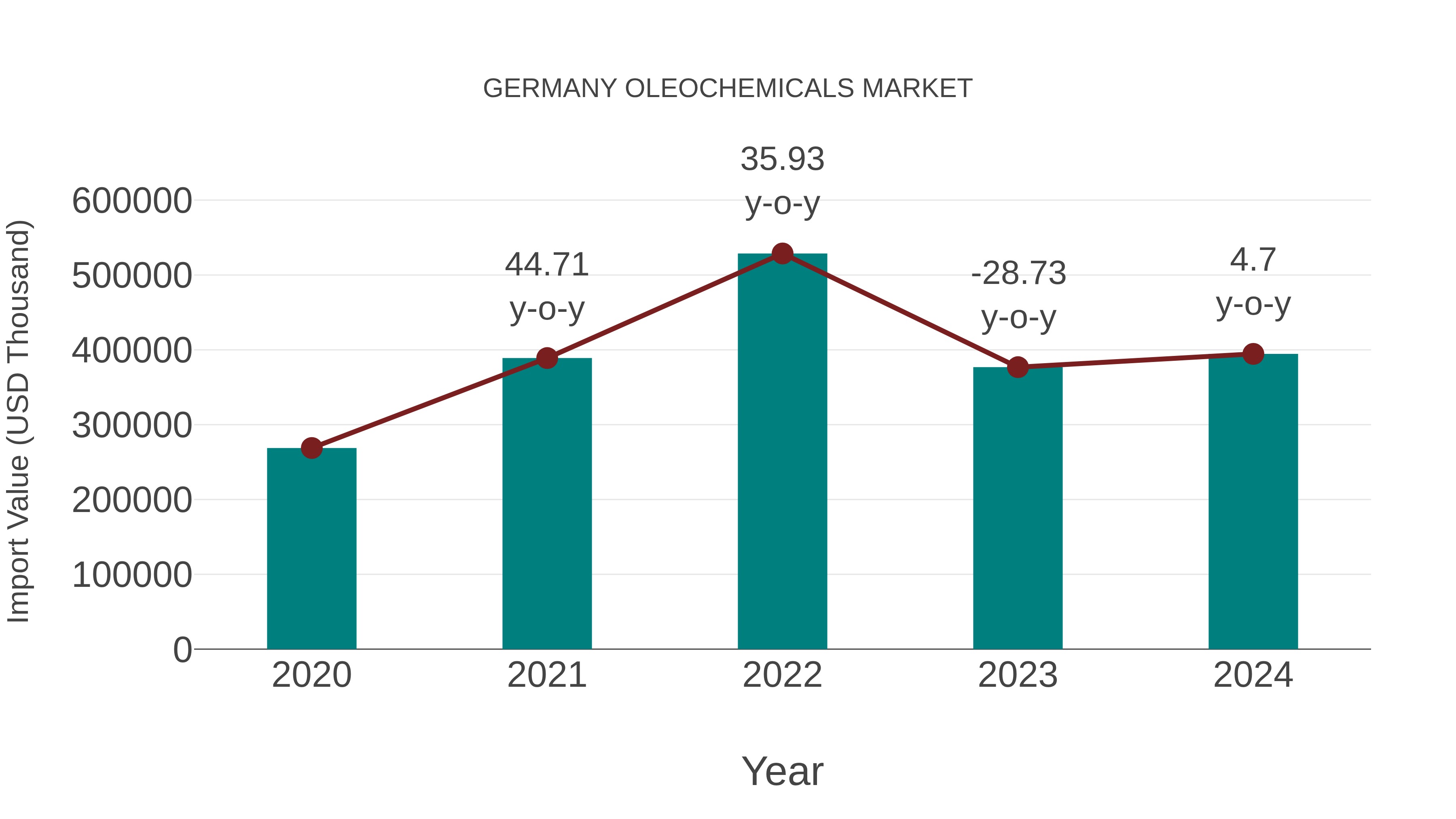
In the Germany oleochemicals market, the import trend showed a notable growth rate of 4.7% from 2023 to 2024, with a compound annual growth rate (CAGR) of 10.07% for the period 2020-2024. This increase can be attributed to a consistent demand shift towards sustainable and bio-based products, reflecting a broader market shift towards environmentally friendly alternatives.
Germany Oleochemicals Market Overview
The Germany Oleochemicals Market is witnessing steady growth driven by increasing demand for sustainable and eco-friendly products across various industries such as personal care, pharmaceuticals, food, and chemicals. Oleochemicals derived from natural oils and fats are preferred over petrochemical-based products due to their biodegradability and renewable nature. The market is also influenced by the rising awareness regarding the environmental impact of traditional chemical processes, leading to a shift towards oleochemicals. Key players in the Germany Oleochemicals Market include BASF, Cargill, Evonik Industries, and Emery Oleochemicals. Government regulations promoting the use of bio-based materials further support market growth. Overall, the Germany Oleochemicals Market is poised for expansion as industries increasingly adopt sustainable practices and consumers demand more environmentally friendly products.
Germany Oleochemicals Market Trends and Opportunities
The Germany Oleochemicals Market is witnessing a growing demand for sustainable and eco-friendly products, driving the trend towards oleochemicals derived from renewable sources such as plant oils. With increasing awareness about the environmental impact of traditional chemicals, there is a shift towards bio-based alternatives in industries like personal care, food, and pharmaceuticals. Opportunities lie in developing innovative oleochemical products that cater to the specific needs of these industries, such as bio-based surfactants, lubricants, and emollients. Collaborations between oleochemical manufacturers and end-users can help in customizing solutions and expanding market reach. Additionally, the emphasis on regulatory compliance and certifications for sustainable products presents a chance for companies to differentiate themselves in the market and gain a competitive edge.
Germany Oleochemicals Market Challenges
In the Germany Oleochemicals Market, some challenges include increasing competition from synthetic alternatives, fluctuating prices of raw materials such as vegetable oils, and regulatory pressures related to sustainability and environmental concerns. The market also faces the challenge of balancing the demand for bio-based oleochemicals with the need for cost-effective solutions. Additionally, the industry must navigate changing consumer preferences towards eco-friendly products and the need to invest in research and development to innovate and stay competitive in the market. Overall, companies operating in the Germany Oleochemicals Market need to adapt to these challenges by focusing on sustainability, efficiency, and product differentiation to maintain their market position and drive growth.
Germany Oleochemicals Market Drivers
The Germany Oleochemicals Market is primarily driven by the increasing demand for sustainable and eco-friendly products in various industries such as personal care, food and beverages, and pharmaceuticals. Consumers are becoming more conscious of the environmental impact of products, leading to a shift towards oleochemicals derived from natural sources like vegetable oils. Additionally, stringent regulations promoting the use of renewable resources and reducing carbon footprint are driving the adoption of oleochemicals in Germany. The versatility of oleochemicals, their biodegradability, and cost-effectiveness compared to petrochemical-based alternatives further contribute to their growth in the market. Overall, the emphasis on sustainability and environmental responsibility is a key driver propelling the Germany Oleochemicals Market forward.
Germany Oleochemicals Market Government Policy
In Germany, government policies related to the oleochemicals market primarily focus on sustainability and environmental protection. The country has implemented regulations to promote the use of renewable raw materials in oleochemical production, such as bio-based feedstocks. Additionally, there are initiatives to reduce greenhouse gas emissions and promote energy efficiency in the oleochemical industry. Germany also supports research and development efforts to enhance the competitiveness of the sector and drive innovation in sustainable oleochemical production processes. Overall, government policies in Germany aim to create a favorable regulatory environment for the oleochemicals market, encouraging companies to adopt sustainable practices and contribute to the country`s transition to a more environmentally friendly economy.
Germany Oleochemicals Market Future Outlook
The Germany Oleochemicals Market is expected to witness steady growth in the coming years driven by increasing demand for sustainable and bio-based products across various industries such as personal care, pharmaceuticals, and food processing. The shift towards eco-friendly alternatives, coupled with stringent regulations promoting the use of renewable resources, will further boost the market. Additionally, the growing awareness among consumers regarding the environmental impact of traditional chemicals is driving the adoption of oleochemicals. Advancements in technology and innovation in the production processes are also expected to enhance the market growth. Overall, the Germany Oleochemicals Market is poised for expansion, with opportunities for market players to capitalize on the demand for green and sustainable solutions.
Key Highlights of the Report:
- Germany Oleochemicals Market Outlook
- Market Size of Germany Oleochemicals Market, 2025
- Forecast of Germany Oleochemicals Market, 2032
- Historical Data and Forecast of Germany Oleochemicals Revenues & Volume for the Period 2022 - 2032F
- Germany Oleochemicals Market Trend Evolution
- Germany Oleochemicals Market Drivers and Challenges
- Germany Oleochemicals Price Trends
- Germany Oleochemicals Porter's Five Forces
- Germany Oleochemicals Industry Life Cycle
- Historical Data and Forecast of Germany Oleochemicals Market Revenues & Volume By Type for the Period 2022 - 2032F
- Historical Data and Forecast of Germany Oleochemicals Market Revenues & Volume By Fatty Acid for the Period 2022 - 2032F
- Historical Data and Forecast of Germany Oleochemicals Market Revenues & Volume By Fatty Alcohol for the Period 2022 - 2032F
- Historical Data and Forecast of Germany Oleochemicals Market Revenues & Volume By Glycerin for the Period 2022 - 2032F
- Historical Data and Forecast of Germany Oleochemicals Market Revenues & Volume By Others for the Period 2022 - 2032F
- Historical Data and Forecast of Germany Oleochemicals Market Revenues & Volume By Application for the Period 2022 - 2032F
- Historical Data and Forecast of Germany Oleochemicals Market Revenues & Volume By Pharmaceutical & personal care for the Period 2022 - 2032F
- Historical Data and Forecast of Germany Oleochemicals Market Revenues & Volume By Food & beverages for the Period 2022 - 2032F
- Historical Data and Forecast of Germany Oleochemicals Market Revenues & Volume By Soaps & detergents for the Period 2022 - 2032F
- Historical Data and Forecast of Germany Oleochemicals Market Revenues & Volume By Polymers for the Period 2022 - 2032F
- Historical Data and Forecast of Germany Oleochemicals Market Revenues & Volume By Others for the Period 2022 - 2032F
- Germany Oleochemicals Import Export Trade Statistics
- Market Opportunity Assessment By Type
- Market Opportunity Assessment By Application
- Germany Oleochemicals Top Companies Market Share
- Germany Oleochemicals Competitive Benchmarking By Technical and Operational Parameters
- Germany Oleochemicals Company Profiles
- Germany Oleochemicals Key Strategic Recommendations






































