Germany Organic Shampoo Market: Import Trend Analysis
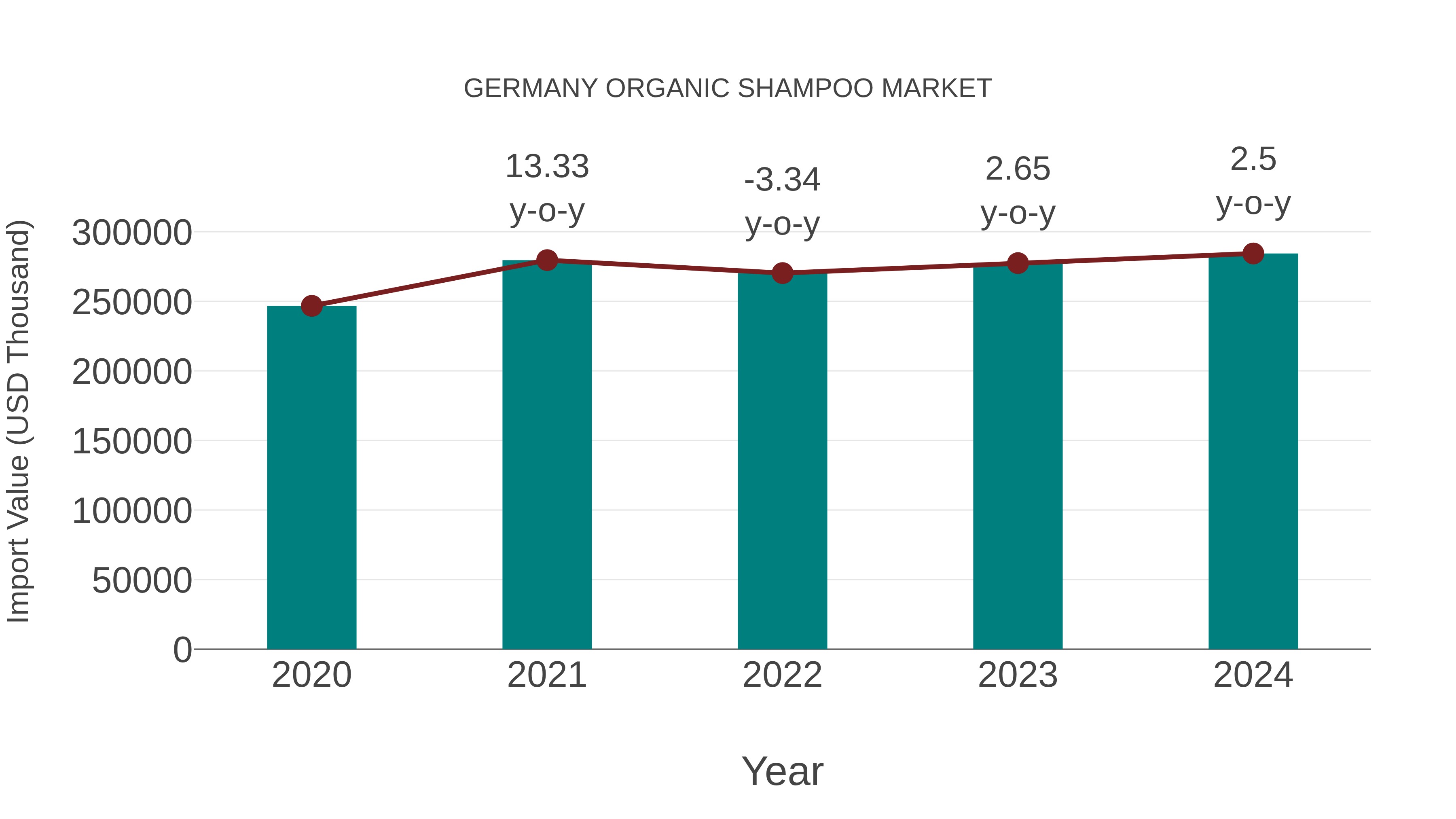
In the Germany organic shampoo market, the import trend saw a growth rate of 2.5% from 2023 to 2024, with a compound annual growth rate (CAGR) of 3.62% from 2020 to 2024. This steady import momentum indicates consistent demand for organic shampoo products in Germany, reflecting market stability and sustained consumer interest in organic personal care items.
Germany Organic Shampoo Market Overview
The Germany organic shampoo market is experiencing steady growth driven by increasing consumer awareness of the benefits of using natural and organic hair care products. The market is characterized by a strong demand for products that are free from harsh chemicals, sulfates, and parabens, with a focus on ingredients that are environmentally friendly and ethically sourced. Key trends in the market include the rising popularity of vegan and cruelty-free formulations, as well as the use of sustainable packaging materials. Major players in the Germany organic shampoo market include established brands such as Lavera, Weleda, and Logona, as well as newer entrants offering innovative formulations targeting specific hair care needs. The market is expected to continue expanding as consumers prioritize health and sustainability in their purchasing decisions.
Germany Organic Shampoo Market Trends and Opportunities
The Germany Organic Shampoo Market is witnessing significant growth due to increasing consumer awareness about the benefits of organic and natural ingredients. Key trends include the rising demand for sustainable and eco-friendly products, as well as a shift towards clean beauty and personal care. Opportunities in the market stem from the growing preference for chemical-free hair care solutions and the emphasis on wellness and self-care routines. Market players can capitalize on these trends by offering innovative formulations, transparent labeling, and effective marketing strategies that highlight the organic and natural aspects of their products. Additionally, partnerships with retailers and online platforms can help reach a wider audience and cater to the increasing demand for organic shampoos in Germany.
Germany Organic Shampoo Market Challenges
In the Germany Organic Shampoo Market, one of the key challenges faced is the presence of strong competition from both established and new entrants. With an increasing consumer preference for natural and organic products, the market has become saturated with numerous brands offering organic shampoos, making it difficult for companies to differentiate their products. Additionally, pricing pressure from larger competitors and the need for continuous product innovation to meet changing consumer preferences pose challenges for smaller players in the market. Regulatory compliance and certification requirements for organic products also add complexity and cost to the manufacturing and marketing processes, further impacting the competitiveness of companies in the Germany Organic Shampoo Market.
Germany Organic Shampoo Market Drivers
The Germany Organic Shampoo Market is being driven by several key factors. Consumer awareness and preference for natural and organic products is a significant driver, as more individuals are becoming conscious of the ingredients they put on their bodies. Growing concerns about the environment and sustainability also play a role, leading consumers to seek out eco-friendly and cruelty-free options. Additionally, the trend towards clean beauty and wellness lifestyles is boosting the demand for organic shampoos that are free from harsh chemicals and potentially harmful additives. The availability of a wide range of organic shampoo products in the market, along with increasing disposable incomes and a willingness to invest in premium personal care products, further contribute to the growth of the organic shampoo market in Germany.
Germany Organic Shampoo Market Government Policies
In Germany, the organic shampoo market is influenced by various government policies aimed at promoting sustainability and consumer health. The government has implemented regulations and certifications, such as the EU Organic Certification, to ensure that organic shampoos meet specific standards in terms of ingredients, production processes, and labeling. Additionally, the government offers financial incentives and support for organic agriculture, which indirectly benefits organic shampoo manufacturers using organic ingredients. Furthermore, there are initiatives to reduce plastic waste and promote eco-friendly packaging, which can impact the packaging choices of organic shampoo brands. Overall, government policies in Germany play a significant role in shaping the organic shampoo market by emphasizing environmental responsibility and consumer protection.
Germany Organic Shampoo Market Future Outlook
The future outlook for the Germany Organic Shampoo Market is promising, with a growing trend towards natural and sustainable personal care products. Consumer awareness and concern for the environment, as well as interest in health and wellness, are driving the demand for organic shampoos. The market is expected to witness continuous growth as more consumers seek products free from harmful chemicals and artificial additives. Key players in the market are focusing on product innovation, using organic and plant-based ingredients, and sustainable packaging to cater to the evolving preferences of consumers. With increasing disposable income and a shift towards eco-friendly choices, the Germany Organic Shampoo Market is projected to expand further in the coming years.
Key Highlights of the Report:
- Germany Organic Shampoo Market Outlook
- Market Size of Germany Organic Shampoo Market, 2025
- Forecast of Germany Organic Shampoo Market, 2032
- Historical Data and Forecast of Germany Organic Shampoo Revenues & Volume for the Period 2022 - 2032F
- Germany Organic Shampoo Market Trend Evolution
- Germany Organic Shampoo Market Drivers and Challenges
- Germany Organic Shampoo Price Trends
- Germany Organic Shampoo Porter's Five Forces
- Germany Organic Shampoo Industry Life Cycle
- Historical Data and Forecast of Germany Organic Shampoo Market Revenues & Volume By Distribution Channel for the Period 2022 - 2032F
- Historical Data and Forecast of Germany Organic Shampoo Market Revenues & Volume By Supermarkets/hypermarkets for the Period 2022 - 2032F
- Historical Data and Forecast of Germany Organic Shampoo Market Revenues & Volume By Specialty stores for the Period 2022 - 2032F
- Historical Data and Forecast of Germany Organic Shampoo Market Revenues & Volume By Online for the Period 2022 - 2032F
- Germany Organic Shampoo Import Export Trade Statistics
- Market Opportunity Assessment By Distribution Channel
- Germany Organic Shampoo Top Companies Market Share
- Germany Organic Shampoo Competitive Benchmarking By Technical and Operational Parameters
- Germany Organic Shampoo Company Profiles
- Germany Organic Shampoo Key Strategic Recommendations






































