Germany Soft Drinks Market: Import Trend Analysis
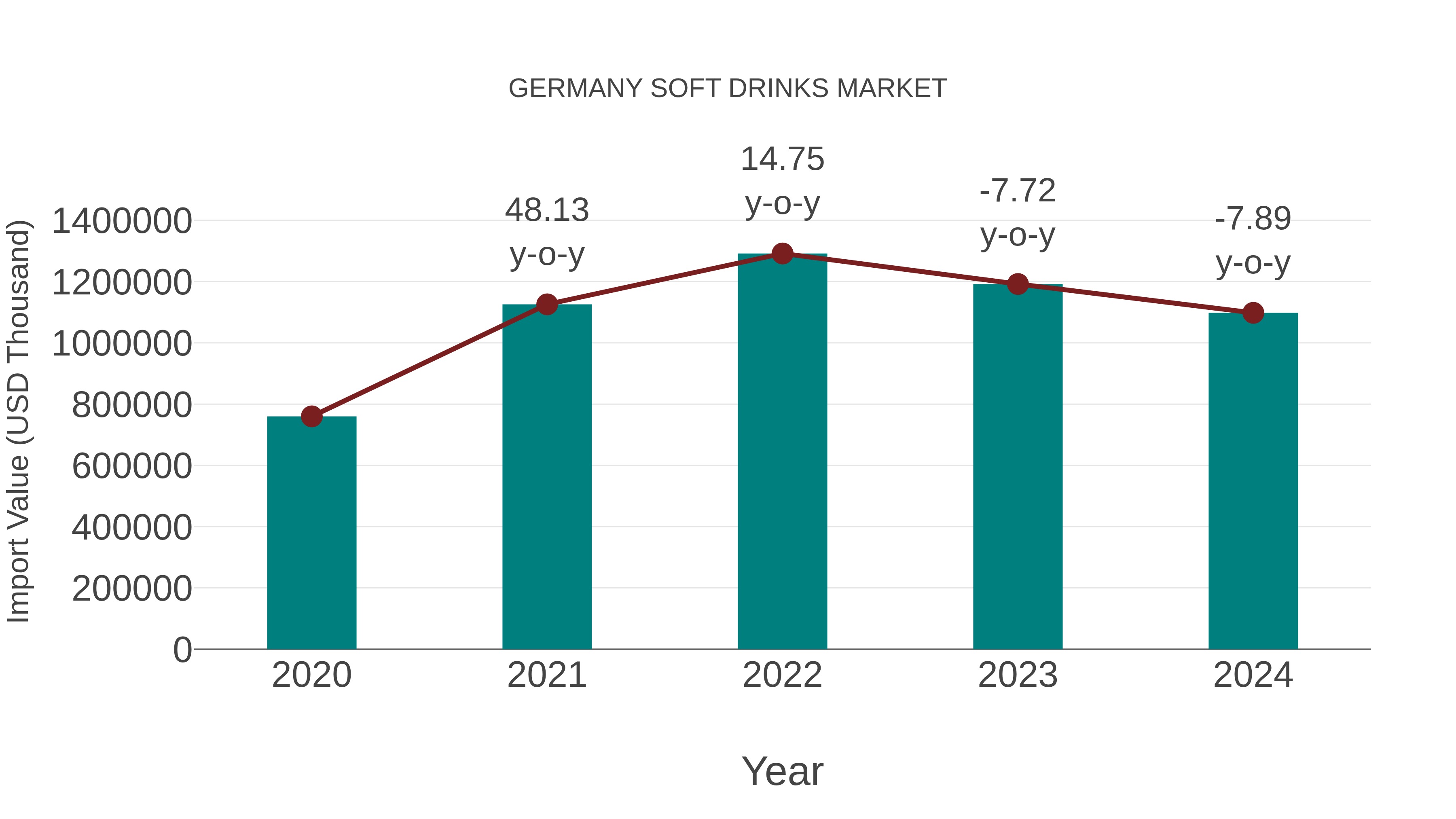
In the Germany soft drinks market, the import trend exhibited a decrease with a growth rate of -7.89% from 2023 to 2024, contrasting with the 9.64% compound annual growth rate (CAGR) recorded from 2020 to 2024. This decline in import momentum may be attributed to shifts in consumer preferences or changes in trade policies affecting the market`s stability during this period.
Germany Soft Drinks Market Growth Rate
According to 6Wresearch internal database and industry insights, the Germany Soft Drinks Market is projected to grow at a compound annual growth rate (CAGR) of 4.3% during the forecast period from 2026 to 2032.
Five-Year Growth Trajectory of the Germany Soft Drinks Market with Core Drivers
Below mentioned are the evaluation of year-wise growth rate along with key drivers:
| Year | Est. Annual Growth (%) | Growth Drivers |
| 2021 | 2.3% | High demand for healthier soft drinks and low-sugar and natural ingredient-based beverages. |
| 2022 | 3% | Increased interest in functional beverages which have added vitamins and minerals. |
| 2023 | 3.4% | Rising demand for non-carbonated drinks as it is bought by health-conscious consumers. |
| 2024 | 3.6% | Major focus on premium products and eco-friendly packaging solutions. |
| 2025 | 4% | Expanding presence of international soft drink brands and innovative product launches. |
Topics Covered in the Germany Soft Drinks Market Report
The Germany Soft Drinks Market report thoroughly covers the market by product and distribution channels. It provides an unbiased and detailed analysis of ongoing market trends, opportunities, challenges, and market drivers, helping stakeholders align their strategies with current and future market dynamics.
Germany Soft Drinks Marke Highlights
| Report Name | Germany Soft Drinks Market |
| Forecast Period | 2026–2032 |
| CAGR | 4.30% |
| Growing Sector | Beverages & Food Industry |
Germany Soft Drinks Market Synopsis
Germany Soft Drinks Market is expected to witness major growth as it is driven by rising interest of consumer in healthy, functional, and non-carbonated drinks. The market earns benefits from increasing demand for beverages with natural ingredients and a surge in interest for products with health benefits like vitamin-rich drinks, detoxifying beverages, and organic variants. The German government also continues to support the beverage sector through sustainability policies and laws that are aimed at reducing environmental damage. The increasing popularity of plant-based drinks is also contributing to the Germany Soft Drinks Market Growth.
Evaluation of Growth Drivers in the Germany Soft Drinks Market
Below mentioned are some prominent drivers and their impact on the Germany Soft Drinks Market dynamics:
| Drivers | Primary Segment Affected | Why It Matters (Evidence) |
| Health-Conscious Consumers | Non-carbonated Soft Drinks | High consumer demand for beverages which have lower sugar content and natural ingredients as it increases demand for healthy alternatives. |
| Sustainability Initiatives | All Segments | Government policies push eco-friendly packaging and reduced carbon damage which help brands to usage eco-friendly practices. |
| Increasing Product Innovation | Carbonated & Non-carbonated Drinks | New product launches such as functional beverages with many benefits like probiotics or vitamins, contribute to this market growth. |
| Convenience & E-commerce | Distribution Channels | Rise of online shopping for beverages on e-commerce platforms increases consumer’s access to a large range of soft drinks. |
| Premiumization | Carbonated Soft Drinks | Increased willingness of consumer to spend more on premium, organic, or luxury beverages with unique flavours or packaging. |
Germany Soft Drinks Market Size is projected to grow at a CAGR of 4.3% from 2026 to 2032. The market earns major benefits from strong consumer demand for functional, low-calorie, and sugar-free drinks. The market is also likely to be propelled by the rise of e-commerce channels which is facilitating easier access to a broad number of beverages. The market earns benefits from increasing demand for beverages with natural ingredients and a surge in interest for products with health benefits like vitamin-rich drinks, detoxifying beverages, and organic variants. As consumers increasingly look for healthier options such as non-carbonated drinks like fruit juices, bottled water, and plant-based beverages are gaining popularity in the Germany Soft Drinks Industry.
Evaluation of Restraints in the Germany Soft Drinks Market
Below mentioned are some major restraints and their influence on the Germany Soft Drinks Market dynamics:
| Restraints | Primary Segment Affected | What This Means (Evidence) |
| High Sugar Content | Carbonated Drinks | Increased focus on sugar content in soft drinks due to health concerns and sugar taxes may impact the market in negative way. |
| Regulatory Compliance | All Segments | Regulatory laws for labelling, ingredients, and advertising may reduce the introduction of new products. |
| Environmental Impact of Packaging | All Segments | Pressure to move towards more eco-friendly packaging also increases production prices for soft drink manufacturers. |
| Economic Constraints | Premium Soft Drinks | Price-sensitive consumers may reduce spending on premium products which restricts the growth in this segment. |
| Competition from Substitutes | Non-carbonated Soft Drinks | Increase of healthier alternatives, such as plant-based drinks, bottled waters, and functional beverages also likely to push consumers from old soft drinks. |
Germany Soft Drinks Market Challenges
Germany Soft Drinks Market faces many challenges such as the increasing laws and rules on sugar content, which could reduce the demand of sugary carbonated drinks in the market. The pressure to use eco-friendly packaging may increase prices of production. Economic difficulties particularly in lower-income groups also expected to reduce the growth of premium-priced products. Despite all these challenges, the German market still remains strong due to better innovation, sustainability efforts, and government programs that are supporting the beverage sector.
Germany Soft Drinks Market Trends
Major trends that are changing the Germany Soft Drinks Market dynamics include:
- Health and Wellness Drinks: Consumers are changing towards soft drinks which have natural ingredients and low sugar content such as plant-based beverages and herbal infusions.
- Eco-friendly Packaging: Sustainability is a major focus as companies exploring more recyclable, biodegradable, and minimalistic packaging solutions.
- Plant-based Beverages: Increasing interest in plant-based drinks, such as oat milk, coconut water, and almond milk which fulfil the demand of health-conscious consumers.
- E-commerce Growth: The increase of online shopping platforms and home delivery services has made it easier for consumers to access a large variety of soft drink brands which create expansion in the market.
- Customization and Personalization: Beverage brands are offering better options such as flavoured water and functional beverages, which fulfil the personal health demand.
Major Investment Opportunities in the Germany Soft Drinks Industry
Some new investment opportunities in the Germany Soft Drinks Industry are:
- Health-Conscious Products: Develop low-calorie, organic, or fortified drinks to fulfil demand of health-conscious.
- Eco-Friendly Packaging: Use recyclable, eco-friendly packaging to appeal to environmentally aware consumers.
- Functional Beverages: Offer drinks with which have added benefits like probiotics or vitamins to tap into the health trend.
- Online Sales Growth: Develop better e-commerce platforms to earn profits on the increase of online beverage shopping.
- Personalized Drinks: Provide customizable beverage options to fulfil the individual health demand and choice.
Top 5 Leading Players in the Germany Soft Drinks Market
Below is the list of prominent companies leading in the Germany Soft Drinks Market:
1. Coca-Cola Company
| Company Name | Coca-Cola Company |
| Established Year | 1886 |
| Headquarters | Atlanta, Georgia, USA |
| Official Website | Click Here |
Coca-Cola operates extensively in Germany with a diverse portfolio, including both carbonated and non-carbonated drinks, leading the market with its flagship Coca-Cola, Sprite, and Fanta brands.
2. PepsiCo, Inc.
| Company Name | PepsiCo, Inc. |
| Established Year | 1965 |
| Headquarters | Purchase, New York, USA |
| Official Website | Click Here |
PepsiCo offers a broad range of soft drinks, including Pepsi, Mountain Dew, and Gatorade, and has made significant strides in expanding its non-carbonated drinks segment in Germany.
3. Nestlé S.A.
| Company Name | Nestlé S.A. |
| Established Year | 1867 |
| Headquarters | Vevey, Switzerland |
| Official Website | Click Here |
Nestlé has a strong presence in the German beverage market with its products such as Nestea, Perrier, and a variety of bottled waters, alongside its growing portfolio of plant-based beverages.
4. Dr. Pepper Snapple Group (now Keurig Dr. Pepper)
| Company Name | Dr. Pepper Snapple Group (now Keurig Dr. Pepper) |
| Established Year | 2008 |
| Headquarters | Burlington, Massachusetts, USA |
| Official Website | Click Here |
Dr. Pepper Snapple Group (Keurig Dr. Pepper) has a significant presence in Germany with products including Dr. Pepper, Schweppes, and 7UP, leading the market in both the carbonated and non-carbonated segments.
5. Red Bull GmbH
| Company Name | Red Bull GmbH |
| Established Year | 1987 |
| Headquarters | Fuschl am See, Austria |
| Official Website | Click Here |
Red Bull dominates the energy drink market in Germany and has expanded its product line to cater to a broader audience, capitalizing on the demand for functional and energy-boosting beverages.
Government Regulations Introduced in the Germany Soft Drinks Market
According to Germany’s Government data, they have started many policies that promote healthier beverage demand in the country. The sugar tax which is introduced in 2019, targets high-sugar soft drinks and also push producers to reduce sugar content in their products. The Germany also started strict labelling laws on food and beverage products to increase honesty and inform consumers about nutritional values. The German Beverage Industry Association has also been promoting eco-friendliness in packaging and pushing for recycling and the reduction of plastic waste in the beverage sector.
Future Insights of the Germany Soft Drinks Market
Germany Soft Drinks Market is expected to continue growing steadily due to increasing consumer demand for healthy, low-sugar, and plant-based beverages. The expansion of e-commerce and delivery services is likely to further increase the reach of the market. Growing sustainability efforts and innovations in packaging and functional beverages are expected to also present major opportunities for growth in this sector. The change towards health-consciousness in consumers is set to redefine the types of products that will likely to dominate the German beverage market.
Market Segmentation Analysis
The report offers a comprehensive study of the following market segments and their leading categories:
By Product - Carbonated Soft Drinks to dominate the market
According to Lakshita, Senior Research Analyst, 6Wresearch, Carbonated drinks still remain the largest segment in Germany due to their long-standing popularity, especially in younger consumers. Despite the increase of healthier alternatives, carbonated beverages such as cola, lemon-lime sodas, and energy drinks continue to lead the Germany Soft Drinks Market Share.
By Distribution Channel - Hypermarkets and Supermarkets to dominate the market
Hypermarkets and supermarkets are the main distribution channels in Germany due to their large reach and the ability to offer a large variety of soft drinks in both carbonated and non-carbonated categories. Their dominance is due to convenience and extensive sales networks in urban and suburban regions.
Key Attractiveness of the Report
- 10 Years of Market Numbers
- Historical Data Starting from 2022 to 2025
- Base Year: 2025
- Forecast Data until 2032
- Key Performance Indicators Impacting the Market
- Major Upcoming Developments and Projects
Key Highlights of the Report:
- Germany Soft Drinks Market Outlook
- Market Size of Germany Soft Drinks Market, 2025
- Forecast of Germany Soft Drinks Market, 2032
- Historical Data and Forecast of Germany Soft Drinks Revenues & Volume for the Period 2022- 2032F
- Germany Soft Drinks Market Trend Evolution
- Germany Soft Drinks Market Drivers and Challenges
- Germany Soft Drinks Price Trends
- Germany Soft Drinks Porter's Five Forces
- Germany Soft Drinks Industry Life Cycle
- Historical Data and Forecast of Germany Soft Drinks Market Revenues & Volume By Product for the Period 2022- 2032F
- Historical Data and Forecast of Germany Soft Drinks Market Revenues & Volume By Carbonated for the Period 2022- 2032F
- Historical Data and Forecast of Germany Soft Drinks Market Revenues & Volume By Non-Carbonated for the Period 2022- 2032F
- Historical Data and Forecast of Germany Soft Drinks Market Revenues & Volume By Distribution Channel for the Period 2022- 2032F
- Historical Data and Forecast of Germany Soft Drinks Market Revenues & Volume By Hypermarkets and Supermarkets for the Period 2022- 2032F
- Historical Data and Forecast of Germany Soft Drinks Market Revenues & Volume By Convenience Store for the Period 2022- 2032F
- Historical Data and Forecast of Germany Soft Drinks Market Revenues & Volume By Online for the Period 2022- 2032F
- Historical Data and Forecast of Germany Soft Drinks Market Revenues & Volume By Others for the Period 2022- 2032F
- Germany Soft Drinks Import Export Trade Statistics
- Market Opportunity Assessment By Product
- Market Opportunity Assessment By Distribution Channel
- Germany Soft Drinks Top Companies Market Share
- Germany Soft Drinks Competitive Benchmarking By Technical and Operational Parameters
- Germany Soft Drinks Company Profiles
- Germany Soft Drinks Key Strategic Recommendations
Market Covered
The report offers a comprehensive study of the following Germany Soft Drinks Market segments:
By Product
- Carbonated
- Non-Carbonated
By Distribution Channel
- Hypermarkets and Supermarkets
- Convenience Store
- Online
- Others






































