Ghana Digital Market Size & Growth Rate (2026-2032)
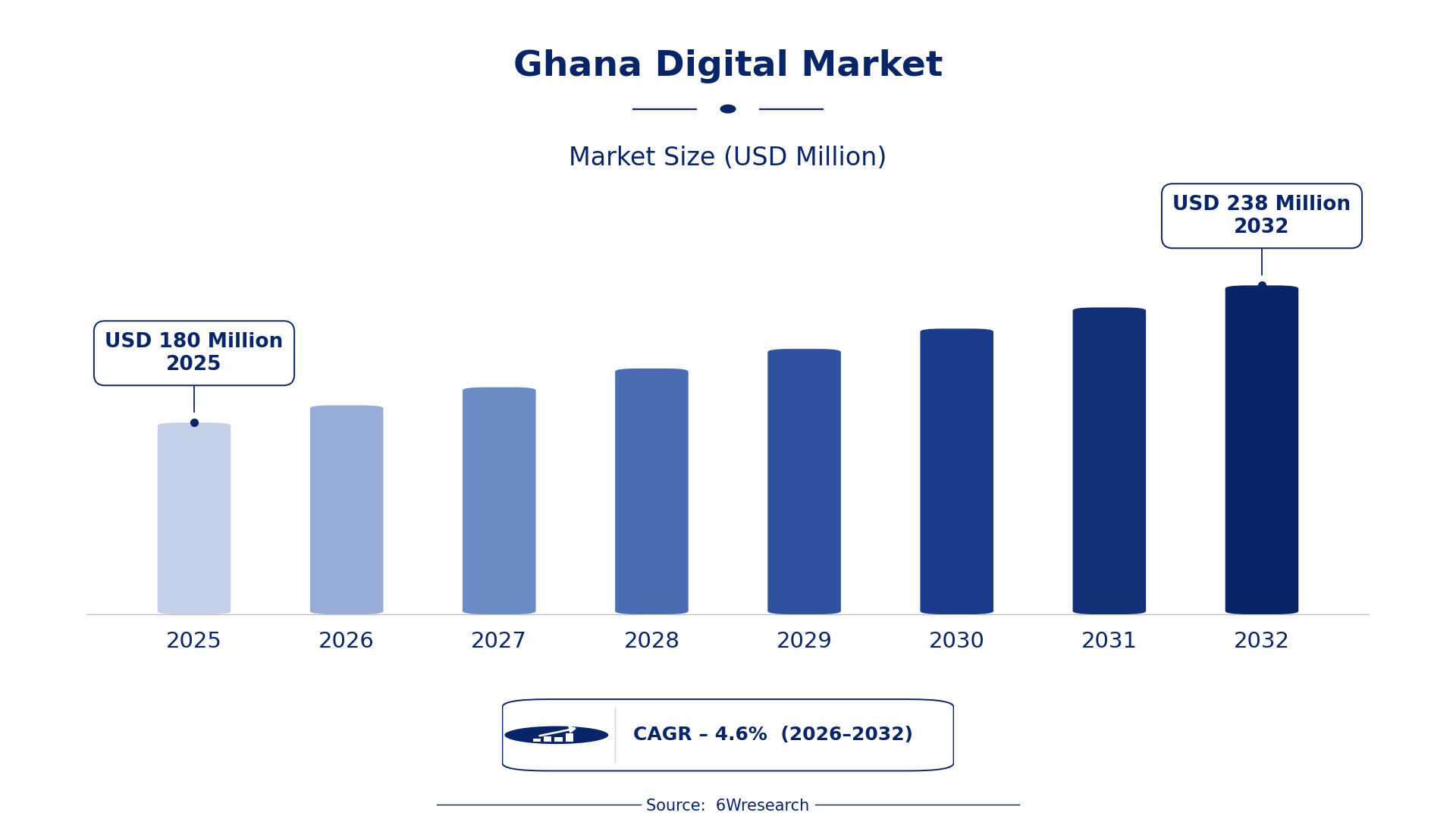
The Ghana Digital Market was estimated at USD 180 Million in 2025 and is projected to reach USD 238 Million by 2032, growing at a CAGR of 4.6% from 2026 to 2032.
Ghana Digital Market Synopsis
The rapid expansion of internet access is the most potent force currently shaping the Ghana Digital Market. With a young and tech-savvy population eager to embrace digital solutions, there’s a palpable shift toward online services, ranging from e-commerce to digital finance.
E-commerce platforms are witnessing increasing traction, driven by consumer demand for convenience and variety. Coupled with the growing popularity of mobile money services, the market is experiencing a transformative phase, changing how Ghanaians shop and transact.
Ghana Digital Market Year-wise Growth Rate and Key Drivers
This graph illustrates the annual growth rates of the Ghana Digital Market from 2021 to 2032, highlighting a steady upward trajectory and projected expansion over the forecast period.
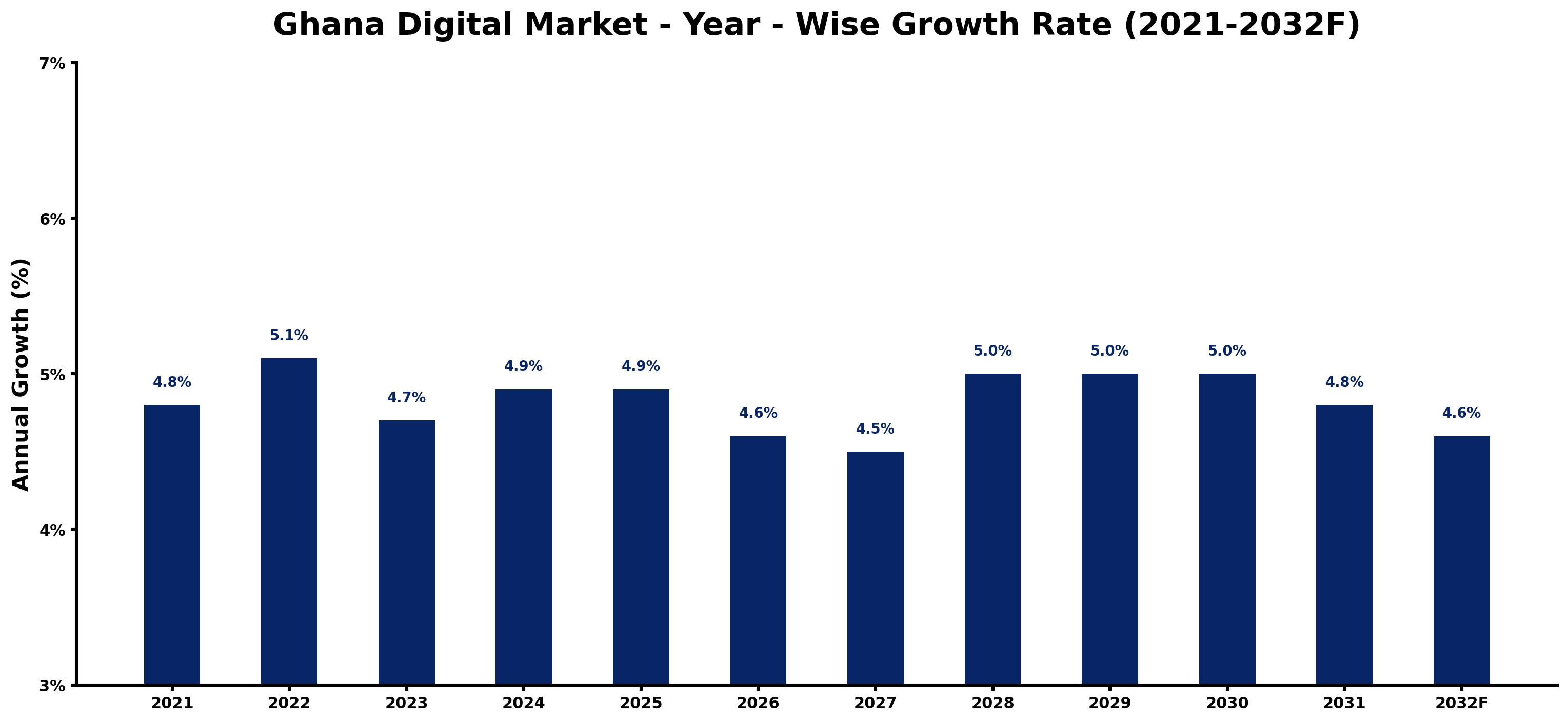
The table below presents the year‑wise growth rates along with the key drivers influencing the market
| Year | Growth Rate | Major Drivers |
| 2021 | 4.8% | Government's National Digital Transformation Strategy implementation boost. |
| 2022 | 5.1% | Increase in smartphone penetration enhancing digital accessibility. |
| 2023 | 4.7% | Rising e-commerce adoption fueled by urban youth demographics. |
| 2024 | 4.9% | Local startups attracting foreign investment in digital services. |
| 2025 | 4.9% | Regulatory support for fintech innovations driving sector growth. |
| 2026 | 4.6% | Improved internet infrastructure facilitating online business expansion. |
| 2027 | 4.5% | Digital education initiatives promoting new market entrants. |
| 2028 | 5.0% | Adoption of digital health services improving consumer engagement. |
| 2029 | 5.0% | Increased social media usage driving content consumption. |
| 2030 | 5.0% | Government initiatives supporting tech incubators bolster innovation. |
| 2031 | 4.8% | Growing awareness of cybersecurity needs enhancing digital trust. |
| 2032 | 4.6% | Growing fintech adoption spurring demand for digital solutions. |
Note: Market size estimations and growth projections presented in this report are based on 6Wresearch's proprietary forecasting methodology, utilizing the latest available industry data, government publications, and primary research inputs.
Ghana Digital Market Key Takeaways
Below are some of the specific key takeaways from the market, including:
- The digital market is significantly influenced by a young, tech-savvy population.
- Mobile money services are reshaping financial transactions and payment methods.
- E-commerce platforms are rapidly expanding, driven by consumer preferences.
- Government initiatives are fostering a supportive environment for digital entrepreneurship.
- Challenges like cybersecurity concerns and limited internet access need addressing.
Evaluation of Restraints in Ghana Digital Market
Despite its growth potential, the Ghana Digital Market faces several restraints. Limited internet connectivity remains a major hurdle, particularly in rural areas where access is patchy and costly. High data costs further discourage widespread adoption of digital services. Additionally, a pervasive lack of trust in online transactions, stemming from fears of fraud and inadequate cybersecurity measures, limits consumer engagement. The digital skills gap, especially among less educated populations, impedes the full utilization of available digital tools.
Ghana Digital Market Trends
The Ghana Digital Market is currently witnessing a surge in mobile commerce, with more consumers preferring to shop via mobile applications. Additionally, social media platforms are being increasingly harnessed for marketing and brand engagement, as businesses strive to connect with younger audiences. Digital marketing strategies are gaining traction, reflecting a shift in how companies approach customer interaction. on top of that, the interest in fintech solutions is escalating, with startups innovating to meet the growing demand for efficient financial services.
Ghana Digital Market Opportunities
Investment opportunities abound in the Ghana Digital Market, particularly in fintech and e-commerce. As internet penetration continues to rise, so does the demand for digital payment solutions and online shopping experiences. The government's commitment to enhancing digital infrastructure and fostering entrepreneurship creates an inviting atmosphere for investors. Companies that can introduce innovative solutions tailored to local needs stand to gain significantly as the market matures.
Government Initiatives in the Ghana Digital Market
The Ghanaian government is actively involved in shaping the digital market through various initiatives aimed at improving infrastructure and regulatory frameworks. These efforts are crucial for establishing a secure and conducive environment for digital transactions and innovation.
- A recently completed initiative, the National Digital Property Addressing System, aims to provide unique addresses, facilitating e-commerce logistics.
- The ongoing National Cyber Security Policy is designed to bolster trust in digital transactions by addressing cybersecurity threats.
- Currently underway is the Ghana Online Mall project, which seeks to promote local e-commerce businesses and enhance visibility.
- Upcoming is a national digital infrastructure upgrade programme expected to improve internet access across the country by 2026.
- The Electronic Transactions Act, enacted recently, establishes a legal framework for electronic transactions, ensuring consumer protection.
Future Insights of the Ghana Digital Market
Looking ahead to 2026-2032, the Ghana Digital Market is set for promising growth. Increased smartphone adoption and government initiatives to enhance digital infrastructure will likely drive e-commerce and digital payments further. The continued rise of fintech companies will play a critical role in transforming how Ghanaians interact with financial services, paving the way for a more integrated digital economy.
Ghana Digital Market Latest Developments
Recent developments in the Ghana Digital Market indicate a vibrant and evolving sector, marked by innovations and expansions. Over the last year, various initiatives have surfaced, reflecting the market's dynamic nature.
- A major technology vendor launched a new mobile payment platform in early 2025, aimed at simplifying transactions for small businesses.
- A regional operator is currently rolling out an internet access initiative in underserved areas, expected to enhance connectivity by mid-2025.
- A partnership between local startups and international investors is underway, focusing on developing e-commerce solutions tailored to the Ghanaian market.
- An upcoming fintech conference planned for late 2025 will showcase innovations and connect entrepreneurs with potential investors.
- A digital literacy campaign was completed in Q1 2025, targeting schools to equip students with essential digital skills.
Ghana Digital Market - Key Attractiveness of the Report
- 10 Years of Market Numbers
- Historical Data Starting from 2022 to 2025
- Base Year: 2025
- Forecast Data until 2032
- Key Performance Indicators Impacting the Market
- Major Upcoming Developments and Projects
Key Highlights of the Report:
- Ghana Digital Market Outlook
- Market Size of Ghana Digital Market, 2025
- Forecast of Ghana Digital Market, 2032
- Historical Data and Forecast of Ghana Digital Revenues & Volume for the Period 2022-2032F
- Ghana Digital Market Trend Evolution
- Ghana Digital Market Drivers and Challenges
- Ghana Digital Price Trends
- Ghana Digital Porter's Five Forces
- Ghana Digital Industry Life Cycle
- Historical Data and Forecast of Ghana Digital Market Revenues & Volume By Software for the Period 2022-2032F
- Historical Data and Forecast of Ghana Digital Market Revenues & Volume By CRM Software for the Period 2022-2032F
- Historical Data and Forecast of Ghana Digital Market Revenues & Volume By Email Marketing Software for the Period 2022-2032F
- Historical Data and Forecast of Ghana Digital Market Revenues & Volume By Social Media Advertising for the Period 2022-2032F
- Ghana Digital Import Export Trade Statistics
- Market Opportunity Assessment By Software
- Ghana Digital Top Companies Market Share
- Ghana Digital Competitive Benchmarking By Technical and Operational Parameters
- Ghana Digital Company Profiles
- Ghana Digital Key Strategic Recommendations






































