Ghana Modular Kitchen Market Size, Share & Growth Rate
The Ghana Modular Kitchen Market was estimated at USD 379 Million in 2025 and is projected to reach USD 538 Million by 2032, growing at a CAGR of 5.1% from 2026 to 2032. This growth trajectory is underpinned by a robust urbanization trend, as more Ghanaians seek modern and space-efficient kitchen solutions. With rising disposable incomes, there is an increased demand for aesthetically pleasing yet functional kitchen designs that cater to both residential and commercial sectors.
Ghana Modular Kitchen Market Year-wise Growth Rate and Key Drivers
This graph highlights how the Ghana Modular Kitchen Market has steadily grown over the years, supported by major growth factors.
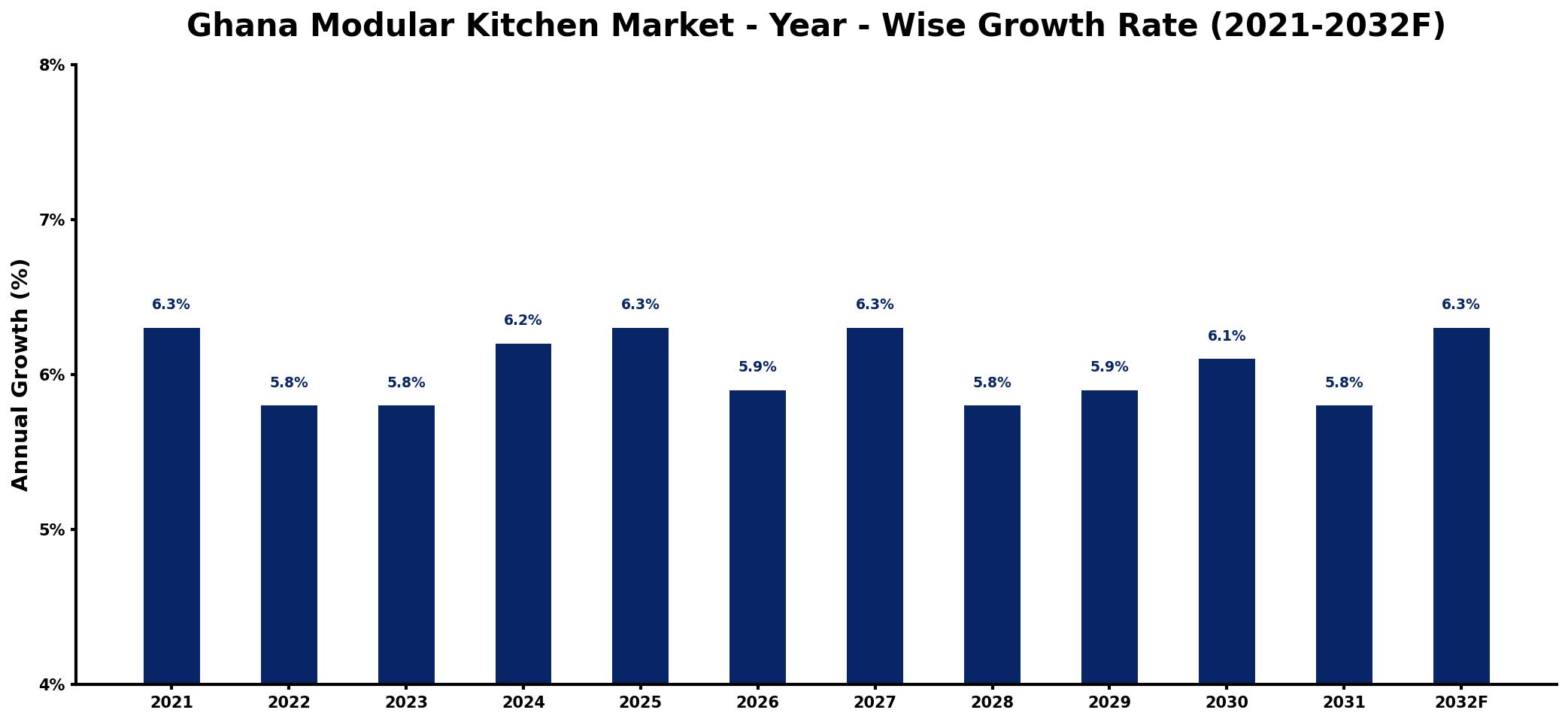
The table below presents the year‑wise growth rates along with the key drivers influencing the market
| Year | Growth Rate | Major Drivers |
| 2021 | 6.3% | Rising urbanization and population growth |
| 2022 | 5.8% | Increased disposable income levels |
| 2023 | 5.8% | Growing interest in home renovations |
| 2024 | 6.2% | Expansion of real estate projects |
| 2025 | 6.3% | Surge in luxury housing demand |
| 2026 | 5.9% | Emergence of eco-friendly materials |
| 2027 | 6.3% | Technological advancements in design |
| 2028 | 5.8% | Increase in commercial developments |
| 2029 | 5.9% | Rising popularity of smart homes |
| 2030 | 6.1% | Growth in interior design services |
| 2031 | 5.8% | Boost in lifestyle and aesthetics |
| 2032 | 6.3% | Higher investments in home improvement |
Note: Market size estimations and growth projections presented in this report are based on 6Wresearch's proprietary forecasting methodology, utilizing the latest available industry data, government publications, and primary research inputs.
Ghana Modular Kitchen Market Synopsis
In recent years, the Ghana modular kitchen market has experienced significant momentum, driven by evolving consumer preferences and a growing emphasis on ergonomic design. As the market matures, the shift towards customizable solutions and high-quality materials is expected to redefine consumer expectations and industry standards.
Looking ahead, the Ghana modular kitchen market is poised for a transformation, with increasing competition from both local and international players. This dynamic landscape is likely to encourage innovation, leading to enhanced product offerings that align with modern kitchen trends and sustainability considerations.
Ghana Modular Kitchen Market Key Takeaways
- The market is witnessing a shift towards sustainable and energy-efficient kitchen solutions.
- Urbanization is significantly driving demand for space-efficient modular kitchens.
- Customization and innovative materials are becoming key differentiators in the market.
- Partnerships between manufacturers and designers are enhancing product offerings.
- Government policies are fostering an environment conducive to market growth.
Evaluation of Restraints in Ghana Modular Kitchen Market
Despite its growth potential, the Ghana modular kitchen market faces several restraints that could hinder its progress. One notable challenge is the customization requirement, which necessitates standardized modular components to meet diverse consumer needs effectively. Additionally, the high upfront costs associated with modular kitchen installations can deter potential buyers, particularly in a market where traditional designs remain prevalent and often perceived as more economical. As consumers weigh the benefits of modular kitchens against these costs, manufacturers may need to focus on strategies that demonstrate long-term value and affordability.
Ghana Modular Kitchen Market Trends
Current trends in the Ghana modular kitchen market indicate a strong consumer preference for smart storage solutions and multifunctional designs that maximize limited spaces. Moreover, the integration of technology in kitchen appliances and fixtures is gaining traction, with a growing appetite for smart kitchens that enhance functionality and energy efficiency. Additionally, eco-friendly materials are becoming more popular, as consumers are increasingly concerned about sustainability and environmental impact.
Ghana Modular Kitchen Market Opportunities
The Ghana modular kitchen market presents numerous growth opportunities, particularly for brands that can innovate and provide customized solutions. There is a significant gap in the availability of affordable modular kitchen options tailored for the middle-income segment. This demographic is increasingly seeking modern kitchen designs that offer both style and functionality. Additionally, the ongoing real estate boom provides an expanding customer base as more residential and commercial projects incorporate modular kitchen solutions into their designs.
Government Initiatives in the Ghana Modular Kitchen Market
The Ghanaian government is actively promoting policies aimed at enhancing the quality and accessibility of modular kitchen solutions. Initiatives include establishing design standards and quality assurance mechanisms to ensure that modular kitchen products meet consumer expectations. By fostering collaborations between kitchen manufacturers, interior designers, and regulatory agencies, the government is working to elevate kitchen functionality, aesthetic appeal, and durability across both residential and commercial spaces.
Future Insights of the Ghana Modular Kitchen Market
From 2026 to 2032, the Ghana modular kitchen market is anticipated to undergo substantial evolution. As urbanization continues to reshape living spaces, the demand for innovative kitchen solutions will likely increase. Furthermore, with consumers prioritizing style and sustainability, manufacturers that adapt to these changing preferences will have a competitive edge. The anticipated growth in the housing sector, combined with rising incomes, is set to foster a thriving environment for modular kitchen solutions in the coming years.
Ghana Modular Kitchen Market Latest Developments (2025 - 2026)
Recent developments in the Ghana modular kitchen market indicate a shift towards enhanced collaboration among manufacturers and designers, resulting in more innovative and customizable solutions. There is a notable increase in awareness around the benefits of modular kitchens, leading to greater consumer interest. Furthermore, as sustainability becomes a focal point, several manufacturers are integrating eco-friendly practices into their production processes, aligning with global trends while addressing local market demands.
Ghana Modular Kitchen Market - Key Attractiveness of the Report
- 10 Years of Market Numbers
- Historical Data Starting from 2022 to 2025
- Base Year: 2025
- Forecast Data until 2032
- Key Performance Indicators Impacting the Market
- Major Upcoming Developments and Projects
Key Highlights of the Report:
- Ghana Modular Kitchen Market Outlook
- Market Size of Ghana Modular Kitchen Market, 2025
- Forecast of Ghana Modular Kitchen Market, 2032
- Historical Data and Forecast of Ghana Modular Kitchen Revenues & Volume for the Period 2022-2032F
- Ghana Modular Kitchen Market Trend Evolution
- Ghana Modular Kitchen Market Drivers and Challenges
- Ghana Modular Kitchen Price Trends
- Ghana Modular Kitchen Porter's Five Forces
- Ghana Modular Kitchen Industry Life Cycle
- Historical Data and Forecast of Ghana Modular Kitchen Market Revenues & Volume By Product for the Period 2022-2032F
- Historical Data and Forecast of Ghana Modular Kitchen Market Revenues & Volume By Floor Cabinet & Wall Cabinets for the Period 2022-2032F
- Historical Data and Forecast of Ghana Modular Kitchen Market Revenues & Volume By Tall Storage Cabinets for the Period 2022-2032F
- Historical Data and Forecast of Ghana Modular Kitchen Market Revenues & Volume By Others for the Period 2022-2032F
- Historical Data and Forecast of Ghana Modular Kitchen Market Revenues & Volume By End-User for the Period 2022-2032F
- Historical Data and Forecast of Ghana Modular Kitchen Market Revenues & Volume By Residential for the Period 2022-2032F
- Historical Data and Forecast of Ghana Modular Kitchen Market Revenues & Volume By Commercial for the Period 2022-2032F
- Historical Data and Forecast of Ghana Modular Kitchen Market Revenues & Volume By Distribution Channel for the Period 2022-2032F
- Historical Data and Forecast of Ghana Modular Kitchen Market Revenues & Volume By Offline (Contractors, Builders, and Others) for the Period 2022-2032F
- Historical Data and Forecast of Ghana Modular Kitchen Market Revenues & Volume By Online for the Period 2022-2032F
- Ghana Modular Kitchen Import Export Trade Statistics
- Market Opportunity Assessment By Product
- Market Opportunity Assessment By End-User
- Market Opportunity Assessment By Distribution Channel
- Ghana Modular Kitchen Top Companies Market Share
- Ghana Modular Kitchen Competitive Benchmarking By Technical and Operational Parameters
- Ghana Modular Kitchen Company Profiles
- Ghana Modular Kitchen Key Strategic Recommendations






































