Ghana Wine Market Summary
The ghana wine market was estimated at USD 202 Million in 2025 and is projected to reach USD 277 Million by 2032, growing at a CAGR of 5.6% from 2026 to 2032.
Ghana Wine Market Year-wise Growth Rate and Key Drivers
This graph highlights how the Ghana Wine Market has steadily grown over the past five years, supported by major growth factors.
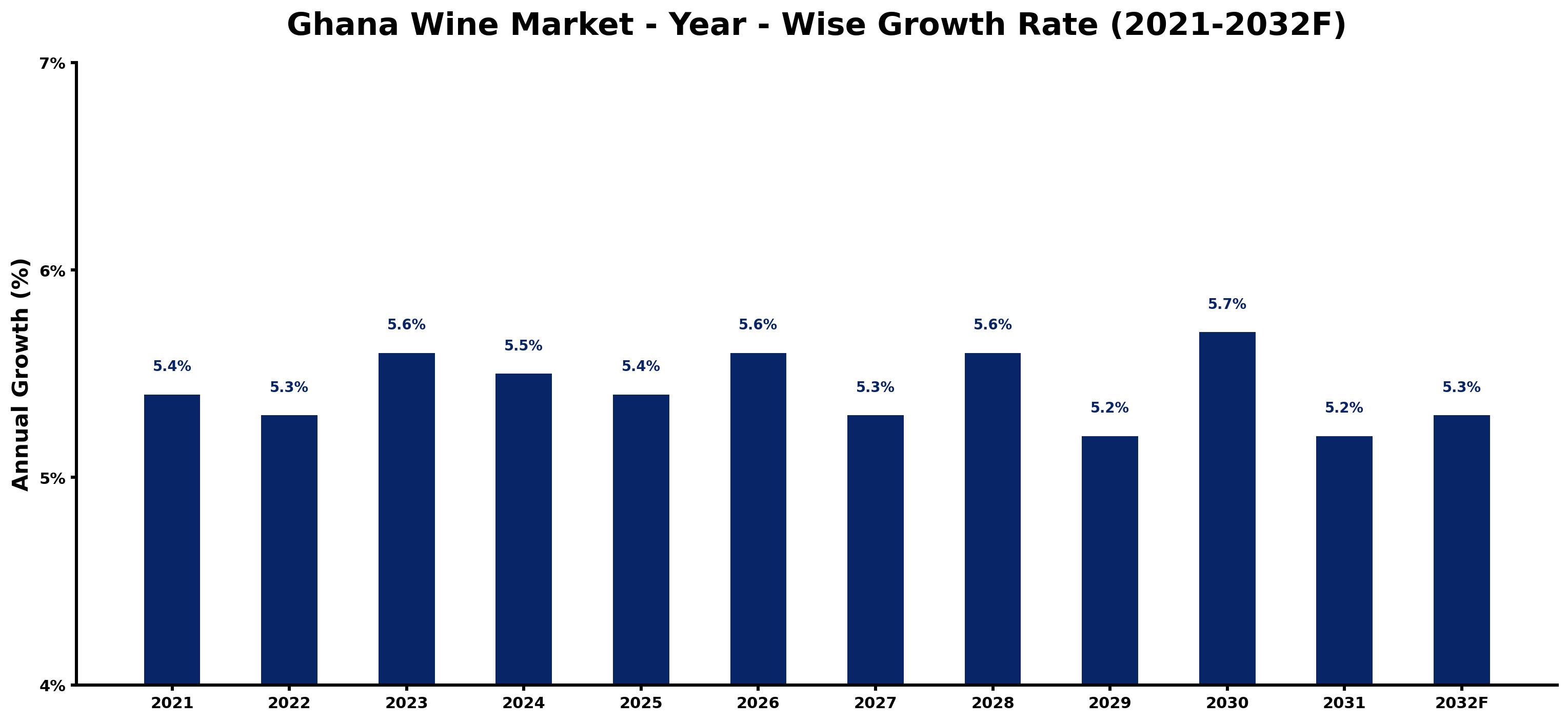
The table below presents the year wise growth rates along with the key drivers influencing the market
| Year | Growth Rate | Major Drivers |
| 2021 | 5.4% | Wine consumption among urban millennials starts to reshape traditional drinking habits. |
| 2022 | 5.3% | Local vineyards begin to gain recognition, enhancing the country's wine profile significantly. |
| 2023 | 5.6% | E-commerce platforms facilitate easier access to both local and international wine brands. |
| 2024 | 5.5% | Wine education programs introduce consumers to diverse tasting experiences and pairings. |
| 2025 | 5.4% | Tourism initiatives promote wine tourism, boosting local vineyard visits and sales. |
| 2026 | 5.6% | Social media influencers highlight wine culture, attracting younger audiences to premium selections. |
| 2027 | 5.3% | Improved distribution networks reduce costs, making wine more accessible to various demographics. |
| 2028 | 5.6% | Collaborations between Ghanaian winemakers and international experts create unique offerings. |
| 2029 | 5.2% | Health trends position moderate wine consumption as part of a balanced lifestyle. |
| 2030 | 5.7% | Sustainability practices in wineries attract environmentally conscious consumers and investors. |
| 2031 | 5.2% | Increased luxury spending among Ghanaians favors high-end wine brands and experiences. |
| 2032 | 5.3% | Culinary events celebrating local wines solidify cultural integration in the dining scene. |
Note - Market size estimations and growth projections presented in this report are based on 6Wresearch's advanced forecasting approach, validated with industry datasets as of June 2026.
Ghana Wine Market Synopsis
The Ghana Wine Market is projected to reach 5.6% and witness significant growth during the forecast period (2026-2032). The anticipated expansion can be linked to several key factors, including an increase in premium wine consumption, rising disposable income levels, and a burgeoning demographic of young adults willing to explore diverse alcoholic beverage options. Furthermore, evolving consumer tastes and lifestyles are contributing to the dynamic nature of this market segment.
Ghana Wine Market Growth Drivers
The growth momentum in the Ghana Wine Market is underpinned by various drivers that influence consumer behavior and market dynamics:
- Increasing disposable income among Ghana's population enables consumers to indulge in premium and imported wine varieties, thereby driving sales.
- A growing young adult demographic, characterized by a willingness to experiment, fosters a culture of diverse wine appreciation and consumption.
- Infrastructure development, particularly transportation networks, expands distribution channels, allowing international manufacturers to access the Ghanaian market more easily.
- Strategic marketing initiatives focused on brand awareness and consumer education increase the visibility and attractiveness of wine products across different demographics.
- Changing lifestyles and an inclination towards social drinking in urban settings promote wine consumption as part of social gatherings and celebrations.
Ghana Wine Market Trends and Opportunities
The Ghana Wine Market is witnessing several trends that present significant opportunities for growth and investment:
- The trend towards health consciousness is notable, as many consumers are opting for wines perceived as healthier alternatives to other alcoholic beverages.
- Wine tourism is emerging as a unique segment, with increased interest in vineyard tours and tasting experiences enhancing consumer engagement with the product.
- Online sales platforms are gaining traction, providing consumers with convenient access to a broader assortment of wine options and enhancing purchasing experiences.
- Local wineries are beginning to develop, promoting domestic production and sustainability while catering to local tastes and preferences.
- Collaborative marketing efforts between wine distributors and hospitality sectors can drive wine consumption within restaurants and bars, creating a symbiotic growth environment.
Ghana Wine Market Challenges and Restraints
While the Ghana Wine Market is poised for growth, various challenges could potentially hinder progress:
- The presence of competing alcoholic beverages, particularly local options, may limit the market share of wine as consumers can be more price-sensitive.
- Import tariffs and regulations can act as a barrier to entry for foreign wine producers, affecting pricing and availability.
- Inadequate distribution infrastructure in rural areas can restrict market access and limit the spread of wine consumption across the country.
- Consumer education regarding wine varieties and proper consumption practices remains a necessity to foster a wine culture.
- Economic fluctuations could influence discretionary spending on luxury items, including premium wines, possibly impacting demand.
Ghana Wine Market Government Investment and Initiatives
The government of Ghana has recognized the potential of the wine industry and is taking steps to enhance market growth through various initiatives:
- Investment in transportation infrastructure is aimed at improving logistics for wine distribution, allowing broader market reach for both local and imported wines.
- Policy frameworks are being developed to encourage local production and investment in wine-making facilities, which could bolster the domestic wine industry.
- Public awareness campaigns aimed at educating consumers about wine can enhance appreciation and demand, contributing to market growth.
- Tax incentives for locally produced wines may encourage entrepreneurship within the industry and stimulate economic development.
- The government is also exploring partnerships with international wine organizations to promote quality standards and modernization within the sector.
Ghana Wine Market Latest Developments (May 2025 - June 2026)
In the recent period from May 2025 to June 2026, the Ghana Wine Market has seen notable developments that reflect its evolving landscape:
- Increased participation in international wine expos has heightened visibility for Ghanaian wine producers, showcasing local talents and products to a global audience.
- Various wine-related festivals have emerged, attracting both local and international visitors and promoting wine culture in Ghana.
- Retail channels have expanded, with more supermarkets and specialty stores dedicating sections for wine, enhancing consumer access to different products.
- The introduction of new wine labels from international markets has enriched the variety available, responding to consumer demand for diversity.
- Collaborations between local businesses and foreign wine brands have been initiated to create exclusive product offerings, combining local and international flavors.
Ghana Wine Market - Key Attractiveness of the Report
- 10 Years of Market Numbers
- Historical Data Starting from 2022 to 2025
- Base Year: 2025
- Forecast Data until 2032
- Key Performance Indicators Impacting the Market
- Major Upcoming Developments and Projects
Key Highlights of the Report:
- Ghana Wine Market Outlook
- Market Size of Ghana Wine Market, 2025
- Forecast of Ghana Wine Market, 2032F
- Historical Data and Forecast of Ghana Wine Revenues & Volume for the Period 2022-2032F
- Ghana Wine Market Trend Evolution
- Ghana Wine Market Drivers and Challenges
- Ghana Wine Price Trends
- Ghana Wine Porter's Five Forces
- Ghana Wine Industry Life Cycle
- Historical Data and Forecast of Ghana Wine Market Revenues & Volume By Product Types for the Period 2022-2032F
- Historical Data and Forecast of Ghana Wine Market Revenues & Volume By Still Wine for the Period 2022-2032F
- Historical Data and Forecast of Ghana Wine Market Revenues & Volume By Sparkling Wine for the Period 2022-2032F
- Historical Data and Forecast of Ghana Wine Market Revenues & Volume By Dessert Wine for the Period 2022-2032F
- Historical Data and Forecast of Ghana Wine Market Revenues & Volume By Fortified Wine for the Period 2022-2032F
- Historical Data and Forecast of Ghana Wine Market Revenues & Volume By Colors for the Period 2022-2032F
- Historical Data and Forecast of Ghana Wine Market Revenues & Volume By Red Wine for the Period 2022-2032F
- Historical Data and Forecast of Ghana Wine Market Revenues & Volume By Rose Wine for the Period 2022-2032F
- Historical Data and Forecast of Ghana Wine Market Revenues & Volume By White Wine for the Period 2022-2032F
- Historical Data and Forecast of Ghana Wine Market Revenues & Volume By Other Colors for the Period 2022-2032F
- Historical Data and Forecast of Ghana Wine Market Revenues & Volume By Distribution Channel for the Period 2022-2032F
- Historical Data and Forecast of Ghana Wine Market Revenues & Volume By Offline for the Period 2022-2032F
- Historical Data and Forecast of Ghana Wine Market Revenues & Volume By Online for the Period 2022-2032F
- Ghana Wine Import Export Trade Statistics
- Market Opportunity Assessment By Product Types
- Market Opportunity Assessment By Colors
- Market Opportunity Assessment By Distribution Channel
- Ghana Wine Top Companies Market Share
- Ghana Wine Competitive Benchmarking By Technical and Operational Parameters
- Ghana Wine Company Profiles
- Ghana Wine Key Strategic Recommendations






































