Greece Driving Simulator Market Size (2020-2030)
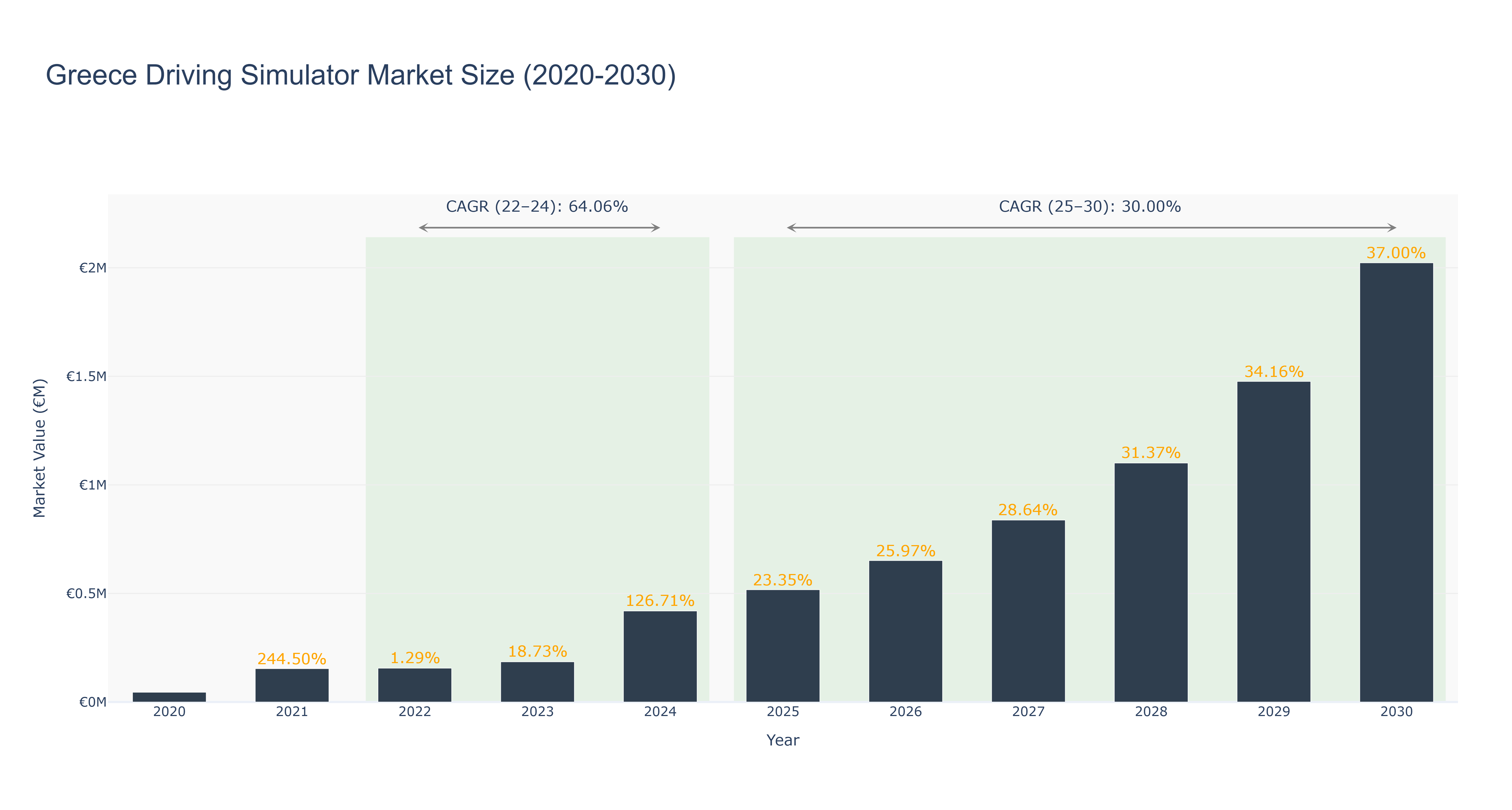
The Greece Driving Simulator Market has shown a significant growth trend over the years. The peak market size of €2.02 million is forecasted for 2030, with an impressive CAGR of 37.00%. Notable market size increases were observed from 2020 to 2024, driven by advancements in technology and increasing demand for immersive driving experiences. The current CAGR (2025-30) stands at 30.0%, indicating a steady growth trajectory. The market's expansion is fueled by factors such as the rising popularity of simulation-based training in the automotive industry and the continuous innovation in virtual reality technologies. Looking ahead, upcoming projects in Greece, such as the integration of artificial intelligence algorithms for enhanced simulation experiences, are expected to further boost market growth and solidify the country's position in the driving simulator market.
Greece Driving Simulator Market: Production & Trade Performance (2019-2025)
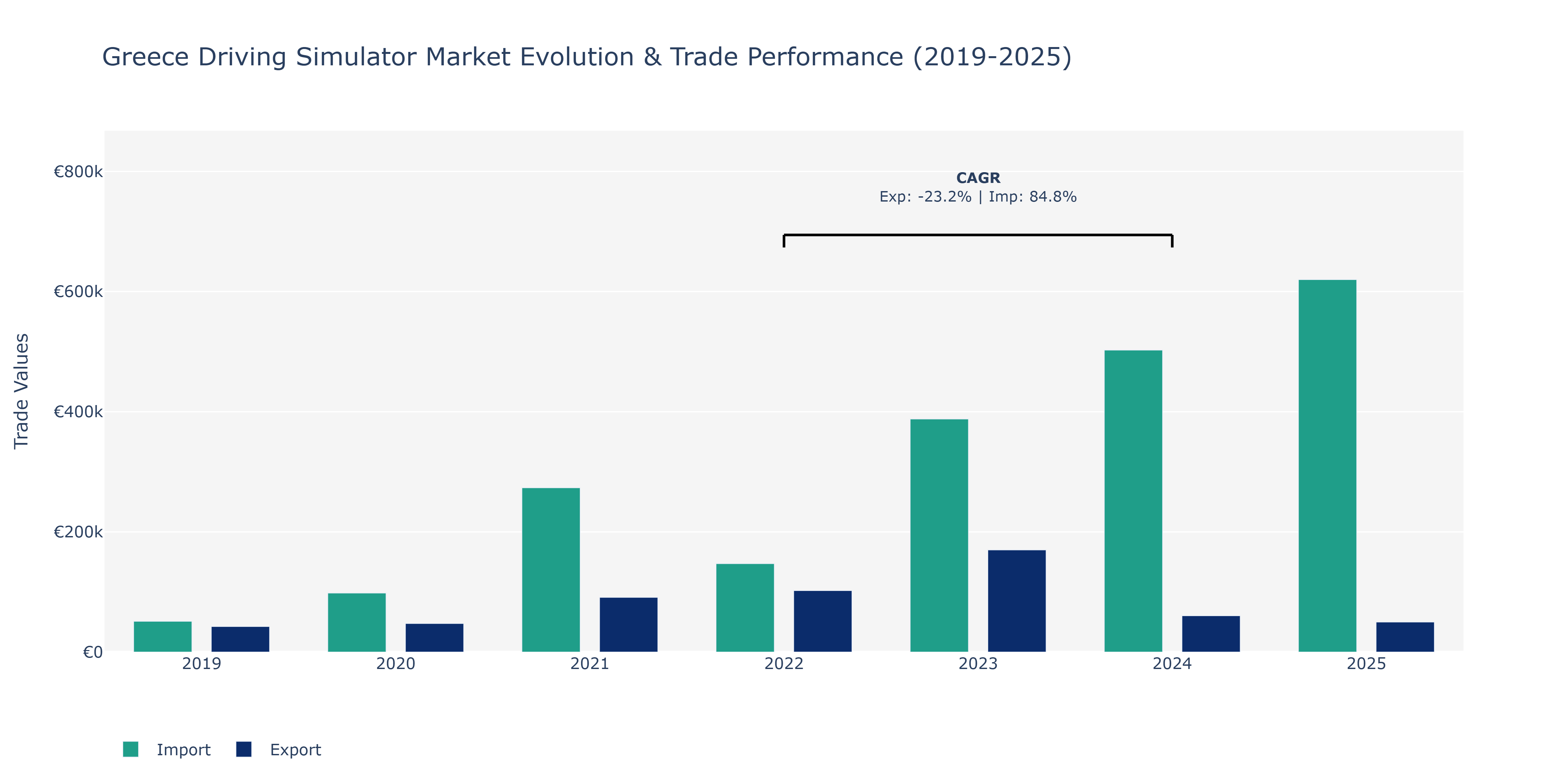
Between 2019 and 2025, the Greece Driving Simulator Market witnessed notable shifts in Exports and Imports. Exports showed a general upward trajectory, rising from €42.47 thousand in 2019 to a peak of €169.99 thousand in 2023 before dropping to €49.88 thousand in 2025. In contrast, Imports experienced substantial fluctuations, starting at €51.17 thousand in 2019, peaking at €619.90 thousand in 2025. The surge in Imports can be attributed to Greece's efforts to modernize its driving simulator technology through the procurement of advanced equipment and software from international markets. The decline in Exports post-2023 may reflect a temporary market saturation or a shift in domestic demand dynamics. These trends highlight the market's responsiveness to technological advancements and evolving consumer preferences, necessitating continuous innovation to maintain competitiveness in the global driving simulator sector.
Key Highlights of the Report:
- Greece Driving Simulator Market Outlook
- Market Size of Greece Driving Simulator Market, 2025
- Forecast of Greece Driving Simulator Market, 2032
- Historical Data and Forecast of Greece Driving Simulator Revenues & Volume for the Period 2022-2032F
- Greece Driving Simulator Market Trend Evolution
- Greece Driving Simulator Market Drivers and Challenges
- Greece Driving Simulator Price Trends
- Greece Driving Simulator Porter`s Five Forces
- Greece Driving Simulator Industry Life Cycle
- Historical Data and Forecast of Greece Driving Simulator Market Revenues & Volume By Application for the Period 2022-2032F
- Historical Data and Forecast of Greece Driving Simulator Market Revenues & Volume By Training for the Period 2022-2032F
- Historical Data and Forecast of Greece Driving Simulator Market Revenues & Volume By Research & Testing for the Period 2022-2032F
- Historical Data and Forecast of Greece Driving Simulator Market Revenues & Volume By Vehicle Type for the Period 2022-2032F
- Historical Data and Forecast of Greece Driving Simulator Market Revenues & Volume By Car Simulator for the Period 2022-2032F
- Historical Data and Forecast of Greece Driving Simulator Market Revenues & Volume By Truck & Bus Simulator for the Period 2022-2032F
- Historical Data and Forecast of Greece Driving Simulator Market Revenues & Volume By Simulator Type for the Period 2022-2032F
- Historical Data and Forecast of Greece Driving Simulator Market Revenues & Volume By Training Simulator for the Period 2022-2032F
- Historical Data and Forecast of Greece Driving Simulator Market Revenues & Volume By Advanced Driving Simulator for the Period 2022-2032F
- Greece Driving Simulator Import Export Trade Statistics
- Market Opportunity Assessment By Application
- Market Opportunity Assessment By Vehicle Type
- Market Opportunity Assessment By Simulator Type
- Greece Driving Simulator Top Companies Market Share
- Greece Driving Simulator Competitive Benchmarking By Technical and Operational Parameters
- Greece Driving Simulator Company Profiles
- Greece Driving Simulator Key Strategic Recommendations






































