Guyana Edible Oils Market Top 5 Importing Countries and Market Competition (HHI) Analysis
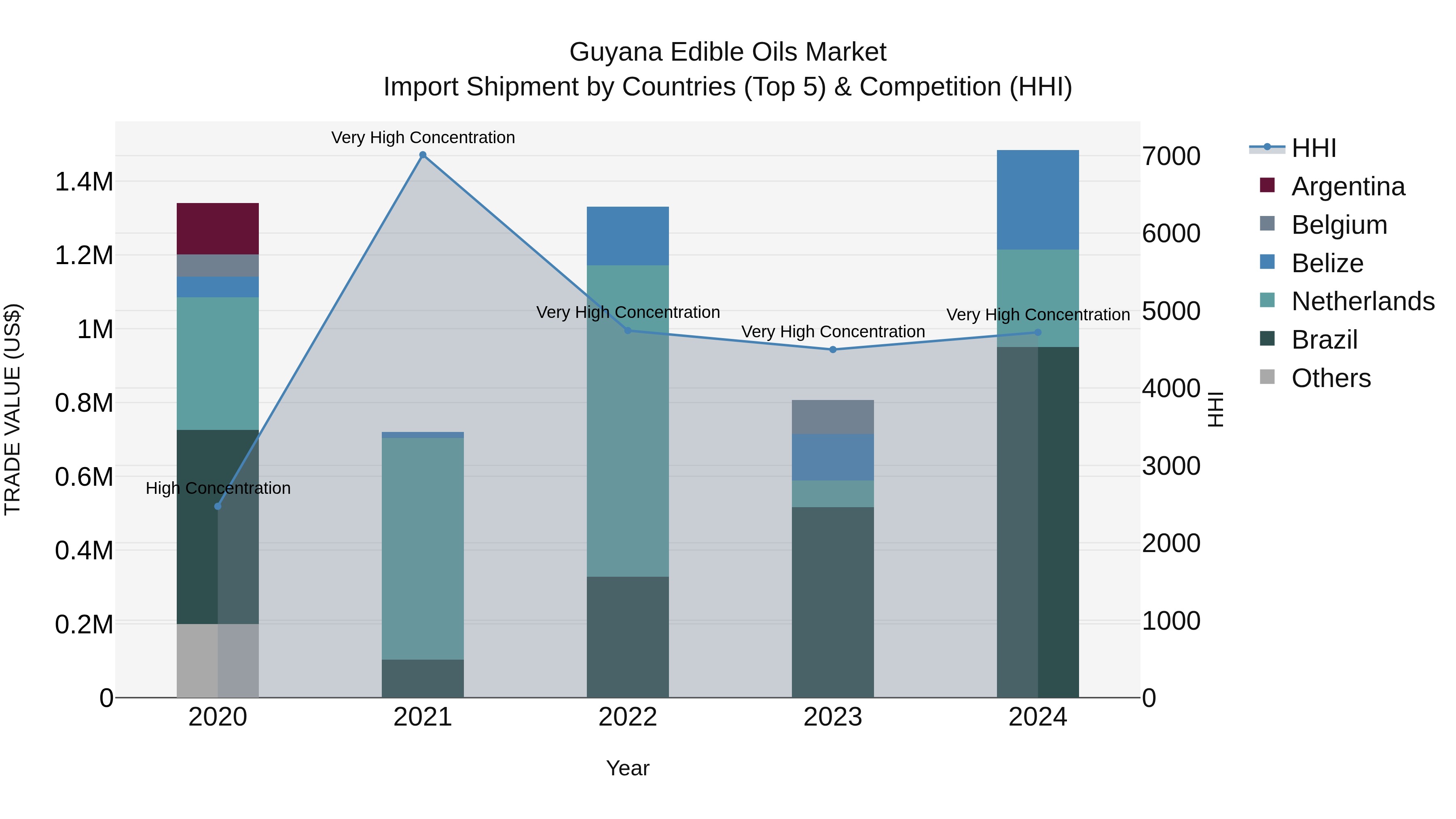
Guyana`s edible oils import market continued to see strong growth in 2024, with top exporting countries such as Brazil, Belize, and the Netherlands leading the way. The high Herfindahl-Hirschman Index (HHI) indicates a concentrated market, while the impressive Compound Annual Growth Rate (CAGR) of 2.58% from 2020 to 2024 reflects sustained expansion. The remarkable growth rate of 83.95% from 2023 to 2024 highlights the increasing demand for edible oils in Guyana, making it an attractive market for exporters to capitalize on.
Key Highlights of the Report:
- Guyana Edible Oils Market Outlook
- Market Size of Guyana Edible Oils Market, 2025
- Forecast of Guyana Edible Oils Market, 2032
- Historical Data and Forecast of Guyana Edible Oils Revenues & Volume for the Period 2022 - 2032F
- Guyana Edible Oils Market Trend Evolution
- Guyana Edible Oils Market Drivers and Challenges
- Guyana Edible Oils Price Trends
- Guyana Edible Oils Porter`s Five Forces
- Guyana Edible Oils Industry Life Cycle
- Historical Data and Forecast of Guyana Edible Oils Market Revenues & Volume By Type for the Period 2022 - 2032F
- Historical Data and Forecast of Guyana Edible Oils Market Revenues & Volume By Palm Oil for the Period 2022 - 2032F
- Historical Data and Forecast of Guyana Edible Oils Market Revenues & Volume By Soybean Oil for the Period 2022 - 2032F
- Historical Data and Forecast of Guyana Edible Oils Market Revenues & Volume By Sunflower Oil for the Period 2022 - 2032F
- Historical Data and Forecast of Guyana Edible Oils Market Revenues & Volume By Rapeseed Oil for the Period 2022 - 2032F
- Historical Data and Forecast of Guyana Edible Oils Market Revenues & Volume By Olive Oil for the Period 2022 - 2032F
- Historical Data and Forecast of Guyana Edible Oils Market Revenues & Volume By Packaging Type for the Period 2022 - 2032F
- Historical Data and Forecast of Guyana Edible Oils Market Revenues & Volume By Pouches for the Period 2022 - 2032F
- Historical Data and Forecast of Guyana Edible Oils Market Revenues & Volume By Jars for the Period 2022 - 2032F
- Historical Data and Forecast of Guyana Edible Oils Market Revenues & Volume By Cans for the Period 2022 - 2032F
- Historical Data and Forecast of Guyana Edible Oils Market Revenues & Volume By Bottles for the Period 2022 - 2032F
- Historical Data and Forecast of Guyana Edible Oils Market Revenues & Volume By End Use for the Period 2022 - 2032F
- Historical Data and Forecast of Guyana Edible Oils Market Revenues & Volume By Domestic for the Period 2022 - 2032F
- Historical Data and Forecast of Guyana Edible Oils Market Revenues & Volume By Food Service for the Period 2022 - 2032F
- Historical Data and Forecast of Guyana Edible Oils Market Revenues & Volume By Industrial for the Period 2022 - 2032F
- Guyana Edible Oils Import Export Trade Statistics
- Market Opportunity Assessment By Type
- Market Opportunity Assessment By Packaging Type
- Market Opportunity Assessment By End Use
- Guyana Edible Oils Top Companies Market Share
- Guyana Edible Oils Competitive Benchmarking By Technical and Operational Parameters
- Guyana Edible Oils Company Profiles
- Guyana Edible Oils Key Strategic Recommendations






































