Hungary Ascorbic Acid Market: Import Trend Analysis
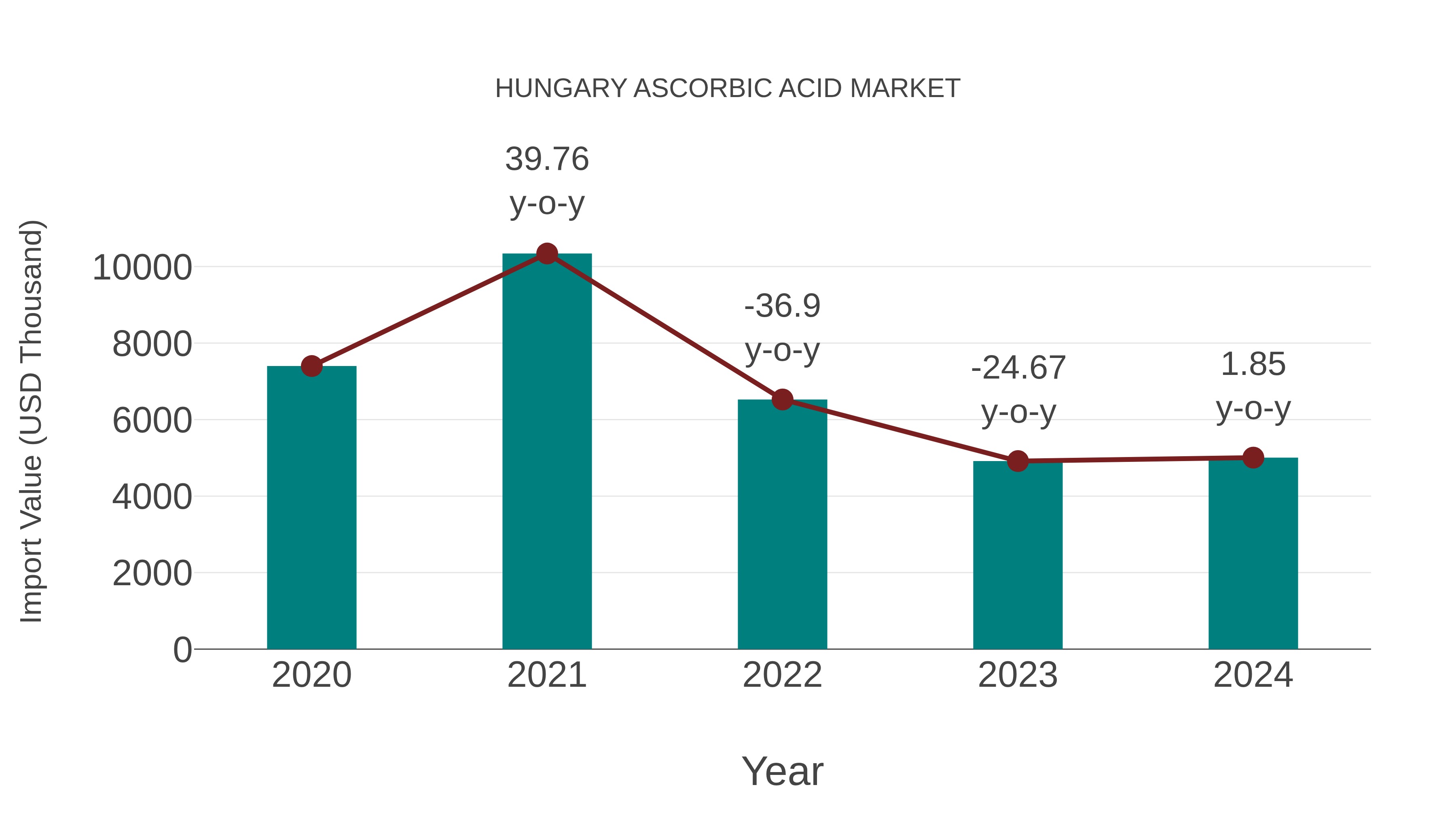
In the Hungary ascorbic acid market, import trends showed a growth rate of 1.85% from 2023 to 2024, contrasting with a compound annual growth rate (CAGR) of -9.31% from 2020 to 2024. The significant improvement in import momentum in 2024 may be attributed to shifts in demand or market stabilization efforts.
Hungary Ascorbic Acid Market Synopsis
The Hungary Ascorbic Acid market is experiencing steady growth driven by the increasing awareness of the health benefits of Vitamin C and its applications in various industries such as food and beverage, pharmaceuticals, and cosmetics. The demand for ascorbic acid is also bolstered by its antioxidant properties and role in boosting immunity. The market is characterized by the presence of key players offering a wide range of ascorbic acid products, including powder and liquid forms. Additionally, the rising trend of incorporating natural and organic ingredients in products is expected to further fuel the demand for ascorbic acid in Hungary. The market is highly competitive, with players focusing on product innovation, quality, and pricing strategies to gain a competitive edge in the market.
Hungary Ascorbic Acid Market Trends
The Hungary Ascorbic Acid market is experiencing steady growth due to the increasing demand for vitamin C supplements and fortified food products. Consumers are becoming more health-conscious and are seeking products that boost immunity and overall well-being. The COVID-19 pandemic has also contributed to the rise in demand for ascorbic acid as people look for ways to support their immune systems. Additionally, the food and beverage industry in Hungary is incorporating ascorbic acid into various products such as juices, snacks, and supplements to cater to the growing consumer interest in functional foods. As a result, manufacturers are focusing on expanding their product offerings and improving distribution channels to capitalize on the emerging opportunities in the market.
Hungary Ascorbic Acid Market Challenges
In the Hungary Ascorbic Acid market, several challenges are faced, including increasing competition from low-cost suppliers in other regions, fluctuating raw material prices, and changing regulatory requirements. The presence of counterfeit products in the market also poses a threat to the credibility and reputation of established brands. Additionally, consumer demand for natural and organic alternatives to synthetic ascorbic acid is on the rise, requiring companies to innovate and adapt to changing preferences. Supply chain disruptions and logistical issues can further impact the market, especially in times of global crises or economic uncertainties. Overall, companies operating in the Hungary Ascorbic Acid market need to navigate these challenges effectively to maintain their market position and drive growth in a competitive environment.
Hungary Ascorbic Acid Market Investment Opportunities
In the Hungary Ascorbic Acid market, there are several investment opportunities available for potential investors. With the growing awareness of the health benefits of vitamin C and its widespread use in various industries such as food and beverage, pharmaceuticals, and cosmetics, there is a steady demand for ascorbic acid in Hungary. Investing in companies that manufacture or distribute ascorbic acid products could be a lucrative opportunity. Additionally, there is potential for growth in the market as more consumers are seeking natural and healthy products, driving the demand for ascorbic acid sourced from natural ingredients. Furthermore, investing in research and development for innovative applications of ascorbic acid could also yield promising returns in the Hungary market.
Jordan Agar Market Government Policies
Government policies related to the Hungary Ascorbic Acid Market focus on ensuring the safety, quality, and compliance of ascorbic acid products. The Hungarian government, through agencies like the National Food Chain Safety Office (NEBIH), regulates the production, import, and distribution of ascorbic acid to protect consumer health and prevent misleading information. Additionally, there are guidelines in place to monitor the labeling, packaging, and advertising of ascorbic acid products to ensure transparency and accuracy in the market. The government also promotes research and innovation in the industry to enhance the competitiveness and sustainability of the Hungary Ascorbic Acid Market while adhering to national and international standards.
Hungary Ascorbic Acid Market Future Outlook
The Hungary Ascorbic Acid market is expected to witness moderate growth in the coming years due to increasing awareness about the health benefits of vitamin C and its applications in the food and beverage, pharmaceutical, and personal care industries. The rising demand for dietary supplements and fortified foods, coupled with the growing trend of preventive healthcare, is likely to drive market growth. Additionally, the expanding pharmaceutical sector and the increasing use of ascorbic acid in skincare products are anticipated to further boost market demand. However, factors such as fluctuating raw material prices and regulatory constraints may pose challenges to market growth. Overall, with the growing emphasis on health and wellness, the Hungary Ascorbic Acid market is poised for steady expansion in the foreseeable future.
Key Highlights of the Report:
- Hungary Ascorbic Acid Market Outlook
- Market Size of Hungary Ascorbic Acid Market, 2025
- Forecast of Hungary Ascorbic Acid Market, 2032
- Historical Data and Forecast of Hungary Ascorbic Acid Revenues & Volume for the Period 2022 - 2032F
- Hungary Ascorbic Acid Market Trend Evolution
- Hungary Ascorbic Acid Market Drivers and Challenges
- Hungary Ascorbic Acid Price Trends
- Hungary Ascorbic Acid Porter's Five Forces
- Hungary Ascorbic Acid Industry Life Cycle
- Historical Data and Forecast of Hungary Ascorbic Acid Market Revenues & Volume By Grade for the Period 2022 - 2032F
- Historical Data and Forecast of Hungary Ascorbic Acid Market Revenues & Volume By Food & Pharmaceutical for the Period 2022 - 2032F
- Historical Data and Forecast of Hungary Ascorbic Acid Market Revenues & Volume By Industrial for the Period 2022 - 2032F
- Historical Data and Forecast of Hungary Ascorbic Acid Market Revenues & Volume By Application for the Period 2022 - 2032F
- Historical Data and Forecast of Hungary Ascorbic Acid Market Revenues & Volume By Food & Beverages for the Period 2022 - 2032F
- Historical Data and Forecast of Hungary Ascorbic Acid Market Revenues & Volume By Pharmaceutical for the Period 2022 - 2032F
- Historical Data and Forecast of Hungary Ascorbic Acid Market Revenues & Volume By Cosmetics for the Period 2022 - 2032F
- Historical Data and Forecast of Hungary Ascorbic Acid Market Revenues & Volume By Chemicals for the Period 2022 - 2032F
- Historical Data and Forecast of Hungary Ascorbic Acid Market Revenues & Volume By Agriculture for the Period 2022 - 2032F
- Historical Data and Forecast of Hungary Ascorbic Acid Market Revenues & Volume By Others for the Period 2022 - 2032F
- Hungary Ascorbic Acid Import Export Trade Statistics
- Market Opportunity Assessment By Grade
- Market Opportunity Assessment By Application
- Hungary Ascorbic Acid Top Companies Market Share
- Hungary Ascorbic Acid Competitive Benchmarking By Technical and Operational Parameters
- Hungary Ascorbic Acid Company Profiles
- Hungary Ascorbic Acid Key Strategic Recommendations






































