Hungary Bamboos Market Size Growth Rate
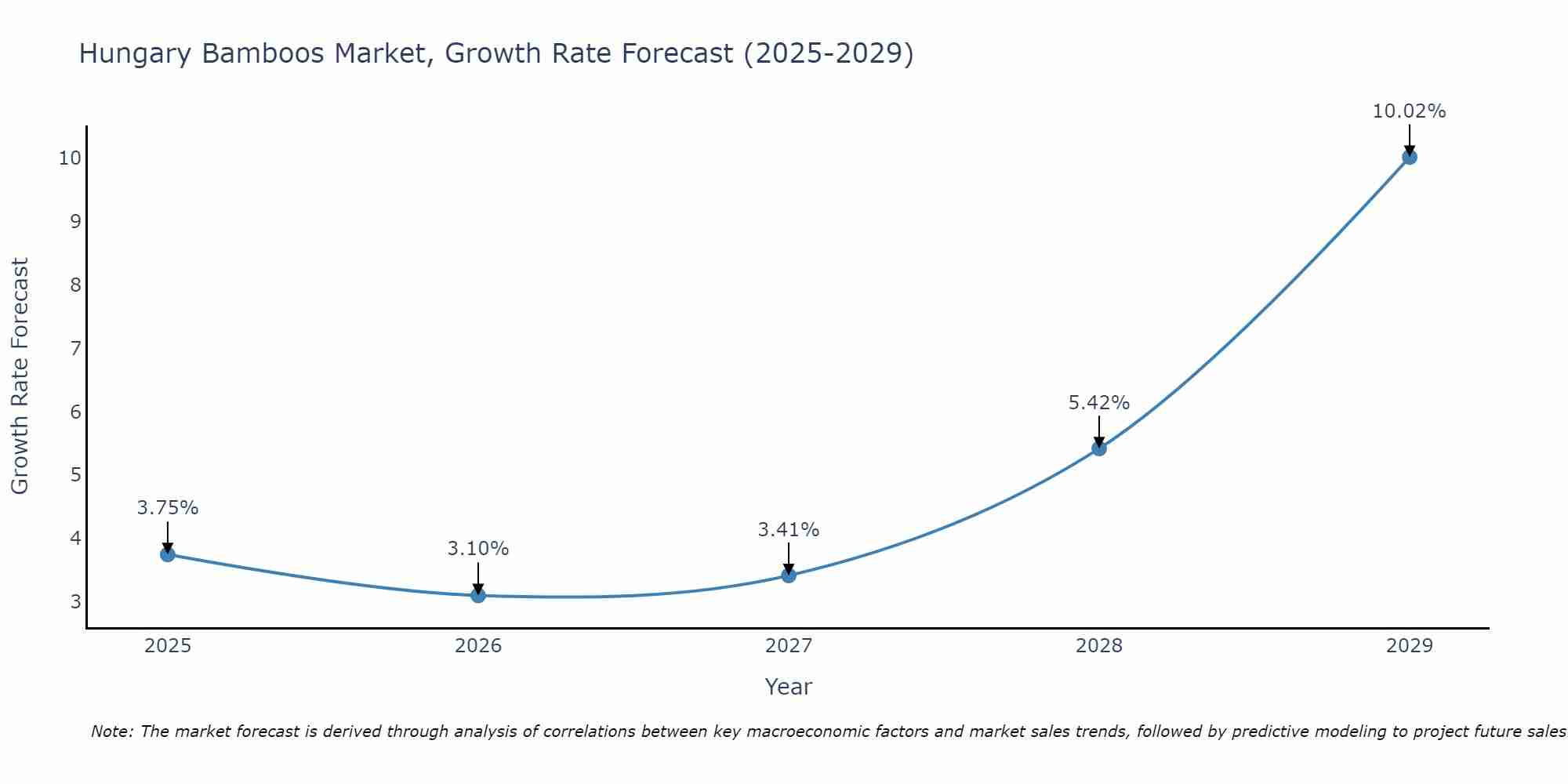
The Hungary Bamboos Market is projected to witness mixed growth rate patterns during 2025 to 2029. Commencing at 3.75% in 2025, growth builds up to 10.02% by 2029.
Bamboos Market: Hungary vs Top 5 Major Economies in 2027 (Europe)
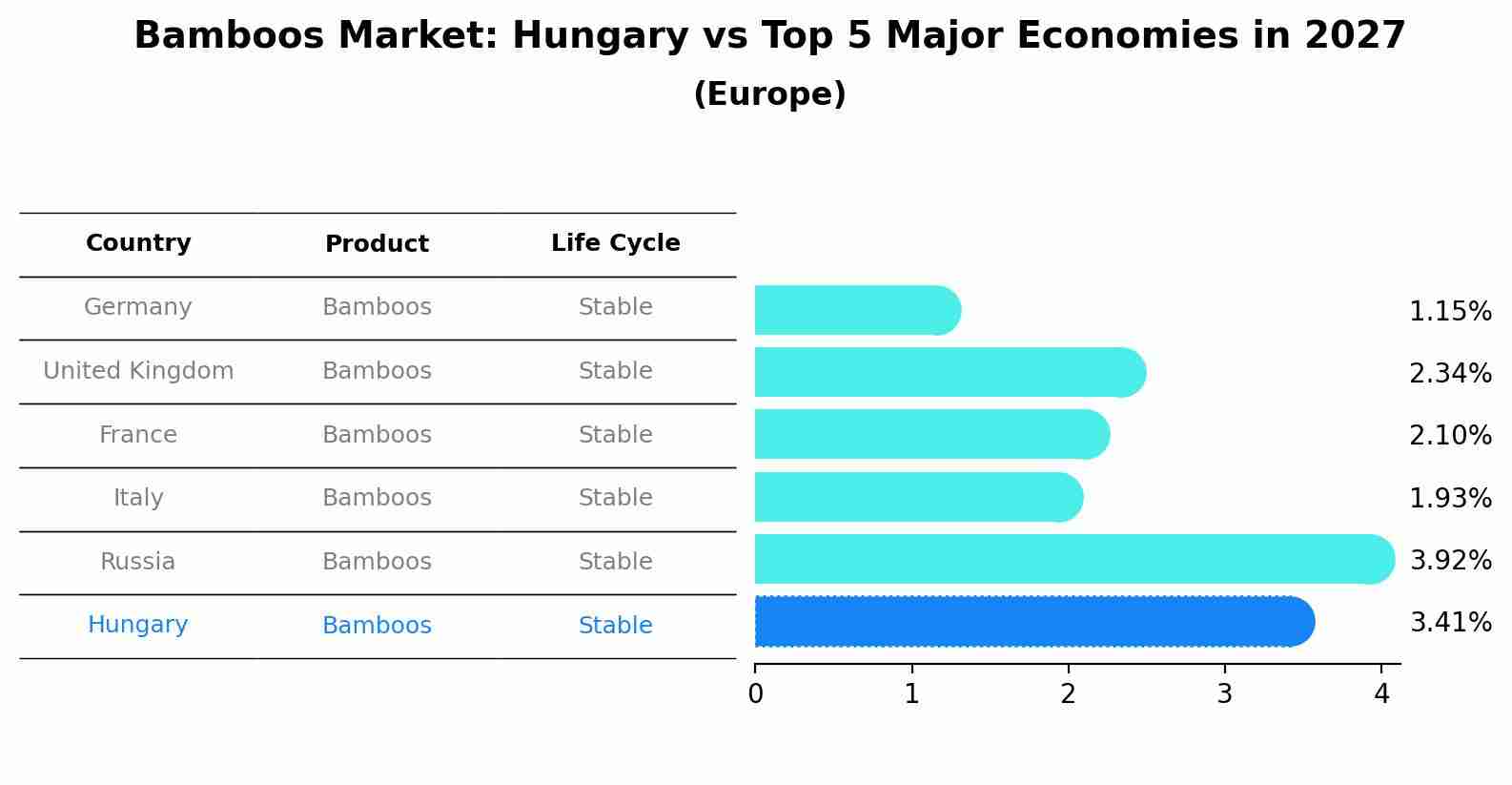
In the Europe region, the Bamboos market in Hungary is projected to expand at a stable growth rate of 3.41% by 2027. The largest economy is Germany, followed by United Kingdom, France, Italy and Russia.
Hungary Bamboos Market Overview
The Hungary Bamboo Market is experiencing steady growth due to the increasing demand for eco-friendly and sustainable products. Bamboo is widely used in various industries such as construction, textiles, and household goods for its versatility and durability. The market is driven by the growing awareness among consumers about the environmental benefits of bamboo, including its rapid growth rate and ability to sequester carbon dioxide. Additionally, the government`s initiatives to promote sustainable practices and the use of renewable resources are further fueling the market growth. Key players in the Hungary Bamboo Market are focusing on product innovation and expanding their product portfolios to cater to the rising demand for bamboo products in the country.
Hungary Bamboos Market Trends
The Hungary Bamboos Market is experiencing a growing demand for sustainable and eco-friendly products, leading to an increased interest in bamboo-based products such as furniture, flooring, and textiles. Consumers are increasingly seeking alternatives to traditional materials due to environmental concerns, driving the popularity of bamboo as a renewable resource. Additionally, the versatility and durability of bamboo products are appealing to a wide range of customers, from interior designers to environmentally conscious individuals. As a result, businesses in Hungary are expanding their bamboo product offerings and focusing on marketing their sustainability benefits to attract more customers. Overall, the Hungary Bamboos Market is witnessing a shift towards sustainable and environmentally friendly products, with bamboo playing a key role in meeting consumer preferences.
Hungary Bamboos Market Challenges
The Hungary Bamboos Market faces several challenges, including limited consumer awareness and acceptance of bamboo products, lack of domestic production leading to reliance on imports, and competition from traditional materials like wood and plastic. Additionally, strict regulations and quality standards for bamboo products, along with fluctuating raw material costs, can also pose challenges for businesses operating in this market. Developing a sustainable supply chain, educating consumers about the benefits of bamboo, and establishing partnerships with local manufacturers could help address some of these challenges and support the growth of the Hungary Bamboos Market.
Hungary Bamboos Market Investment Opportunities
Investment opportunities in the Hungary Bamboos Market include the cultivation and processing of bamboo for various industries such as construction, furniture, textiles, and renewable energy. With its fast growth rate and versatility, bamboo presents a sustainable and environmentally friendly alternative to traditional materials. Investors can consider establishing bamboo plantations for commercial harvesting, setting up bamboo-based product manufacturing facilities, or investing in research and development for innovative bamboo applications. Additionally, there is a growing demand for bamboo products both domestically and internationally, providing opportunities for export-oriented businesses. Overall, the Hungary Bamboos Market offers promising investment prospects for those interested in sustainable industries and seeking to capitalize on the increasing global demand for eco-friendly products.
Hungary Bamboos Market Government Policy
The Hungary government does not have specific policies directly related to the bamboo market. However, they have implemented general environmental protection regulations that indirectly impact the bamboo industry. These regulations include laws on sustainable forestry management, biodiversity conservation, and land use planning. The government encourages sustainable practices in the forestry sector to protect natural resources and promote environmental sustainability. Additionally, Hungary is part of the European Union, which has regulations and initiatives aimed at promoting sustainable development and protecting biodiversity. As a result, businesses operating in the bamboo market in Hungary are expected to comply with these environmental regulations to ensure responsible and sustainable practices.
Hungary Bamboos Market Future Outlook
The future outlook for the Hungary Bamboos Market appears promising, fueled by increasing awareness of the environmental benefits of bamboo products and the rising demand for sustainable materials. With its versatility and eco-friendly properties, bamboo is gaining popularity across various industries such as construction, furniture, and textiles. Additionally, the government`s initiatives to promote sustainable practices and the growing trend towards green consumerism are expected to further drive the market growth. Companies are likely to invest in innovative bamboo products and technologies to meet the evolving consumer preferences for eco-conscious alternatives. Overall, the Hungary Bamboos Market is anticipated to experience steady growth in the coming years, offering opportunities for both domestic and international players to capitalize on the burgeoning demand for sustainable solutions.
Key Highlights of the Report:
- Hungary Bamboos Market Outlook
- Market Size of Hungary Bamboos Market, 2021
- Forecast of Hungary Bamboos Market, 2031
- Historical Data and Forecast of Hungary Bamboos Revenues & Volume for the Period 2018 - 2031
- Hungary Bamboos Market Trend Evolution
- Hungary Bamboos Market Drivers and Challenges
- Hungary Bamboos Price Trends
- Hungary Bamboos Porter's Five Forces
- Hungary Bamboos Industry Life Cycle
- Historical Data and Forecast of Hungary Bamboos Market Revenues & Volume By Application for the Period 2018 - 2031
- Historical Data and Forecast of Hungary Bamboos Market Revenues & Volume By Raw Materials for the Period 2018 - 2031
- Historical Data and Forecast of Hungary Bamboos Market Revenues & Volume By Industrial Products for the Period 2018 - 2031
- Historical Data and Forecast of Hungary Bamboos Market Revenues & Volume By Furniture for the Period 2018 - 2031
- Historical Data and Forecast of Hungary Bamboos Market Revenues & Volume By Shoots for the Period 2018 - 2031
- Historical Data and Forecast of Hungary Bamboos Market Revenues & Volume By Others for the Period 2018 - 2031
- Hungary Bamboos Import Export Trade Statistics
- Market Opportunity Assessment By Application
- Hungary Bamboos Top Companies Market Share
- Hungary Bamboos Competitive Benchmarking By Technical and Operational Parameters
- Hungary Bamboos Company Profiles
- Hungary Bamboos Key Strategic Recommendations






































