Hungary Glassware Market: Import Trend Analysis
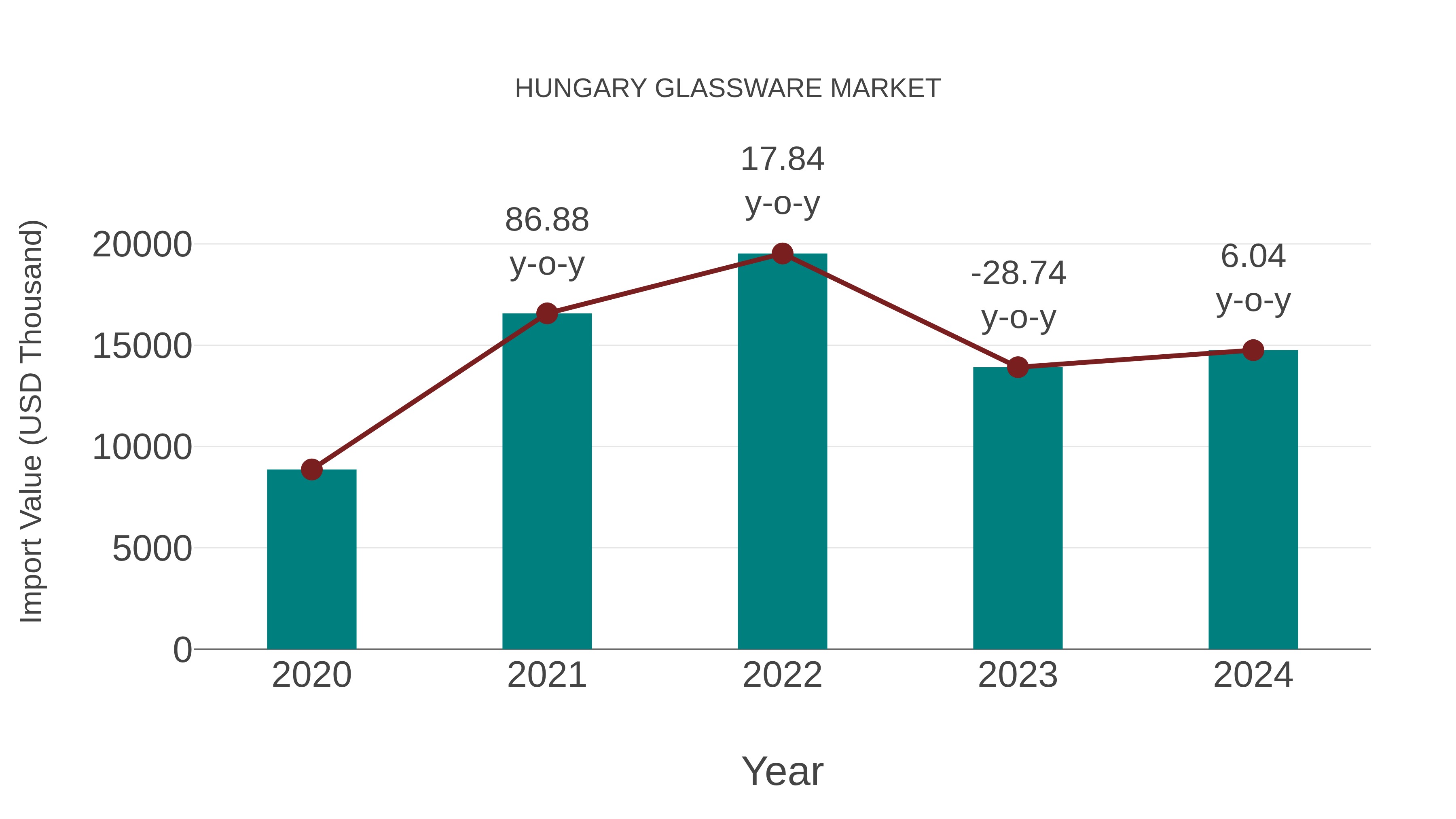
In the Hungary glassware market, the import trend showed a growth rate of 6.04% from 2023 to 2024, with a compound annual growth rate (CAGR) of 13.58% for the period 2020-2024. This increase in imports can be attributed to a steady demand shift towards quality glassware products, indicating market stability and sustained consumer interest in imported glassware goods.
Hungary Glassware Market Overview
The glassware market in Hungary encompasses a wide range of products such as drinking glasses, stemware, decanters, and vases used in households, hospitality, and gifting. Glassware is valued for its clarity, brilliance, and versatility in serving beverages and decorative purposes. With a focus on craftsmanship, design innovation, and premium quality, the glassware market caters to discerning consumers seeking elegant and functional glass products. The market is characterized by a diverse range of styles, patterns, and collections to suit various tastes and occasions.
Drivers of the market
The Hungary glassware market is driven by factors such as changing consumer lifestyles, dining trends, and demand for elegant and functional glassware products. Glassware encompasses a wide range of items such as drinking glasses, stemware, bowls, and vases, offering properties such as transparency, durability, and versatility for serving and decorating purposes. Moreover, innovations in glassware design, manufacturing techniques, and decoration methods further stimulate market growth by offering a diverse range of styles, shapes, and patterns that cater to different occasions, preferences, and aesthetics in Hungary household and hospitality sectors.
Challenges of the market
Challenges in the Hungary glassware market include addressing consumer preferences for design, craftsmanship, and affordability in glassware products such as stemware, vases, and decorative items, optimizing manufacturing processes and quality control measures to ensure product consistency and reliability, and meeting regulatory requirements regarding product safety, labeling, and packaging. Glassware manufacturers must focus on innovation, craftsmanship, and brand reputation to overcome these challenges and maintain competitiveness in the market.
Government Policy of the market
In alignment with Hungary commitment to promoting cultural heritage and craftsmanship, the government supports the growth of the glassware market by promoting investment, innovation, and entrepreneurship in the glass industry. Policies aim to create a conducive regulatory environment for glassware production and use, including standards for material quality, design aesthetics, and product safety. Additionally, the government provides financial incentives and support programs for glass manufacturers, artisans, and designers to invest in glassware production, including grants for equipment purchase, design innovation, and export promotion. By promoting the use of high-quality glassware, the government aims to preserve traditional craftsmanship, stimulate cultural tourism, and support economic development in Hungary glass industry.
Key Highlights of the Report:
- Hungary Glassware Market Outlook
- Market Size of Hungary Glassware Market, 2025
- Forecast of Hungary Glassware Market, 2032
- Historical Data and Forecast of Hungary Glassware Revenues & Volume for the Period 2022-2032F
- Hungary Glassware Market Trend Evolution
- Hungary Glassware Market Drivers and Challenges
- Hungary Glassware Price Trends
- Hungary Glassware Porter's Five Forces
- Hungary Glassware Industry Life Cycle
- Historical Data and Forecast of Hungary Glassware Market Revenues & Volume By Type for the Period 2022-2032F
- Historical Data and Forecast of Hungary Glassware Market Revenues & Volume By Soda Lime Glass for the Period 2022-2032F
- Historical Data and Forecast of Hungary Glassware Market Revenues & Volume By Lead Glass for the Period 2022-2032F
- Historical Data and Forecast of Hungary Glassware Market Revenues & Volume By Heat Resistant Glass for the Period 2022-2032F
- Historical Data and Forecast of Hungary Glassware Market Revenues & Volume By Distribution Channel for the Period 2022-2032F
- Historical Data and Forecast of Hungary Glassware Market Revenues & Volume By e-Commerce for the Period 2022-2032F
- Historical Data and Forecast of Hungary Glassware Market Revenues & Volume By Supermarkets/Hypermarkets for the Period 2022-2032F
- Historical Data and Forecast of Hungary Glassware Market Revenues & Volume By Specialized Stores for the Period 2022-2032F
- Historical Data and Forecast of Hungary Glassware Market Revenues & Volume By End-user for the Period 2022-2032F
- Historical Data and Forecast of Hungary Glassware Market Revenues & Volume By Hotels & Restaurants for the Period 2022-2032F
- Historical Data and Forecast of Hungary Glassware Market Revenues & Volume By Corporate Canteens for the Period 2022-2032F
- Historical Data and Forecast of Hungary Glassware Market Revenues & Volume By Bars & Caf for the Period 2022-2032F
- Historical Data and Forecast of Hungary Glassware Market Revenues & Volume By Household for the Period 2022-2032F
- Historical Data and Forecast of Hungary Glassware Market Revenues & Volume By Others for the Period 2022-2032F
- Hungary Glassware Import Export Trade Statistics
- Market Opportunity Assessment By Type
- Market Opportunity Assessment By Distribution Channel
- Market Opportunity Assessment By End-user
- Hungary Glassware Top Companies Market Share
- Hungary Glassware Competitive Benchmarking By Technical and Operational Parameters
- Hungary Glassware Company Profiles
- Hungary Glassware Key Strategic Recommendations






































