Hungary Inflatable Pools Market: Import Trend Analysis
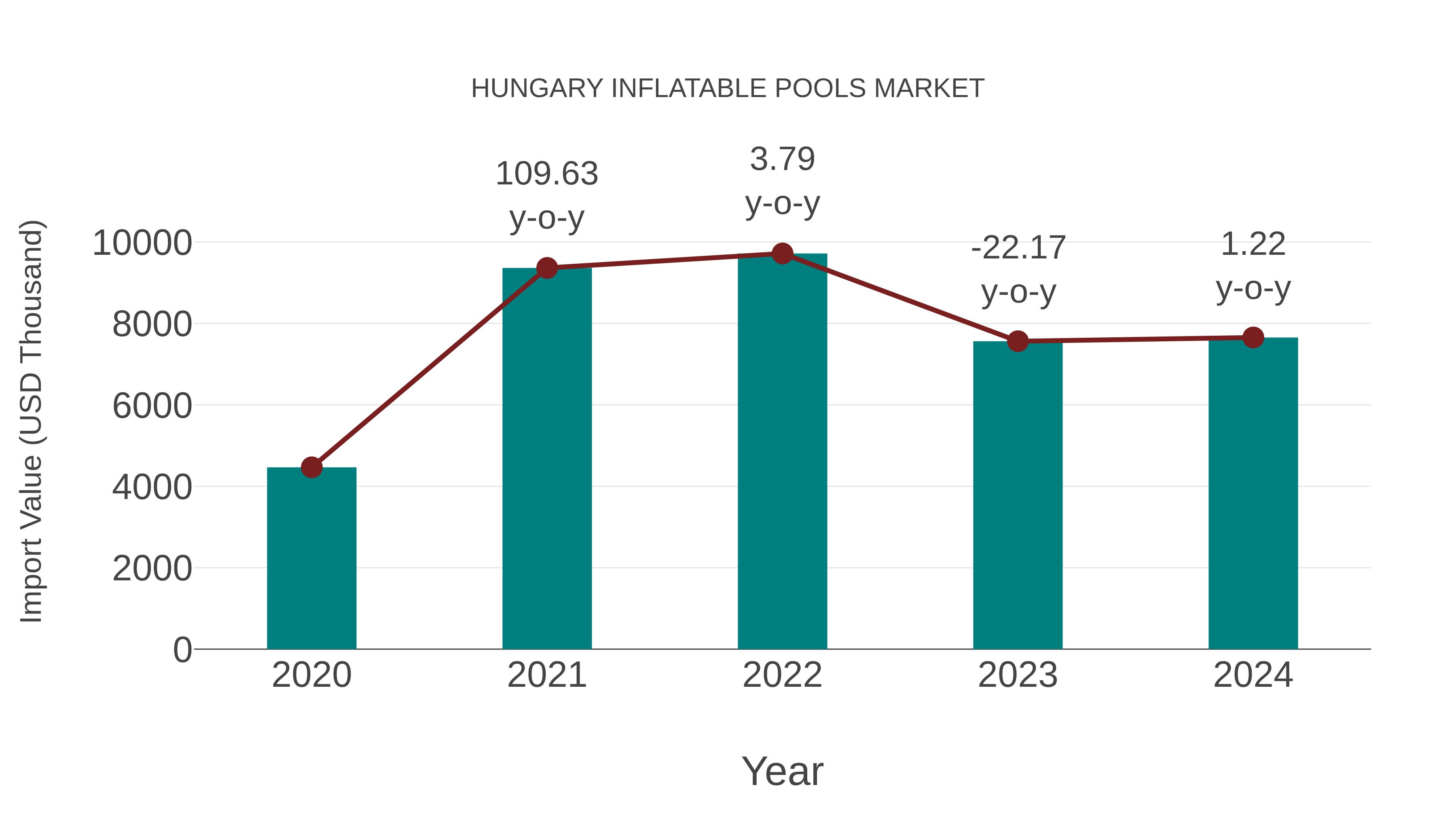
Hungary`s import trend for the inflatable pools market showed a growth rate of 1.22% from 2023 to 2024, with a compound annual growth rate (CAGR) of 14.42% from 2020 to 2024. This increase could be attributed to a combination of rising consumer demand for recreational products and favorable trade policies that facilitated import momentum in the market.
Hungary Inflatable Pools Market Overview
The Hungary Inflatable Pools Market is experiencing steady growth due to factors such as rising disposable income, increasing preference for portable and affordable recreational options, and changing consumer lifestyles. The market offers a wide range of inflatable pools in various sizes, shapes, and designs to cater to different customer preferences. Key players in the market are focusing on product innovation, marketing strategies, and partnerships to gain a competitive edge. The demand for inflatable pools is particularly high during the summer months, as they provide a convenient and cost-effective way for individuals and families to enjoy water-based activities in their own homes. Overall, the Hungary Inflatable Pools Market is expected to continue expanding, driven by the growing popularity of these products among consumers seeking convenient and enjoyable outdoor leisure options.
Hungary Inflatable Pools Market Trends
The Hungary inflatable pools market is experiencing a surge in demand due to the growing popularity of staycations and outdoor leisure activities. Consumers are increasingly looking for convenient and affordable ways to create a fun and relaxing environment in their own homes. Inflatable pools offer a portable and easy-to-set-up solution, making them attractive to a wide range of customers, including families, young adults, and urban dwellers with limited outdoor space. The market is also witnessing a trend towards larger and more durable inflatable pools with innovative features such as built-in water filtration systems and customizable design options. As a result, manufacturers are focusing on product innovation and sustainability to meet the evolving preferences of consumers in the Hungary inflatable pools market.
Hungary Inflatable Pools Market Challenges
In the Hungary Inflatable Pools Market, some key challenges are increasing competition from both domestic and international manufacturers, fluctuating raw material prices impacting production costs, and seasonality in demand due to the weather-dependent nature of the product. Additionally, ensuring compliance with safety regulations and quality standards poses a challenge for manufacturers in this market. Distribution challenges, such as limited shelf space in retail stores and logistics issues, also affect the market. Moreover, the economic uncertainty and changing consumer preferences further complicate the landscape for inflatable pool manufacturers in Hungary. Overall, navigating these challenges requires strategic planning, innovation in product design, efficient cost management, and a deep understanding of consumer behavior.
Hungary Inflatable Pools Market Investment Opportunities
In the Hungary Inflatable Pools Market, there are several investment opportunities for growth and profitability. One option is to invest in innovative and high-quality inflatable pool designs that cater to the increasing demand for aesthetically pleasing and durable products. Additionally, there is potential for investment in eco-friendly materials and manufacturing processes to align with the growing trend towards sustainability in consumer goods. Collaborating with online retailers and leveraging digital marketing strategies can also enhance market reach and brand visibility. Furthermore, considering the seasonal nature of inflatable pool sales, diversifying the product range to include complementary items such as pool accessories, maintenance products, and outdoor furniture could provide additional revenue streams and strengthen market positioning. Overall, strategic investments in product innovation, sustainability, distribution channels, and product diversification can drive growth and competitiveness in the Hungary Inflatable Pools Market.
Hungary Inflatable Pools Market Government Policy
In Hungary, the government has established regulations and safety standards for inflatable pools to ensure the protection of consumers and to maintain a safe market environment. These regulations cover aspects such as product quality, safety features, labeling requirements, and compliance with EU standards. Additionally, there may be specific guidelines regarding the installation, use, and maintenance of inflatable pools to prevent accidents and ensure user safety. Manufacturers and sellers in the Hungary Inflatable Pools Market are required to adhere to these policies to ensure that their products meet the necessary standards and do not pose any risks to consumers. Compliance with government regulations is crucial for businesses operating in this market to avoid penalties and maintain consumer trust.
Hungary Inflatable Pools Market Future Outlook
The Hungary Inflatable Pools Market is poised for steady growth in the coming years due to increasing consumer demand for affordable and convenient recreational products. Factors such as rising disposable incomes, a growing trend towards outdoor leisure activities, and the ease of setup and storage of inflatable pools are expected to drive market expansion. Additionally, the influence of social media and online platforms showcasing lifestyle trends and DIY projects will likely further boost the popularity of inflatable pools among Hungarian consumers. Manufacturers and retailers in the market are anticipated to focus on product innovation, customization options, and eco-friendly materials to cater to evolving consumer preferences and sustain market growth in the future.
Key Highlights of the Report:
- Hungary Inflatable Pools Market Outlook
- Market Size of Hungary Inflatable Pools Market, 2025
- Forecast of Hungary Inflatable Pools Market, 2032
- Historical Data and Forecast of Hungary Inflatable Pools Revenues & Volume for the Period 2022 - 2032F
- Hungary Inflatable Pools Market Trend Evolution
- Hungary Inflatable Pools Market Drivers and Challenges
- Hungary Inflatable Pools Price Trends
- Hungary Inflatable Pools Porter's Five Forces
- Hungary Inflatable Pools Industry Life Cycle
- Historical Data and Forecast of Hungary Inflatable Pools Market Revenues & Volume By Capacity for the Period 2022 - 2032F
- Historical Data and Forecast of Hungary Inflatable Pools Market Revenues & Volume By Maximum 3 Individuals for the Period 2022 - 2032F
- Historical Data and Forecast of Hungary Inflatable Pools Market Revenues & Volume By Maximum 6 Individuals for the Period 2022 - 2032F
- Historical Data and Forecast of Hungary Inflatable Pools Market Revenues & Volume By Maximum 12 Individuals for the Period 2022 - 2032F
- Historical Data and Forecast of Hungary Inflatable Pools Market Revenues & Volume By Age for the Period 2022 - 2032F
- Historical Data and Forecast of Hungary Inflatable Pools Market Revenues & Volume By Up To 4 Years for the Period 2022 - 2032F
- Historical Data and Forecast of Hungary Inflatable Pools Market Revenues & Volume By 5 To 10 Years for the Period 2022 - 2032F
- Historical Data and Forecast of Hungary Inflatable Pools Market Revenues & Volume By 11 Years & Above for the Period 2022 - 2032F
- Historical Data and Forecast of Hungary Inflatable Pools Market Revenues & Volume By Shape for the Period 2022 - 2032F
- Historical Data and Forecast of Hungary Inflatable Pools Market Revenues & Volume By Round for the Period 2022 - 2032F
- Historical Data and Forecast of Hungary Inflatable Pools Market Revenues & Volume By Rectangle for the Period 2022 - 2032F
- Historical Data and Forecast of Hungary Inflatable Pools Market Revenues & Volume By Square for the Period 2022 - 2032F
- Historical Data and Forecast of Hungary Inflatable Pools Market Revenues & Volume By Oval for the Period 2022 - 2032F
- Historical Data and Forecast of Hungary Inflatable Pools Market Revenues & Volume By Others for the Period 2022 - 2032F
- Historical Data and Forecast of Hungary Inflatable Pools Market Revenues & Volume By Distribution Channel for the Period 2022 - 2032F
- Historical Data and Forecast of Hungary Inflatable Pools Market Revenues & Volume By Store Based for the Period 2022 - 2032F
- Historical Data and Forecast of Hungary Inflatable Pools Market Revenues & Volume By Non Store Based for the Period 2022 - 2032F
- Hungary Inflatable Pools Import Export Trade Statistics
- Market Opportunity Assessment By Capacity
- Market Opportunity Assessment By Age
- Market Opportunity Assessment By Shape
- Market Opportunity Assessment By Distribution Channel
- Hungary Inflatable Pools Top Companies Market Share
- Hungary Inflatable Pools Competitive Benchmarking By Technical and Operational Parameters
- Hungary Inflatable Pools Company Profiles
- Hungary Inflatable Pools Key Strategic Recommendations






































