Hungary Modular Kitchen Market: Import Trend Analysis
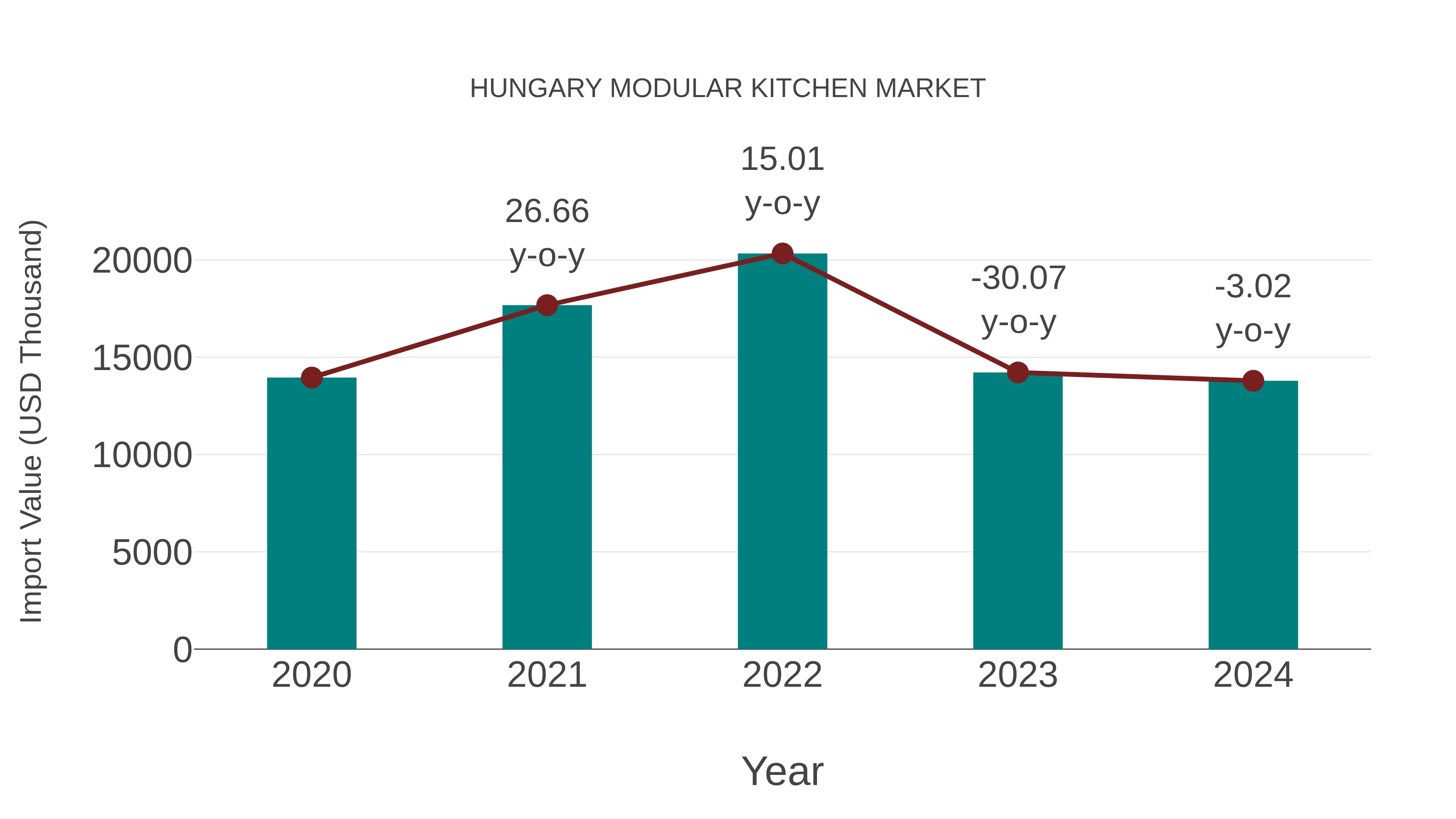
In 2024, Hungary`s import trend for the modular kitchen market experienced a decline, with a growth rate of -3.02% compared to the previous year. The compound annual growth rate (CAGR) from 2020 to 2024 stood at -0.3%. This negative import momentum could be attributed to shifting consumer preferences or changes in trade policies affecting the market`s stability.
Hungary Modular Kitchen Market Overview
The modular kitchen market in Hungary is experiencing steady growth driven by changing consumer lifestyles, urbanization, and a growing preference for modern and efficient kitchen designs. Modular kitchens offer space optimization, customization options, and ease of installation compared to traditional kitchen setups, making them increasingly popular among homeowners and real estate developers. Rising disposable incomes, changing consumer preferences, and the influence of global design trends are fueling the demand for modular kitchen solutions in Hungary. Additionally, advancements in materials, finishes, and smart kitchen technologies are further driving market expansion by enhancing functionality, aesthetics, and user experience.
Drivers of the market
The Hungary modular kitchen market is witnessing growth due to changing consumer lifestyles, increasing urbanization, and the growing trend of customized kitchen designs. Modular kitchens offer space optimization, functional versatility, and aesthetic appeal, driving their adoption among homeowners, real estate developers, and interior designers.
Challenges of the market
Challenges in the Hungary Modular Kitchen market include the need for customization to suit diverse consumer preferences and kitchen layouts. Ensuring quality and durability while offering modular solutions at competitive prices is another hurdle. Additionally, limited awareness about the advantages of modular kitchens among consumers and builders slows market growth.
Government Policy of the market
The Hungary government recognizes the importance of modular kitchens in promoting efficient use of space, enhancing functionality, and improving living standards. To support the growth of the modular kitchen market, the government has implemented policies to streamline construction permitting processes, provide financial incentives for kitchen renovations, and promote the use of sustainable materials and technologies. Additionally, there are regulations in place to ensure the safety, durability, and environmental sustainability of modular kitchen components, including standards for materials, finishes, and appliances. Furthermore, the government works closely with industry stakeholders to promote consumer awareness and education about the benefits of modular kitchens and to address any regulatory barriers hindering their adoption.
Key Highlights of the Report:
- Hungary Modular Kitchen Market Outlook
- Market Size of Hungary Modular Kitchen Market, 2025
- Forecast of Hungary Modular Kitchen Market, 2032
- Historical Data and Forecast of Hungary Modular Kitchen Revenues & Volume for the Period 2022-2032F
- Hungary Modular Kitchen Market Trend Evolution
- Hungary Modular Kitchen Market Drivers and Challenges
- Hungary Modular Kitchen Price Trends
- Hungary Modular Kitchen Porter's Five Forces
- Hungary Modular Kitchen Industry Life Cycle
- Historical Data and Forecast of Hungary Modular Kitchen Market Revenues & Volume By Product for the Period 2022-2032F
- Historical Data and Forecast of Hungary Modular Kitchen Market Revenues & Volume By Floor Cabinet & Wall Cabinets for the Period 2022-2032F
- Historical Data and Forecast of Hungary Modular Kitchen Market Revenues & Volume By Tall Storage Cabinets for the Period 2022-2032F
- Historical Data and Forecast of Hungary Modular Kitchen Market Revenues & Volume By Others for the Period 2022-2032F
- Historical Data and Forecast of Hungary Modular Kitchen Market Revenues & Volume By End-User for the Period 2022-2032F
- Historical Data and Forecast of Hungary Modular Kitchen Market Revenues & Volume By Residential for the Period 2022-2032F
- Historical Data and Forecast of Hungary Modular Kitchen Market Revenues & Volume By Commercial for the Period 2022-2032F
- Historical Data and Forecast of Hungary Modular Kitchen Market Revenues & Volume By Distribution Channel for the Period 2022-2032F
- Historical Data and Forecast of Hungary Modular Kitchen Market Revenues & Volume By Offline (Contractors, Builders, and Others) for the Period 2022-2032F
- Historical Data and Forecast of Hungary Modular Kitchen Market Revenues & Volume By Online for the Period 2022-2032F
- Hungary Modular Kitchen Import Export Trade Statistics
- Market Opportunity Assessment By Product
- Market Opportunity Assessment By End-User
- Market Opportunity Assessment By Distribution Channel
- Hungary Modular Kitchen Top Companies Market Share
- Hungary Modular Kitchen Competitive Benchmarking By Technical and Operational Parameters
- Hungary Modular Kitchen Company Profiles
- Hungary Modular Kitchen Key Strategic Recommendations






































