Hungary Polyols Market: Import Trend Analysis
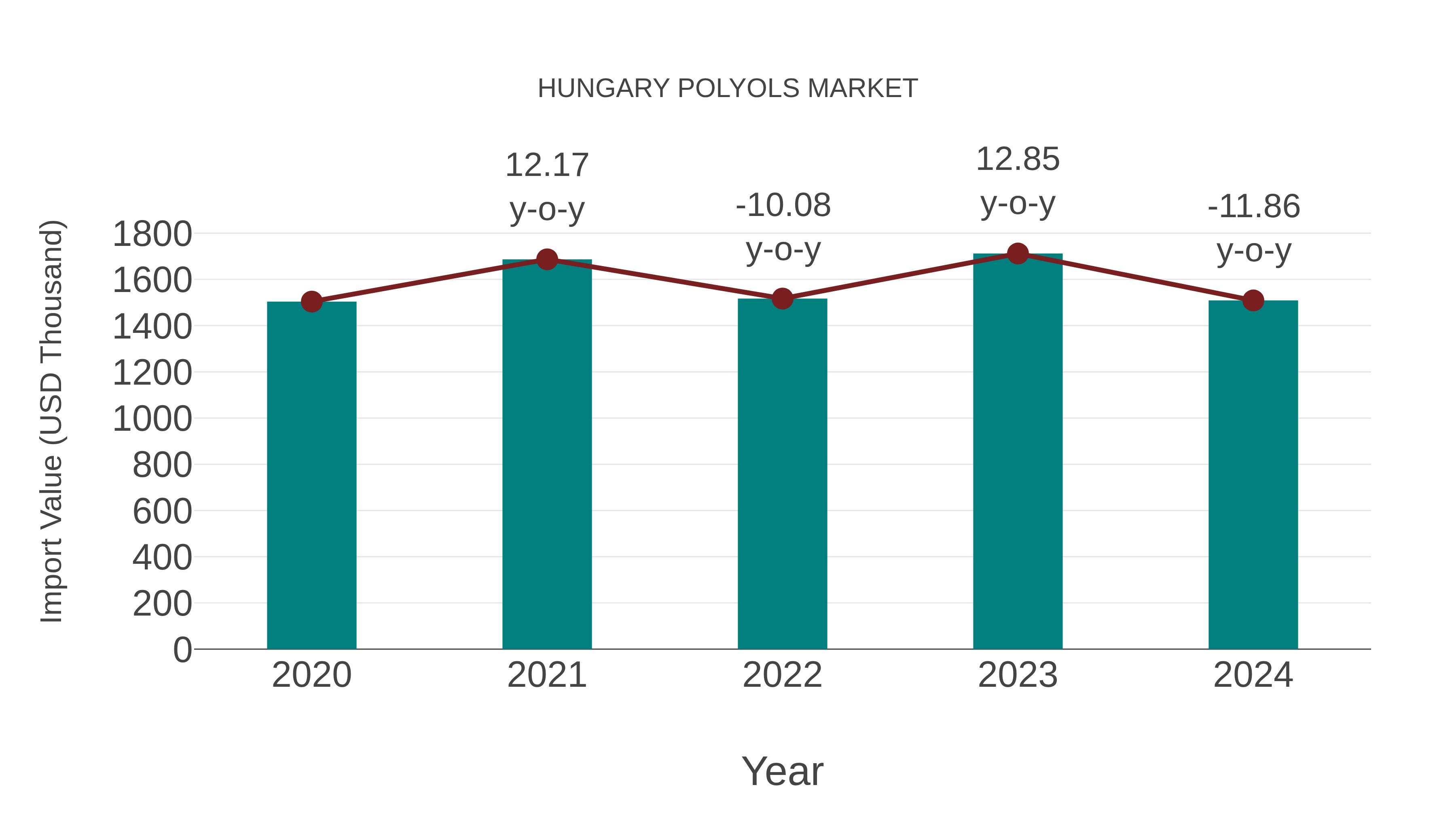
In the Hungary polyols market, the import trend saw a decline, with a growth rate of -11.86% from 2023 to 2024. The compound annual growth rate (CAGR) for imports over the period 2020-2024 was 0.08%. This decline in import momentum could be attributed to shifting demand patterns or changes in trade policies impacting market stability.
Hungary Polyols Market Overview
The Hungary polyols market is experiencing steady growth driven by increasing demand from various end-user industries such as construction, automotive, and furniture. Polyols are essential components in the production of polyurethane foams, coatings, adhesives, and sealants. With rising construction activities and automotive production in Hungary, the demand for polyols is expected to continue growing in the coming years. Additionally, the adoption of eco-friendly and sustainable polyols is gaining traction in the market, further fueling its expansion.
Drivers of the market
Growing demand from industries like construction, automotive, and furniture is propelling the Hungary Polyols market. With increasing awareness about sustainable materials, manufacturers are focusing on producing bio-based polyols, further driving market growth.
Challenges of the market
The Hungary Polyols Market faces several challenges despite its potential for growth. One significant challenge is the fluctuation in raw material prices, particularly crude oil, which directly impacts the cost of production. This volatility can disrupt profit margins and hinder investment in innovation and expansion. Additionally, regulatory changes and environmental concerns regarding the use of certain polyols may pose challenges for manufacturers, requiring them to adapt their processes to meet evolving standards while maintaining competitiveness in the market.
Government Policy of the market
The Hungary government has implemented policies to encourage research and development in the polyols industry, offering tax incentives and grants for companies investing in innovation and sustainability initiatives. Additionally, there are stringent regulations in place to ensure the safe production and handling of polyols to protect both workers and the environment.
Key Highlights of the Report:
- Hungary Polyols Market Outlook
- Market Size of Hungary Polyols Market, 2025
- Forecast of Hungary Polyols Market, 2032
- Historical Data and Forecast of Hungary Polyols Revenues & Volume for the Period 2022-2032F
- Hungary Polyols Market Trend Evolution
- Hungary Polyols Market Drivers and Challenges
- Hungary Polyols Price Trends
- Hungary Polyols Porter's Five Forces
- Hungary Polyols Industry Life Cycle
- Historical Data and Forecast of Hungary Polyols Market Revenues & Volume By Type for the Period 2022-2032F
- Historical Data and Forecast of Hungary Polyols Market Revenues & Volume By Polyether polyols for the Period 2022-2032F
- Historical Data and Forecast of Hungary Polyols Market Revenues & Volume By Polyester polyols for the Period 2022-2032F
- Historical Data and Forecast of Hungary Polyols Market Revenues & Volume By Application for the Period 2022-2032F
- Historical Data and Forecast of Hungary Polyols Market Revenues & Volume By Flexible Polyurethane Foam for the Period 2022-2032F
- Historical Data and Forecast of Hungary Polyols Market Revenues & Volume By Rigid Polyurethane Foam for the Period 2022-2032F
- Historical Data and Forecast of Hungary Polyols Market Revenues & Volume By CASE for the Period 2022-2032F
- Historical Data and Forecast of Hungary Polyols Market Revenues & Volume By End Use Industry for the Period 2022-2032F
- Historical Data and Forecast of Hungary Polyols Market Revenues & Volume By Building & Construction for the Period 2022-2032F
- Historical Data and Forecast of Hungary Polyols Market Revenues & Volume By Automotive for the Period 2022-2032F
- Historical Data and Forecast of Hungary Polyols Market Revenues & Volume By Electronics for the Period 2022-2032F
- Hungary Polyols Import Export Trade Statistics
- Market Opportunity Assessment By Type
- Market Opportunity Assessment By Application
- Market Opportunity Assessment By End Use Industry
- Hungary Polyols Top Companies Market Share
- Hungary Polyols Competitive Benchmarking By Technical and Operational Parameters
- Hungary Polyols Company Profiles
- Hungary Polyols Key Strategic Recommendations






































