Hungary Retinol Market: Import Trend Analysis
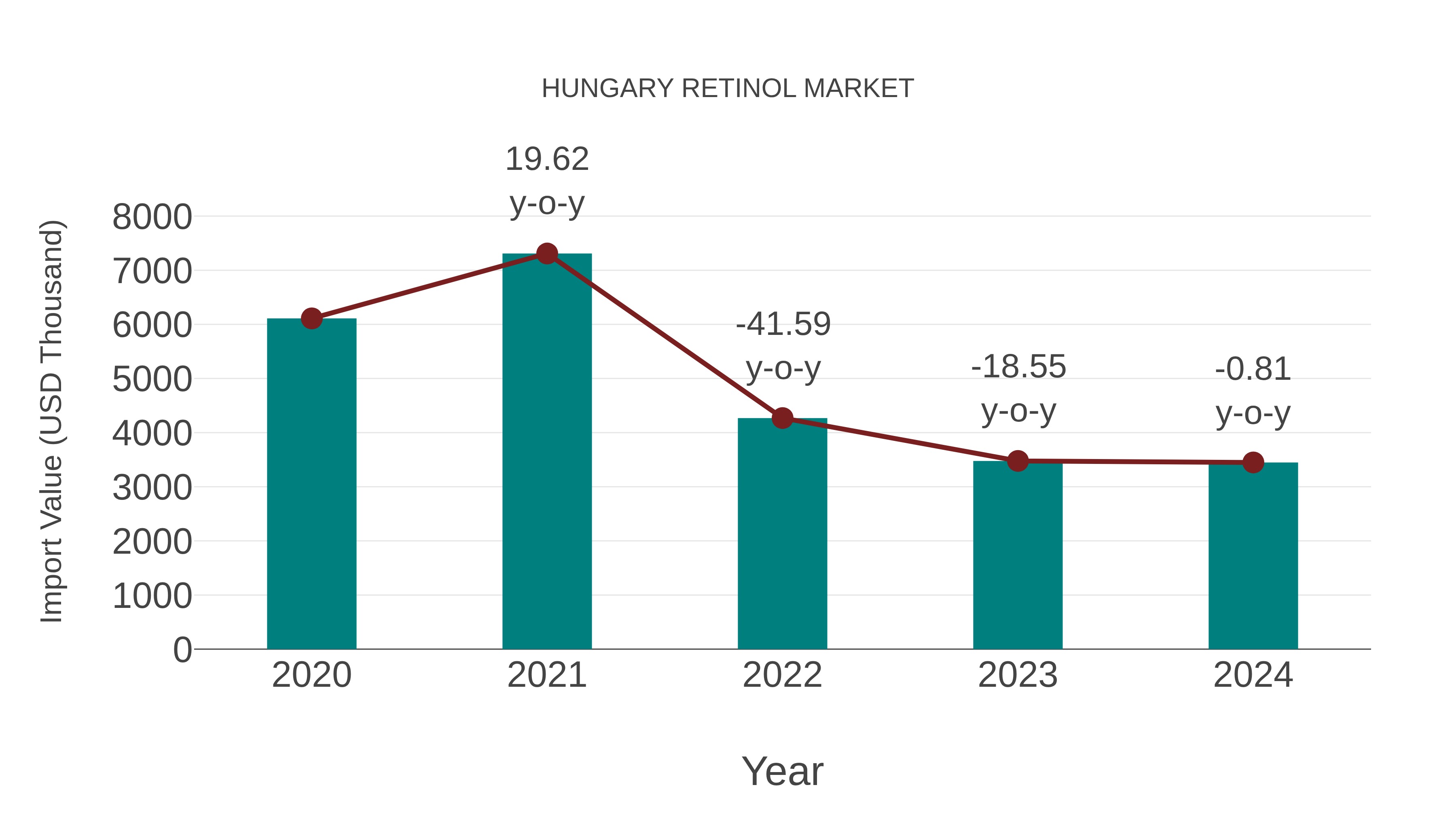
In the Hungary retinol market, the import trend exhibited a decline with a growth rate of -0.81% from 2023 to 2024. The compound annual growth rate (CAGR) for imports from 2020 to 2024 was -13.32%. This downward trajectory could be attributed to shifting consumer preferences or changes in regulatory policies impacting import volumes.
Hungary Retinol Market Synopsis
The Hungary Retinol market is experiencing steady growth driven by increasing consumer awareness of skincare benefits and a growing demand for anti-aging products. Retinol, a derivative of vitamin A, is a key ingredient in many skincare products due to its proven effectiveness in reducing wrinkles, improving skin texture, and promoting cell turnover. The market is witnessing a rise in the availability of various retinol-based products, including creams, serums, and oils, catering to different skin types and concerns. Key players in the Hungary Retinol market are focusing on product innovation, marketing strategies, and expanding distribution channels to capitalize on the growing demand. Additionally, with a trend towards clean and natural beauty products, there is an increasing preference for organic and cruelty-free retinol formulations in the market.
Hungary Retinol Market Trends
The Hungary Retinol Market is experiencing a growing demand for anti-aging skincare products, driving the popularity of retinol-based formulations. Consumers are increasingly seeking products that offer effective solutions for reducing wrinkles, improving skin texture, and promoting overall skin health. There is a rising awareness of the benefits of retinol in treating various skin concerns, leading to a surge in product innovation and market competition. With the market witnessing a shift towards natural and organic skincare products, there is a significant opportunity for companies to develop retinol products that are plant-based and environmentally friendly. E-commerce platforms and social media influencers are also playing a crucial role in marketing retinol products to a wider audience, presenting opportunities for brands to enhance their online presence and engage with consumers directly.
Hungary Retinol Market Challenges
In the Hungary Retinol Market, challenges may include limited consumer awareness about the benefits of retinol in skincare products, pricing pressure due to competition from other active ingredients, and regulatory constraints regarding retinol concentrations in cosmetic formulations. Additionally, sourcing high-quality retinol raw materials at competitive prices and ensuring product stability and efficacy can be hurdles for market players. Adapting to changing consumer preferences, such as a shift towards natural and organic skincare products, and addressing concerns regarding potential skin irritation or sensitivity associated with retinol usage are also key challenges in the Hungary Retinol Market. Overall, navigating these challenges requires strategic product positioning, effective marketing strategies, and continuous innovation to meet the evolving needs of consumers in the skincare industry.
Hungary Retinol Market Investment Opportunities
The Hungary Retinol Market is primarily driven by the increasing consumer awareness about the benefits of retinol in skincare products, such as anti-aging properties and skin rejuvenation. The growing trend of incorporating skincare routines into daily lifestyles, especially among the younger demographic, is also fueling the demand for retinol-based products. Additionally, the rising disposable income levels and willingness to spend on premium skincare products are contributing to the market growth. Furthermore, the presence of a wide range of retinol products in various formulations and concentrations, catering to different skin types and concerns, is driving the market expansion in Hungary. Manufacturers` efforts to innovate and introduce advanced retinol formulations with enhanced effectiveness and minimal side effects are further propelling the market forward.
Hungary Retinol Market Government Policie
Government policies in Hungary related to the Retinol Market focus on regulating the sale and distribution of retinol products to ensure consumer safety and product quality. The Hungarian government requires retinol products to adhere to strict labeling requirements, including dosage information and potential side effects, to protect consumers from misuse or harm. Additionally, the government monitors the manufacturing processes of retinol products to ensure compliance with safety standards and quality control measures. Import and export regulations are also in place to oversee the international trade of retinol products, ensuring that only approved and safe products enter the Hungarian market. Overall, these policies aim to safeguard public health and uphold the integrity of the retinol market in Hungary.
Hungary Retinol Market Future Outlook
The Hungary Retinol Market is expected to experience steady growth in the coming years due to increasing consumer awareness about skincare and the rising demand for anti-aging products. The market is projected to be driven by factors such as the growing middle-class population, rising disposable incomes, and the influence of social media on beauty trends. Additionally, the shift towards clean and organic beauty products is likely to further boost the demand for retinol-based skincare products in Hungary. The market is also anticipated to benefit from advancements in product formulations and packaging, as well as expanding distribution channels. Overall, the Hungary Retinol Market is poised for growth opportunities, with key players focusing on product innovation and marketing strategies to cater to the evolving preferences of consumers.
Key Highlights of the Report:
- Hungary Retinol Market Outlook
- Market Size of Hungary Retinol Market, 2025
- Forecast of Hungary Retinol Market, 2032
- Historical Data and Forecast of Hungary Retinol Revenues & Volume for the Period 2022 - 2032F
- Hungary Retinol Market Trend Evolution
- Hungary Retinol Market Drivers and Challenges
- Hungary Retinol Price Trends
- Hungary Retinol Porter's Five Forces
- Hungary Retinol Industry Life Cycle
- Historical Data and Forecast of Hungary Retinol Market Revenues & Volume By Type for the Period 2022 - 2032F
- Historical Data and Forecast of Hungary Retinol Market Revenues & Volume By Natural for the Period 2022 - 2032F
- Historical Data and Forecast of Hungary Retinol Market Revenues & Volume By Synthetic for the Period 2022 - 2032F
- Historical Data and Forecast of Hungary Retinol Market Revenues & Volume By Application for the Period 2022 - 2032F
- Historical Data and Forecast of Hungary Retinol Market Revenues & Volume By Personal Care & Cosmetics for the Period 2022 - 2032F
- Historical Data and Forecast of Hungary Retinol Market Revenues & Volume By Dietary Supplements for the Period 2022 - 2032F
- Historical Data and Forecast of Hungary Retinol Market Revenues & Volume By Food & Beverage for the Period 2022 - 2032F
- Historical Data and Forecast of Hungary Retinol Market Revenues & Volume By Animal Feed for the Period 2022 - 2032F
- Historical Data and Forecast of Hungary Retinol Market Revenues & Volume By Others for the Period 2022 - 2032F
- Hungary Retinol Import Export Trade Statistics
- Market Opportunity Assessment By Type
- Market Opportunity Assessment By Application
- Hungary Retinol Top Companies Market Share
- Hungary Retinol Competitive Benchmarking By Technical and Operational Parameters
- Hungary Retinol Company Profiles
- Hungary Retinol Key Strategic Recommendations






































