Iceland Bicycles Market Growth Rate Analysis (2025 - 2031)
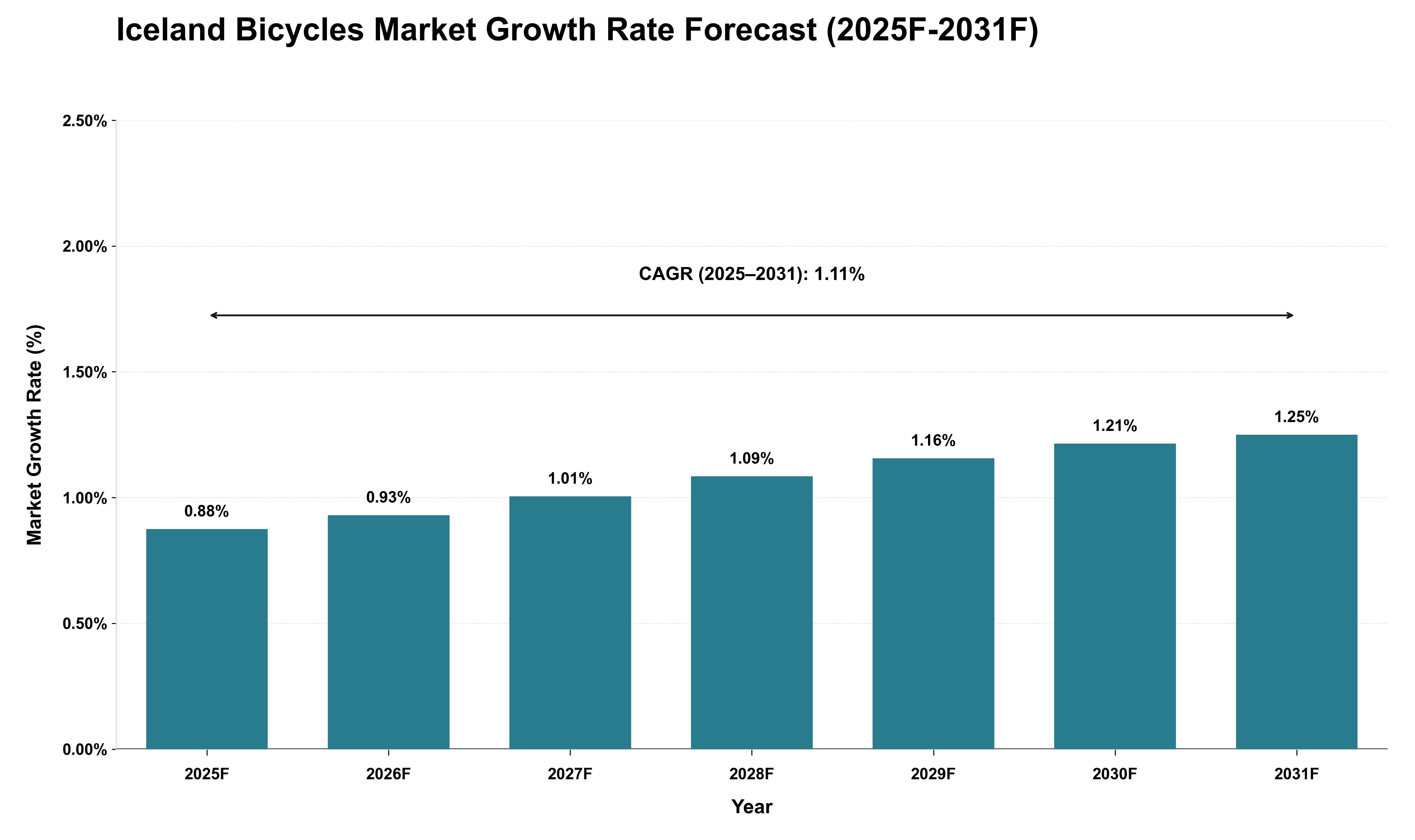
The Iceland bicycles market will experience a gradual increase in end-use demand, driven by evolving consumer preferences towards sustainable transportation and recreational activities. As urbanization continues to influence mobility choices, the projected CAGR of 1.11% will reflect a steady rise in bicycle adoption rates among both residents and tourists. The annual growth rates will incrementally climb from 0.88% in 2025 to 1.25% by 2031, indicating a consistent upward trajectory influenced by factors such as increased environmental awareness and government initiatives promoting cycling infrastructure. Additionally, import dependencies on bicycle components may create fluctuations in supply chains, impacting pricing dynamics and availability. As cycling becomes more integrated into daily life, the market will likely see enhanced demand for diverse bicycle types catering to various consumer segments, further solidifying its growth potential within the broader context of Iceland's economic landscape during this period.
Key Highlights of the Report:
- Iceland Bicycles Market Outlook
- Market Size of Iceland Bicycles Market, 2024
- Forecast of Iceland Bicycles Market, 2031
- Historical Data and Forecast of Iceland Bicycles Revenues & Volume for the Period 2021-2031
- Iceland Bicycles Market Trend Evolution
- Iceland Bicycles Market Drivers and Challenges
- Iceland Bicycles Price Trends
- Iceland Bicycles Porter`s Five Forces
- Iceland Bicycles Industry Life Cycle
- Historical Data and Forecast of Iceland Bicycles Market Revenues & Volume By Product for the Period 2021-2031
- Historical Data and Forecast of Iceland Bicycles Market Revenues & Volume By Mountain for the Period 2021-2031
- Historical Data and Forecast of Iceland Bicycles Market Revenues & Volume By Hybrid for the Period 2021-2031
- Historical Data and Forecast of Iceland Bicycles Market Revenues & Volume By Road for the Period 2021-2031
- Historical Data and Forecast of Iceland Bicycles Market Revenues & Volume By Others for the Period 2021-2031
- Historical Data and Forecast of Iceland Bicycles Market Revenues & Volume By Technology for the Period 2021-2031
- Historical Data and Forecast of Iceland Bicycles Market Revenues & Volume By Electric for the Period 2021-2031
- Historical Data and Forecast of Iceland Bicycles Market Revenues & Volume By Conventional for the Period 2021-2031
- Historical Data and Forecast of Iceland Bicycles Market Revenues & Volume By End-users for the Period 2021-2031
- Historical Data and Forecast of Iceland Bicycles Market Revenues & Volume By Men for the Period 2021-2031
- Historical Data and Forecast of Iceland Bicycles Market Revenues & Volume By Women for the Period 2021-2031
- Historical Data and Forecast of Iceland Bicycles Market Revenues & Volume By Kids for the Period 2021-2031
- Iceland Bicycles Import Export Trade Statistics
- Market Opportunity Assessment By Product
- Market Opportunity Assessment By Technology
- Market Opportunity Assessment By End-users
- Iceland Bicycles Top Companies Market Share
- Iceland Bicycles Competitive Benchmarking By Technical and Operational Parameters
- Iceland Bicycles Company Profiles
- Iceland Bicycles Key Strategic Recommendations






































