Iceland Granite Market Growth Rate Analysis (2025 - 2031)
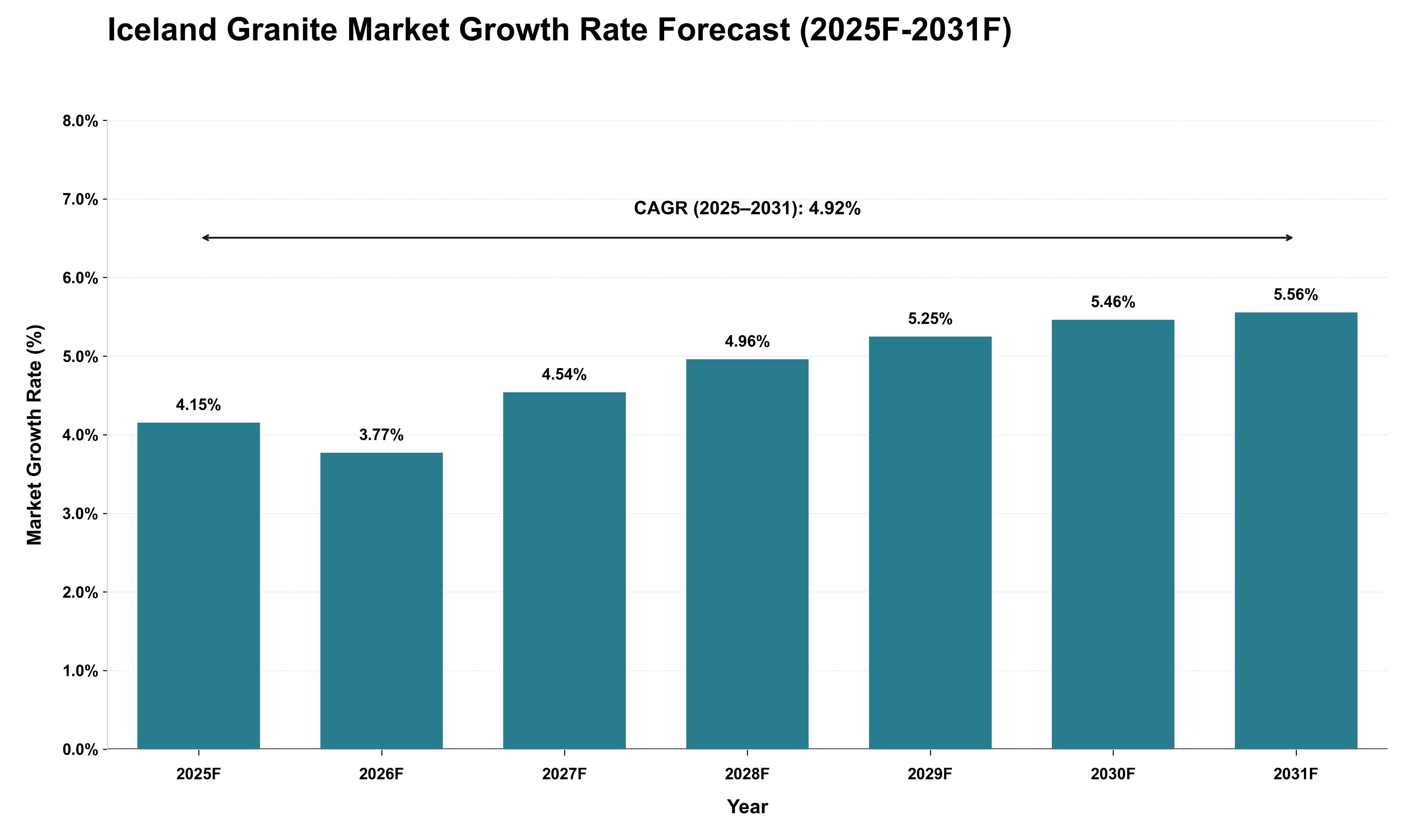
The Iceland granite market will experience a notable shift in end-use demand driven by increasing construction activities and infrastructure development, particularly in the residential and commercial sectors. As urbanization trends continue to rise, the anticipated CAGR of 4.92% from 2025 to 2031 reflects a robust growth trajectory, with annual growth rates peaking at 5.56% in 2031. This upward trend will be supported by heightened demand for durable building materials that align with sustainability goals, as well as an increase in tourism-related projects that utilize granite for aesthetic and functional purposes. Additionally, import dependencies may influence pricing dynamics and availability, potentially leading to fluctuations in market supply. The cyclical nature of construction spending will further amplify these trends, positioning the Iceland granite market favorably within the broader economic landscape during this forecast period.
Key Highlights of the Report:
- Iceland Granite Market Outlook
- Market Size of Iceland Granite Market, 2025
- Forecast of Iceland Granite Market, 2032
- Historical Data and Forecast of Iceland Granite Revenues & Volume for the Period 2022-2032F
- Iceland Granite Market Trend Evolution
- Iceland Granite Market Drivers and Challenges
- Iceland Granite Price Trends
- Iceland Granite Porter`s Five Forces
- Iceland Granite Industry Life Cycle
- Historical Data and Forecast of Iceland Granite Market Revenues & Volume By Product for the Period 2022-2032F
- Historical Data and Forecast of Iceland Granite Market Revenues & Volume By Granite Slabs for the Period 2022-2032F
- Historical Data and Forecast of Iceland Granite Market Revenues & Volume By Granite Tiles for the Period 2022-2032F
- Historical Data and Forecast of Iceland Granite Market Revenues & Volume By Others for the Period 2022-2032F
- Historical Data and Forecast of Iceland Granite Market Revenues & Volume By Application for the Period 2022-2032F
- Historical Data and Forecast of Iceland Granite Market Revenues & Volume By Kitchen Countertops for the Period 2022-2032F
- Historical Data and Forecast of Iceland Granite Market Revenues & Volume By Flooring for the Period 2022-2032F
- Historical Data and Forecast of Iceland Granite Market Revenues & Volume By Stair Treads for the Period 2022-2032F
- Historical Data and Forecast of Iceland Granite Market Revenues & Volume By Monuments for the Period 2022-2032F
- Historical Data and Forecast of Iceland Granite Market Revenues & Volume By Others for the Period 2022-2032F
- Iceland Granite Import Export Trade Statistics
- Market Opportunity Assessment By Product
- Market Opportunity Assessment By Application
- Iceland Granite Top Companies Market Share
- Iceland Granite Competitive Benchmarking By Technical and Operational Parameters
- Iceland Granite Company Profiles
- Iceland Granite Key Strategic Recommendations






































