Iceland Loom Market Growth Rate Analysis (2025 - 2031)
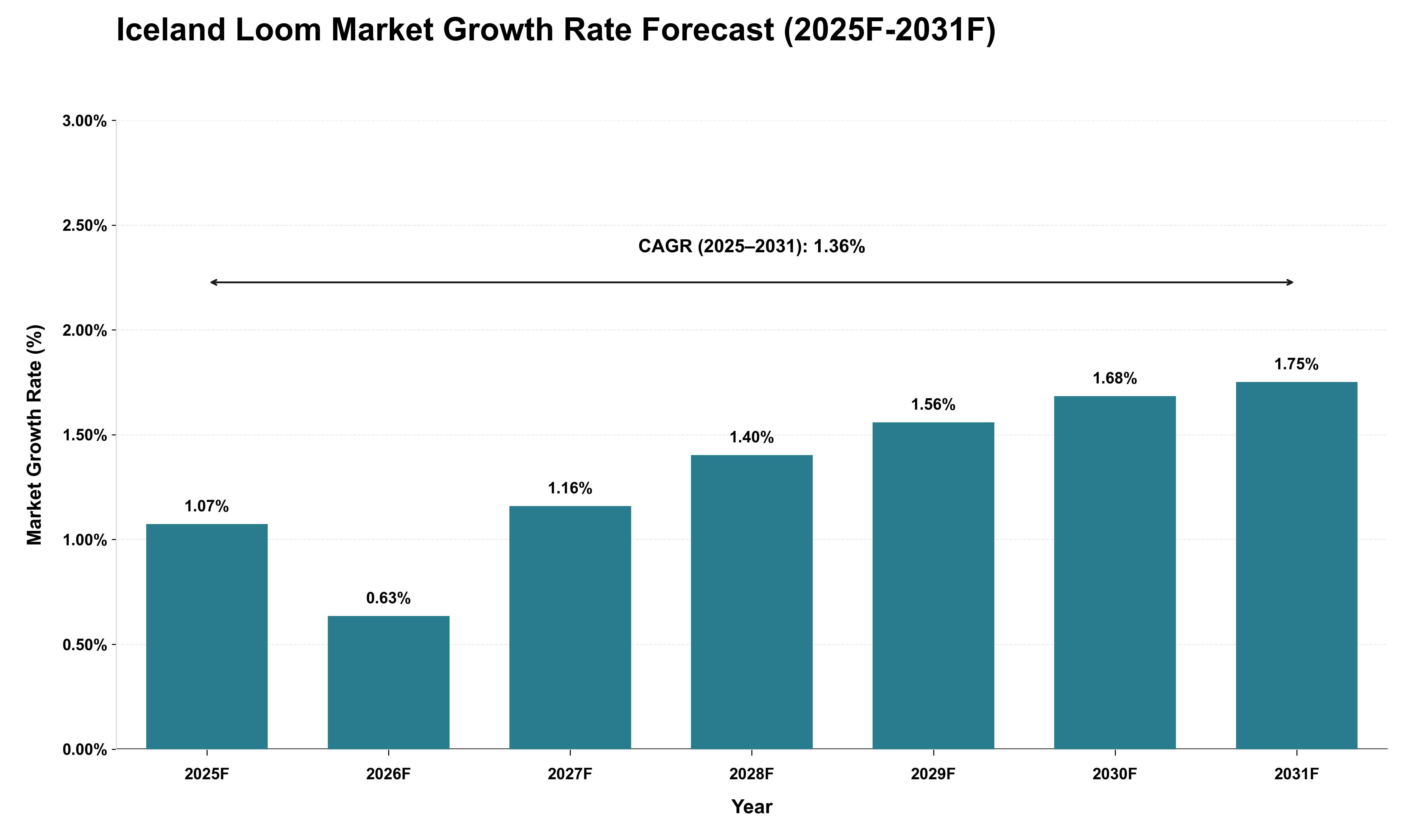
The Iceland loom market is projected to experience a compound annual growth rate of 1.36% from 2025 to 2031, reflecting a gradual increase in demand influenced by evolving consumer preferences and potential shifts in import dependencies. The annual growth rates indicate an initial uptick of 1.07% in 2025, followed by fluctuations that suggest a response to both domestic production capabilities and international trade dynamics. As the forecast progresses, growth is expected to accelerate, peaking at 1.75% in 2031, likely driven by enhanced export opportunities and the integration of innovative textile technologies that could bolster competitiveness. Import trends will play a crucial role; as global supply chains adapt, Iceland may see increased reliance on foreign loom technologies while simultaneously positioning its unique offerings in niche markets abroad. This interplay between local production and international trade will shape the market's trajectory throughout the forecast period.
Key Highlights of the Report:
- Iceland Loom Market Outlook
- Market Size of Iceland Loom Market, 2024
- Forecast of Iceland Loom Market, 2031
- Historical Data and Forecast of Iceland Loom Revenues & Volume for the Period 2021-2031
- Iceland Loom Market Trend Evolution
- Iceland Loom Market Drivers and Challenges
- Iceland Loom Price Trends
- Iceland Loom Porter`s Five Forces
- Iceland Loom Industry Life Cycle
- Historical Data and Forecast of Iceland Loom Market Revenues & Volume By Type for the Period 2021-2031
- Historical Data and Forecast of Iceland Loom Market Revenues & Volume By Hand Loom for the Period 2021-2031
- Historical Data and Forecast of Iceland Loom Market Revenues & Volume By Shuttle Loom for the Period 2021-2031
- Historical Data and Forecast of Iceland Loom Market Revenues & Volume By Modern Loom for the Period 2021-2031
- Historical Data and Forecast of Iceland Loom Market Revenues & Volume By Projectile Loom for the Period 2021-2031
- Historical Data and Forecast of Iceland Loom Market Revenues & Volume By Air Jet Loom for the Period 2021-2031
- Historical Data and Forecast of Iceland Loom Market Revenues & Volume By Multiphase Loom for the Period 2021-2031
- Historical Data and Forecast of Iceland Loom Market Revenues & Volume By Applications for the Period 2021-2031
- Historical Data and Forecast of Iceland Loom Market Revenues & Volume By Home Use for the Period 2021-2031
- Historical Data and Forecast of Iceland Loom Market Revenues & Volume By Commercial Use for the Period 2021-2031
- Iceland Loom Import Export Trade Statistics
- Market Opportunity Assessment By Type
- Market Opportunity Assessment By Applications
- Iceland Loom Top Companies Market Share
- Iceland Loom Competitive Benchmarking By Technical and Operational Parameters
- Iceland Loom Company Profiles
- Iceland Loom Key Strategic Recommendations






































