Iceland Typewriter Market Growth Rate Analysis (2025 - 2031)
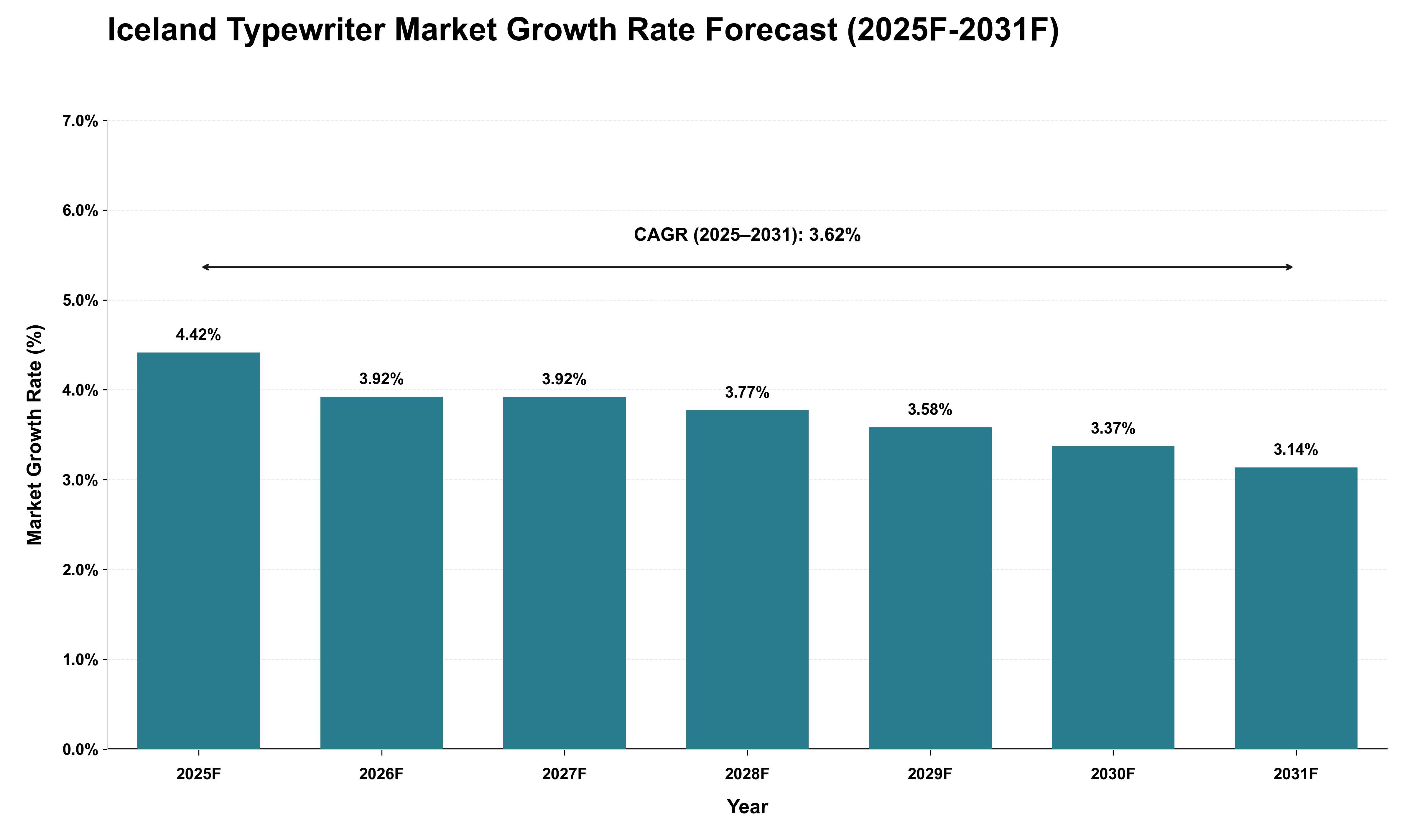
The Iceland typewriter market is projected to experience a compound annual growth rate of 3.62% from 2025 to 2031, reflecting a nuanced interplay of supply chain dynamics and input costs. As global demand for niche writing instruments persists, the anticipated annual growth rates will likely be influenced by fluctuations in raw material prices and shipping logistics, particularly given Iceland's geographic isolation. The initial growth in 2025 at 4.42% suggests a robust start, potentially driven by renewed interest in analog writing tools amidst digital fatigue. However, as the forecast progresses, incremental declines in growth rates indicate that rising import costs and potential supply chain disruptions may begin to exert pressure on pricing strategies and consumer accessibility. Consequently, manufacturers will need to navigate these challenges while optimizing production efficiencies to sustain profitability within this specialized market segment.
Key Highlights of the Report:
- Iceland Typewriter Market Outlook
- Market Size of Iceland Typewriter Market, 2024
- Forecast of Iceland Typewriter Market, 2031
- Historical Data and Forecast of Iceland Typewriter Revenues & Volume for the Period 2021-2031
- Iceland Typewriter Market Trend Evolution
- Iceland Typewriter Market Drivers and Challenges
- Iceland Typewriter Price Trends
- Iceland Typewriter Porter`s Five Forces
- Iceland Typewriter Industry Life Cycle
- Historical Data and Forecast of Iceland Typewriter Market Revenues & Volume By Type for the Period 2021-2031
- Historical Data and Forecast of Iceland Typewriter Market Revenues & Volume By Standard Typewriter for the Period 2021-2031
- Historical Data and Forecast of Iceland Typewriter Market Revenues & Volume By Portable Typewriter for the Period 2021-2031
- Historical Data and Forecast of Iceland Typewriter Market Revenues & Volume By Noiseless Typewriter for the Period 2021-2031
- Historical Data and Forecast of Iceland Typewriter Market Revenues & Volume By Electric Typewriter for the Period 2021-2031
- Historical Data and Forecast of Iceland Typewriter Market Revenues & Volume By Variable Typewriter for the Period 2021-2031
- Historical Data and Forecast of Iceland Typewriter Market Revenues & Volume By Automatic Typewriter for the Period 2021-2031
- Historical Data and Forecast of Iceland Typewriter Market Revenues & Volume By Electronic Typewriter for the Period 2021-2031
- Historical Data and Forecast of Iceland Standard Typewriter Typewriter Market Revenues & Volume By Typewriter with Additional Attachments for the Period 2021-2031
- Historical Data and Forecast of Iceland Typewriter Market Revenues & Volume By Application for the Period 2021-2031
- Historical Data and Forecast of Iceland Typewriter Market Revenues & Volume By Commerical for the Period 2021-2031
- Historical Data and Forecast of Iceland Typewriter Market Revenues & Volume By Industrial for the Period 2021-2031
- Historical Data and Forecast of Iceland Typewriter Market Revenues & Volume By Others for the Period 2021-2031
- Iceland Typewriter Import Export Trade Statistics
- Market Opportunity Assessment By Type
- Market Opportunity Assessment By Application
- Iceland Typewriter Top Companies Market Share
- Iceland Typewriter Competitive Benchmarking By Technical and Operational Parameters
- Iceland Typewriter Company Profiles
- Iceland Typewriter Key Strategic Recommendations






































