Iceland Umbrella Market Growth Rate Analysis (2025 - 2031)
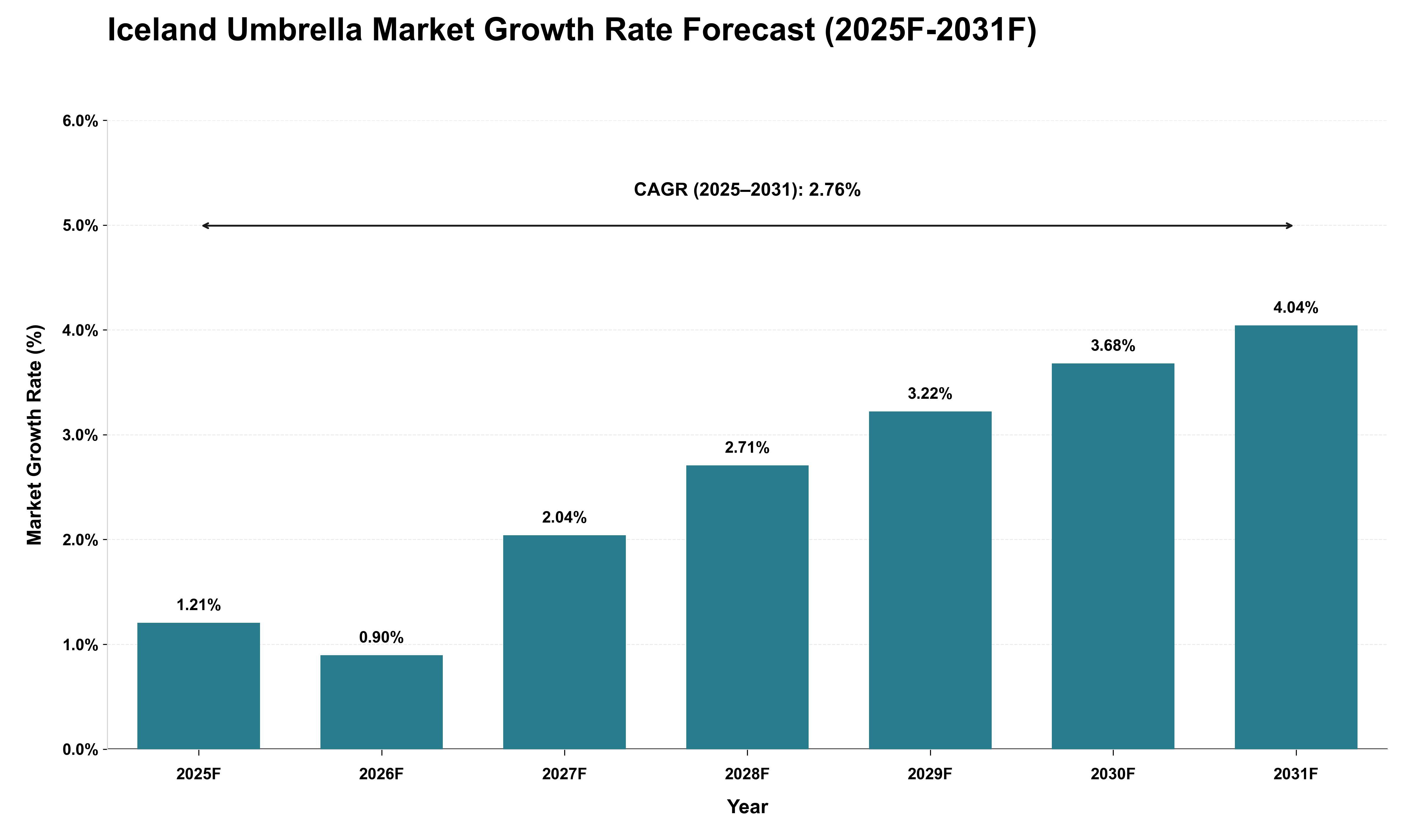
The Iceland umbrella market will experience a gradual increase in growth driven by evolving raw material availability and pricing dynamics. As the forecast period progresses, the anticipated CAGR of 2.76% will reflect a shift in sourcing strategies, with manufacturers likely seeking more sustainable materials to align with global environmental standards. The initial years, characterized by modest growth rates of 1.21% and 0.90%, will indicate adjustments in supply chains as import dependencies on specific materials fluctuate due to geopolitical factors and trade policies. By 2031, growth is projected to reach 4.04%, suggesting that as production efficiencies improve and alternative materials become more accessible, the market will benefit from enhanced consumer demand for durable and eco-friendly products. This trend will be further supported by cyclical patterns in consumer spending on outdoor leisure items, particularly as tourism rebounds post-pandemic.
Key Highlights of the Report:
- Iceland Umbrella Market Outlook
- Market Size of Iceland Umbrella Market, 2025
- Forecast of Iceland Umbrella Market, 2032
- Historical Data and Forecast of Iceland Umbrella Revenues & Volume for the Period 2022-2032F
- Iceland Umbrella Market Trend Evolution
- Iceland Umbrella Market Drivers and Challenges
- Iceland Umbrella Price Trends
- Iceland Umbrella Porter`s Five Forces
- Iceland Umbrella Industry Life Cycle
- Historical Data and Forecast of Iceland Umbrella Market Revenues & Volume By Product for the Period 2022-2032F
- Historical Data and Forecast of Iceland Umbrella Market Revenues & Volume By Reverse Umbrella for the Period 2022-2032F
- Historical Data and Forecast of Iceland Umbrella Market Revenues & Volume By Straight Umbrella for the Period 2022-2032F
- Historical Data and Forecast of Iceland Umbrella Market Revenues & Volume By Folding Umbrella for the Period 2022-2032F
- Historical Data and Forecast of Iceland Umbrella Market Revenues & Volume By Automatic Umbrella for the Period 2022-2032F
- Historical Data and Forecast of Iceland Umbrella Market Revenues & Volume By Other for the Period 2022-2032F
- Historical Data and Forecast of Iceland Umbrella Market Revenues & Volume By Application for the Period 2022-2032F
- Historical Data and Forecast of Iceland Umbrella Market Revenues & Volume By Commercial Use for the Period 2022-2032F
- Historical Data and Forecast of Iceland Umbrella Market Revenues & Volume By Entertainment Use for the Period 2022-2032F
- Iceland Umbrella Import Export Trade Statistics
- Market Opportunity Assessment By Product
- Market Opportunity Assessment By Application
- Iceland Umbrella Top Companies Market Share
- Iceland Umbrella Competitive Benchmarking By Technical and Operational Parameters
- Iceland Umbrella Company Profiles
- Iceland Umbrella Key Strategic Recommendations






































