Iceland Window Blinds Market Growth Rate Analysis (2025 - 2031)
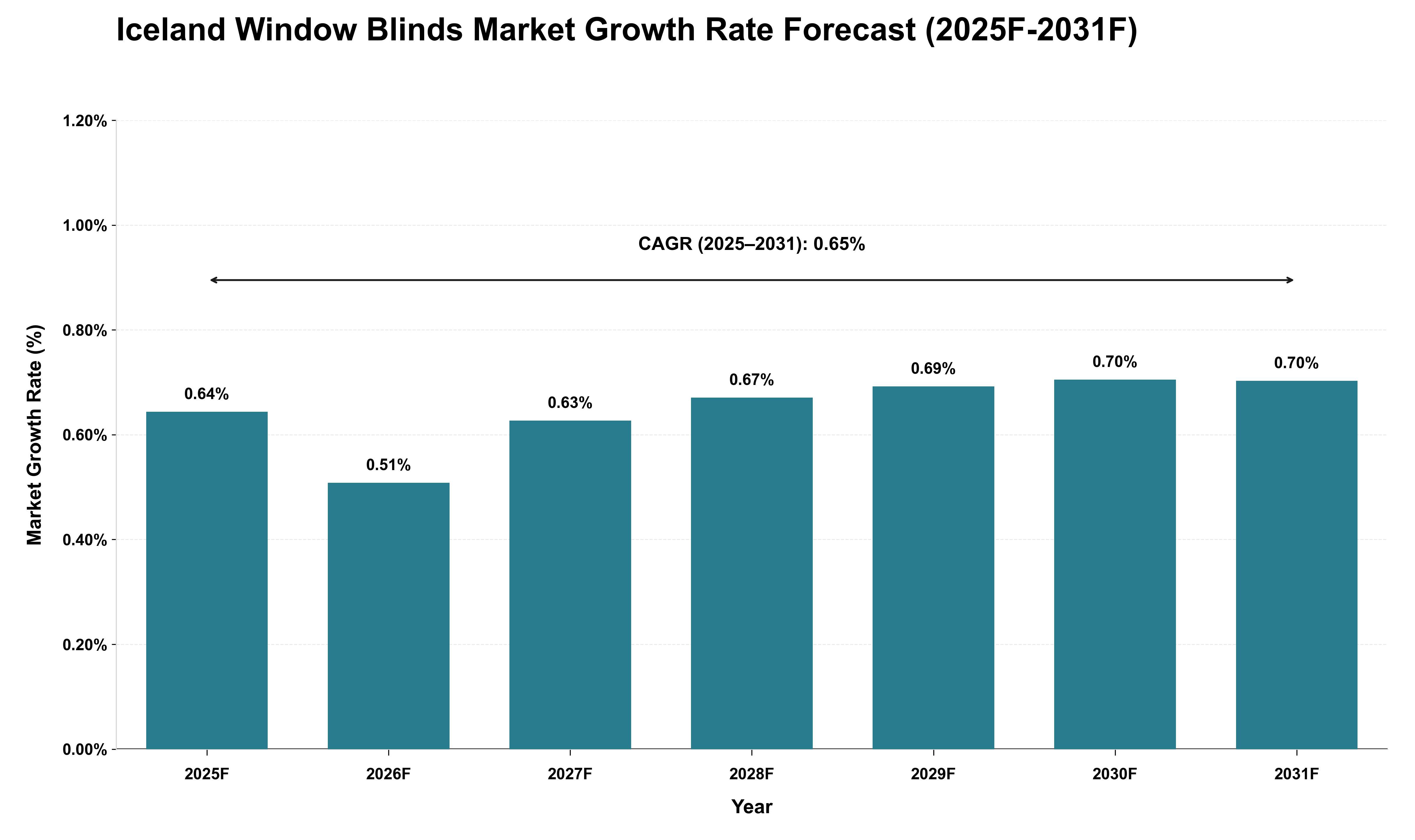
The Iceland window blinds market is projected to experience a compound annual growth rate of 0.65% from 2025 to 2031, reflecting a nuanced interplay of regulatory and trade policy factors. As import dependencies remain significant, fluctuations in global supply chains and tariffs will likely influence pricing and availability, impacting consumer purchasing behavior. The annual growth rates indicate a gradual increase, with notable upticks in 2029 through 2031, suggesting potential easing of trade barriers or improved logistics efficiency that could enhance market access for imported materials. Additionally, cyclical trends in home improvement spending may drive demand as economic conditions stabilize post-pandemic. Regulatory shifts aimed at promoting energy efficiency could further stimulate interest in window treatments that offer insulation benefits, thereby supporting incremental growth within this sector throughout the forecast period.
Key Highlights of the Report:
- Iceland Window Blinds Market Outlook
- Market Size of Iceland Window Blinds Market, 2025
- Forecast of Iceland Window Blinds Market, 2032
- Historical Data and Forecast of Iceland Window Blinds Revenues & Volume for the Period 2022-2032F
- Iceland Window Blinds Market Trend Evolution
- Iceland Window Blinds Market Drivers and Challenges
- Iceland Window Blinds Price Trends
- Iceland Window Blinds Porter's Five Forces
- Iceland Window Blinds Industry Life Cycle
- Historical Data and Forecast of Iceland Window Blinds Market Revenues & Volume By Product for the Period 2022-2032F
- Historical Data and Forecast of Iceland Window Blinds Market Revenues & Volume By Roller Blinds for the Period 2022-2032F
- Historical Data and Forecast of Iceland Window Blinds Market Revenues & Volume By Venetian Blinds for the Period 2022-2032F
- Historical Data and Forecast of Iceland Window Blinds Market Revenues & Volume By Vertical Blinds for the Period 2022-2032F
- Historical Data and Forecast of Iceland Window Blinds Market Revenues & Volume By Panel Blinds for the Period 2022-2032F
- Historical Data and Forecast of Iceland Window Blinds Market Revenues & Volume By Corded Blinds for the Period 2022-2032F
- Historical Data and Forecast of Iceland Window Blinds Market Revenues & Volume By Others for the Period 2022-2032F
- Historical Data and Forecast of Iceland Window Blinds Market Revenues & Volume By Material for the Period 2022-2032F
- Historical Data and Forecast of Iceland Window Blinds Market Revenues & Volume By Metal for the Period 2022-2032F
- Historical Data and Forecast of Iceland Window Blinds Market Revenues & Volume By Wood for the Period 2022-2032F
- Historical Data and Forecast of Iceland Window Blinds Market Revenues & Volume By Plastic for the Period 2022-2032F
- Historical Data and Forecast of Iceland Window Blinds Market Revenues & Volume By Others for the Period 2022-2032F
- Historical Data and Forecast of Iceland Window Blinds Market Revenues & Volume By Application for the Period 2022-2032F
- Historical Data and Forecast of Iceland Window Blinds Market Revenues & Volume By Automatic for the Period 2022-2032F
- Historical Data and Forecast of Iceland Window Blinds Market Revenues & Volume By Manual for the Period 2022-2032F
- Historical Data and Forecast of Iceland Window Blinds Market Revenues & Volume By Installation for the Period 2022-2032F
- Historical Data and Forecast of Iceland Window Blinds Market Revenues & Volume By New Construction for the Period 2022-2032F
- Historical Data and Forecast of Iceland Window Blinds Market Revenues & Volume By Retro-fit for the Period 2022-2032F
- Iceland Window Blinds Import Export Trade Statistics
- Market Opportunity Assessment By Product
- Market Opportunity Assessment By Material
- Market Opportunity Assessment By Application
- Market Opportunity Assessment By Installation
- Iceland Window Blinds Top Companies Market Share
- Iceland Window Blinds Competitive Benchmarking By Technical and Operational Parameters
- Iceland Window Blinds Company Profiles
- Iceland Window Blinds Key Strategic Recommendations






































