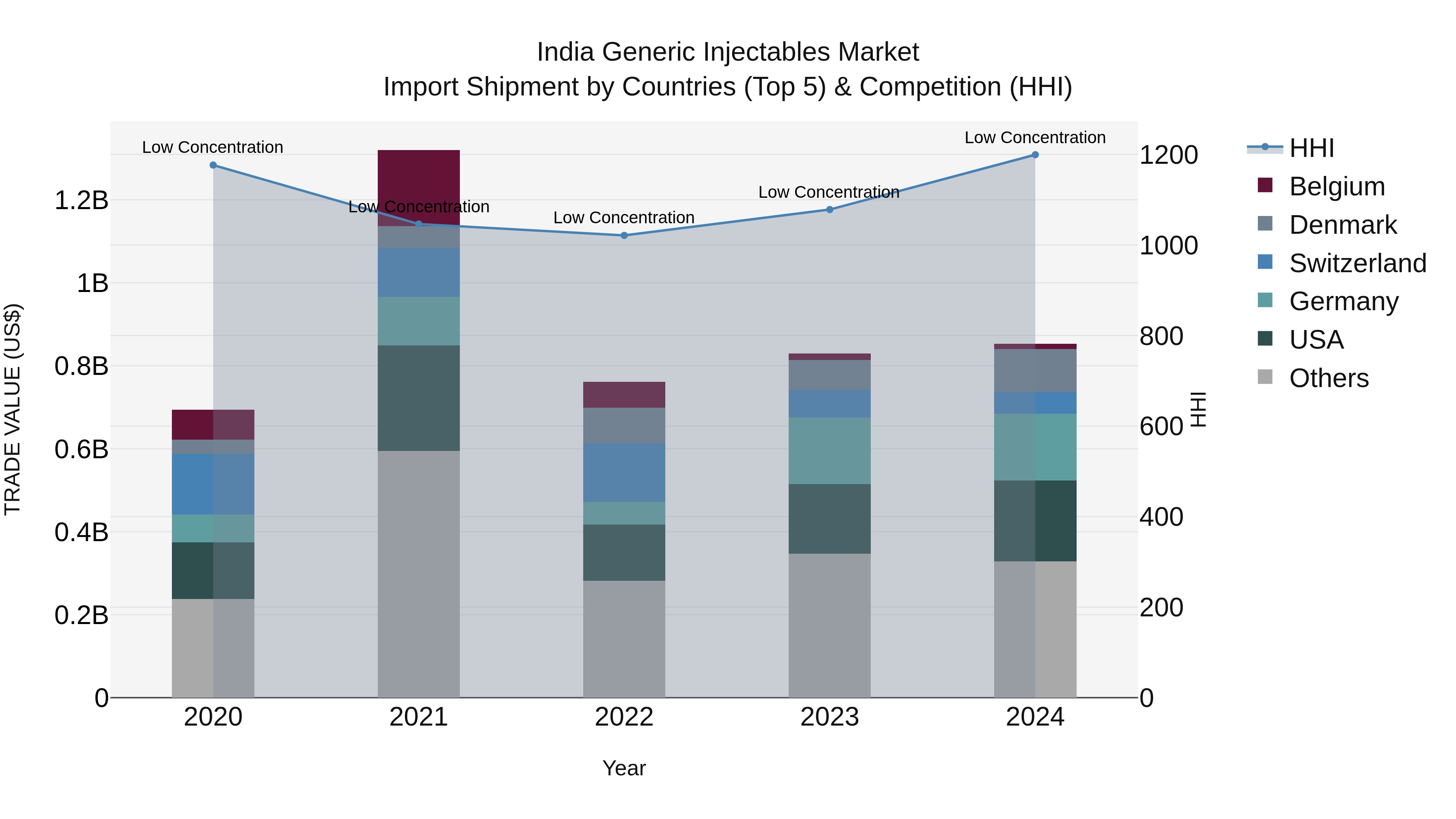
India Generic Injectables Market Top 5 Importing Countries and Market Competition (HHI) Analysis
India`s import of generic injectables saw steady growth in 2024, with top exporting countries being the USA, Germany, Denmark, Italy, and Switzerland. The market remained relatively competitive with low concentration, indicating a diverse range of suppliers. The compound annual growth rate (CAGR) from 2020 to 2024 stood at a healthy 5.28%, with a growth rate of 2.82% in 2023-24 alone. This data suggests a positive trajectory for the generic injectables market in India, driven by a mix of quality suppliers from various countries.
India Generic Injectables Market Growth Rate
According to 6Wresearch internal database and industry insights,
Five-Year Growth Trajectory of the India Generic Injectables Market with Core Drivers
Below is the evaluation of years-wise growth rate along with key growth drivers:
| Year | Est. Annual Growth (%) | Growth Drivers |
| 2021 | 4.5 | Growing prevalence of oncology, diabetes, and infectious diseases is increasing the demand for generic injectables. |
| 2022 | 5.2 | The cost of healthcare and the shift towards affordable treatments drive higher adoption of generic injectable drugs. |
| 2023 | 6.9 | Government initiatives and regulatory support for the manufacturing of generic drugs have bolstered the market. |
| 2024 | 7.5 | Pharmaceutical manufacturing sector widely expanded, along with foreign investments grew, contributed to market growth. |
| 2025 | 8.4 | Small molecule injectables developed and awareness about generic drugs grew among healthcare professionals supported growth. |
Topics Covered in the India Generic Injectables Market Report
The India Generic Injectables Market report thoroughly covers the market by product type, application, container type, and route of administration. The report provides an unbiased and detailed analysis of ongoing market trends, opportunities/high growth areas, and market drivers, which would help stakeholders devise and align their market strategies according to current and future market dynamics.
India Generic Injectables Market Highlights
| Report Name | India Generic Injectables Market |
| Forecast period | 2026-2032 |
| CAGR | 9.2% |
| Growing Sector | Pharmaceuticals |
India Generic Injectables Market Synopsis
India Generic Injectables Market is undergoing major transformation over the past few years due to growing increasing demand for affordable injectable drugs, particularly in oncology, cardiology, and diabetes treatment areas. Initiatives and regulatory frameworks are supporting the manufacturing of generics have accelerated market adoption. Aside from these, biotechnology and formulation technologies are being advanced which have led to the production of more effective generic injectables, is expected to drive the market.
Evaluation of Growth Drivers in the India Generic Injectables Market
Below are the key growth drivers and their impacts on the market dynamics:
| Drivers | Primary Segments Affected | Why it matters (evidence) |
| Rising Prevalence of Chronic Diseases | By Application | Chronic diseases such as cancer, diabetes, and cardiovascular diseases are driving the demand for injectables. |
| Government Initiatives for Generic Drugs | By Product Type, By Application | Government support, including price control measures and regulatory frameworks, is driving the growth of the generic injectables market. |
| Growing Focus on Affordable Healthcare | By Application, By Product Type | Healthcare professionals and patients are increasingly opting for generic injectables due to their cost-effectiveness. |
| Advancements in Biotechnology & Formulations | By Product Type, By Route of Administration | Biotechnology is seeing advancements which have led to the development of more effective and targeted generic injectables. |
| Expanding Healthcare Infrastructure | By End-Users | Government and private sector increased funds in healthcare facilities to promote the use of generic injectables, especially in hospitals and clinics. |
India Generic Injectables Market Size is estimated to grow at a CAGR of 9.1% during the forecast period from 2026 to 2032. This industry is expanding gradually with a growing demand for affordable healthcare solutions, particularly in the treatment of chronic diseases like cancer, diabetes, and cardiovascular disorders. Also, the adoption of generic drugs is growing due to their cost-effectiveness is driving market growth. Advancements are occurring in technological drug formulations and the expansion of the healthcare infrastructure will provide further growth momentum to the market.
Evaluation of Restraints in the India Generic Injectables Market
Below are the key restraints and their influence on the market dynamics:
| Restraints | Primary Segments Affected | What this means (evidence) |
| High R&D Costs and Investment | By Product Type, By Application | Significant investments are aided in research and development of generic injectables may slow down market expansion. |
| Regulatory and Patent Challenges | By Product Type, By Application | Patent litigation and regulatory hurdles may delay the market entry of new generic injectables. |
| Limited Availability of Skilled Labor | By Product Type, By End-Users | The lack of skilled labour in the pharmaceutical sector can affect the production quality and adoption of generic injectables. |
| Perception Issues Regarding Generic Quality | By Brand, By Product Type | Some consumers and healthcare providers still have concerns regarding the efficacy and quality of generic injectables compared to branded drugs. |
| Supply Chain Challenges | By Container Type, By End-Users | Inconsistent supply and distribution channels can hinder the availability of generic injectables in remote and rural areas. |
India Generic Injectables Market Challenges
India Generic Injectables Market faces numbers of challenges that need to be addressed for continued growth. Some of major challenges are high research and development costs, regulatory complexities, and patent disputes. Further, the lack of skilled labour in the pharmaceutical manufacturing sector creates challenges to produce high-quality generic injectables. While the market is expanding, concerns are growing over the quality of generics and limited availability in rural areas may hinder adoption. To overcome these challenges will be critical for the sustainable growth of the generic injectables market in India.
India Generic Injectables Market Trends
Below are the major trends present in the India Generic Injectables Market, which include:
- Rise in Biologic and Biosimilar Injectables: Biosimilars and biologics are developing in the market, is boosting the demand for generic injectables.
- Growth of Prefilled Syringes: Prefilled syringes are more preferred among doctors due to their convenience, accuracy, and reduced risk of contamination, especially in homecare settings.
- Increase in Subcutaneous and Intramuscular Injectables: The demand for subcutaneous and intramuscular injectables is growing due to their ease of use and effectiveness in treating chronic conditions such as diabetes.
- Adoption of Smart Injectable Devices: The use of smart devices in the administration of injectables, such as connected prefilled syringes, is gaining momentum, providing more accurate dosing and patient convenience.
Investment Opportunities in the India Generic Injectables Industry
Several investments opportunities exist in the India Generic Injectables Industry which include:
- Biosimilars and Biologics Development: Funds are aided to the development of biosimilars for complex biologic drugs provides a strong growth opportunity in the market.
- Rural Market Expansion: Distribution networks are expanding in rural and underserved areas which offers significant potential for reaching a larger customer base and increasing market share.
- Manufacturing of Small Molecule Injectables: There is a growing demand for small molecule injectables in oncology, cardiology, and infectious diseases, presenting lucrative investment opportunities.
- Technological Advancements in Drug Delivery Systems: Funds are increasing in advanced drug delivery systems such as smart injectables and controlled-release injectables offers high growth potential.
Top 5 Leading Players in the India Generic Injectables Market
Some of the leading companies operating the India Generic Injectables Market which include:
1. Sandoz (Novartis)
| Company Name | Sandoz (Novartis) |
|---|---|
| Established Year | 2003 |
| Headquarters | Basel, Switzerland |
| Official Website | Click Here |
This company offers a broad portfolio of generic injectables, with a strong focus on oncology, immunology, and biologics.
2. Teva Pharmaceutical Industries Ltd.
| Company Name | Teva Pharmaceutical Industries Ltd. |
|---|---|
| Established Year | 1901 |
| Headquarters | Petah Tikva, Israel |
| Official Website | Click Here |
This is a global leader in generic injectables, with a strong market presence in India, offering a wide range of products across therapeutic areas.
3. Cipla
| Company Name | Cipla |
|---|---|
| Established Year | 1935 |
| Headquarters | Mumbai, India |
| Official Website | Click Here |
This is a prominent player in India’s generic injectables market, providing affordable and high-quality injectables in areas like oncology, cardiology, and diabetes.
4. Mylan (Viatris)
| Company Name | Mylan (Viatris) |
|---|---|
| Established Year | 1961 |
| Headquarters | Canonsburg, Pennsylvania, USA |
| Official Website | Click Here |
Mylan is a part of Viatris who offers a wide range of generic injectables with a focus on affordability and access to critical medicines in India.
5. Baxter International Inc.
| Company Name | Baxter International Inc. |
|---|---|
| Established Year | 1931 |
| Headquarters | Deerfield, Illinois, USA |
| Official Website | Click Here |
This is a key player in the India generic injectables market, focusing on delivering high-quality products for critical care and hospital use.
Government Regulations in the India Generic Injectables Market
According to Indian Government Data, generic injectables industry in India is supported by frameworks of regulations which aim is to ensure the quality, efficacy, and safety of generic injectables. One of the government bodies such as Central Drugs Standard Control Organization (CDSCO) governs the approval and manufacture of generic injectables in India, enforcing stringent quality control standards. Further, the National Pharmaceutical Pricing Authority (NPPA) is one of the main associates which regulates the pricing of generic drugs that makes them more affordable and accessible to the population. These regulations are expected to support the continued growth of the generic injectables market.
Future Insights of the India Generic Injectables Market
During the forecast period, the India Generic Injectables Market is expected to grow steadily. This industry is expanding rapidly with the healthcare needs, government support for generic drug production, and ongoing advancements in drug delivery technologies. In the recent years, biosimilars, small molecule injectables, and prefilled syringes are growing in demand, is likely to grow, as will the adoption of injectables in homecare settings. Further, as the country continues to expand its healthcare infrastructure, the market for generic injectables is set to reach new heights.
Market Segmentation Analysis
The report offers a comprehensive study of the following market segments and their leading categories:
Small molecule to Dominate the Market – By Product Type
According to Vasu, Senior Research Analyst, 6Wresearch, small molecule injectables dominate the market due to their wide applicability and affordability, especially in oncology, cardiology, and infectious diseases. Large molecule injectables, including biologics and biosimilars, are expected to see substantial growth due to the rising demand for complex therapies.
Oncology to Dominate the Market – By Application
Oncology injectables are the leading segment due to the increasing incidence of cancer in India. Infectious diseases and cardiology also hold significant shares, driven by the rising burden of chronic conditions and infections.
Vials to Dominate the Market – By Container Type
Vials are the most commonly used container for injectables, while prefilled syringes are gaining popularity due to their convenience and accuracy, especially for homecare applications.
Intravenous injectables to Dominate the Market - By Route of Administration
Intravenous (IV) injectables dominate the market due to their rapid onset of action and wide usage in hospitals and critical care settings. Intramuscular and subcutaneous injectables are also growing in popularity due to their ease of use in outpatient and homecare settings.
Hospitals to Dominate the Market - By End-Users
Hospitals remain the largest end-user segment, followed by homecare and specialty clinics, as patients increasingly prefer affordable, easy-to-administer generic injectables for chronic conditions and long-term treatments.
Key attractiveness of the Report
- 10 Years Market Numbers.
- Historical Data Starting from 2022 to 2025.
- Base Year: 2025.
- Forecast Data until 2032.
- Key Performance Indicators Impacting the Market.
- Major Upcoming Developments and Projects.
Key Highlights of the Report:
- India Generic Injectables Market Outlook
- Market Size of India Generic Injectables Market, 2025
- Forecast of India Generic Injectables Market, 2032
- Historical Data and Forecast of India Generic Injectables Revenues & Volume for the Period 2022- 2032
- India Generic Injectables Market Trend Evolution
- India Generic Injectables Market Drivers and Challenges
- India Generic Injectables Price Trends
- India Generic Injectables Porter's Five Forces
- India Generic Injectables Industry Life Cycle
- Historical Data and Forecast of India Generic Injectables Market Revenues & Volume By Product Type for the Period 2022- 2032
- Historical Data and Forecast of India Generic Injectables Market Revenues & Volume By Large Molecule Injectables for the Period 2022- 2032
- Historical Data and Forecast of India Generic Injectables Market Revenues & Volume By Small Molecule Injectables for the Period 2022- 2032
- Historical Data and Forecast of India Generic Injectables Market Revenues & Volume By Application for the Period 2022- 2032
- Historical Data and Forecast of India Generic Injectables Market Revenues & Volume By Oncology for the Period 2022- 2032
- Historical Data and Forecast of India Generic Injectables Market Revenues & Volume By Infectious Diseases for the Period 2022- 2032
- Historical Data and Forecast of India Generic Injectables Market Revenues & Volume By Cardiology for the Period 2022- 2032
- Historical Data and Forecast of India Generic Injectables Market Revenues & Volume By Diabetes for the Period 2022- 2032
- Historical Data and Forecast of India Generic Injectables Market Revenues & Volume By Immunology for the Period 2022- 2032
- Historical Data and Forecast of India Generic Injectables Market Revenues & Volume By Others for the Period 2022- 2032
- Historical Data and Forecast of India Generic Injectables Market Revenues & Volume By Container Type for the Period 2022- 2032
- Historical Data and Forecast of India Generic Injectables Market Revenues & Volume By Vials for the Period 2022- 2032
- Historical Data and Forecast of India Generic Injectables Market Revenues & Volume By Premix for the Period 2022- 2032
- Historical Data and Forecast of India Generic Injectables Market Revenues & Volume By Prefilled Syringes for the Period 2022- 2032
- Historical Data and Forecast of India Generic Injectables Market Revenues & Volume By Ampoules for the Period 2022- 2032
- Historical Data and Forecast of India Generic Injectables Market Revenues & Volume By Others for the Period 2022- 2032
- Historical Data and Forecast of India Generic Injectables Market Revenues & Volume By Route of Administration for the Period 2022- 2032
- Historical Data and Forecast of India Generic Injectables Market Revenues & Volume By Intravenous for the Period 2022- 2032
- Historical Data and Forecast of India Generic Injectables Market Revenues & Volume By Intramuscular for the Period 2022- 2032
- Historical Data and Forecast of India Generic Injectables Market Revenues & Volume By Subcutaneous for the Period 2022- 2032
- Historical Data and Forecast of India Generic Injectables Market Revenues & Volume By Others for the Period 2022- 2032
- India Generic Injectables Import Export Trade Statistics
- Market Opportunity Assessment By Product Type
- Market Opportunity Assessment By Application
- Market Opportunity Assessment By Container Type
- Market Opportunity Assessment By Route of Administration
- India Generic Injectables Top Companies Market Share
- India Generic Injectables Competitive Benchmarking By Technical and Operational Parameters
- India Generic Injectables Company Profiles
- India Generic Injectables Key Strategic Recommendations
Market Covered
The report offers a comprehensive study of the subsequent market segments:
By Product Type
- Large Molecule Injectables
- Small Molecule Injectables
By Application
- Oncology
- Infectious Diseases
- Cardiology
- Diabetes
- Immunology
- Others
By Container Type
- Vials
- Premix
- Prefilled Syringes
- Ampoules
- Others
By Route of Administration
- Intravenous
- Intramuscular
- Subcutaneous
- Others






































