India Nylon Market Size Growth Rate
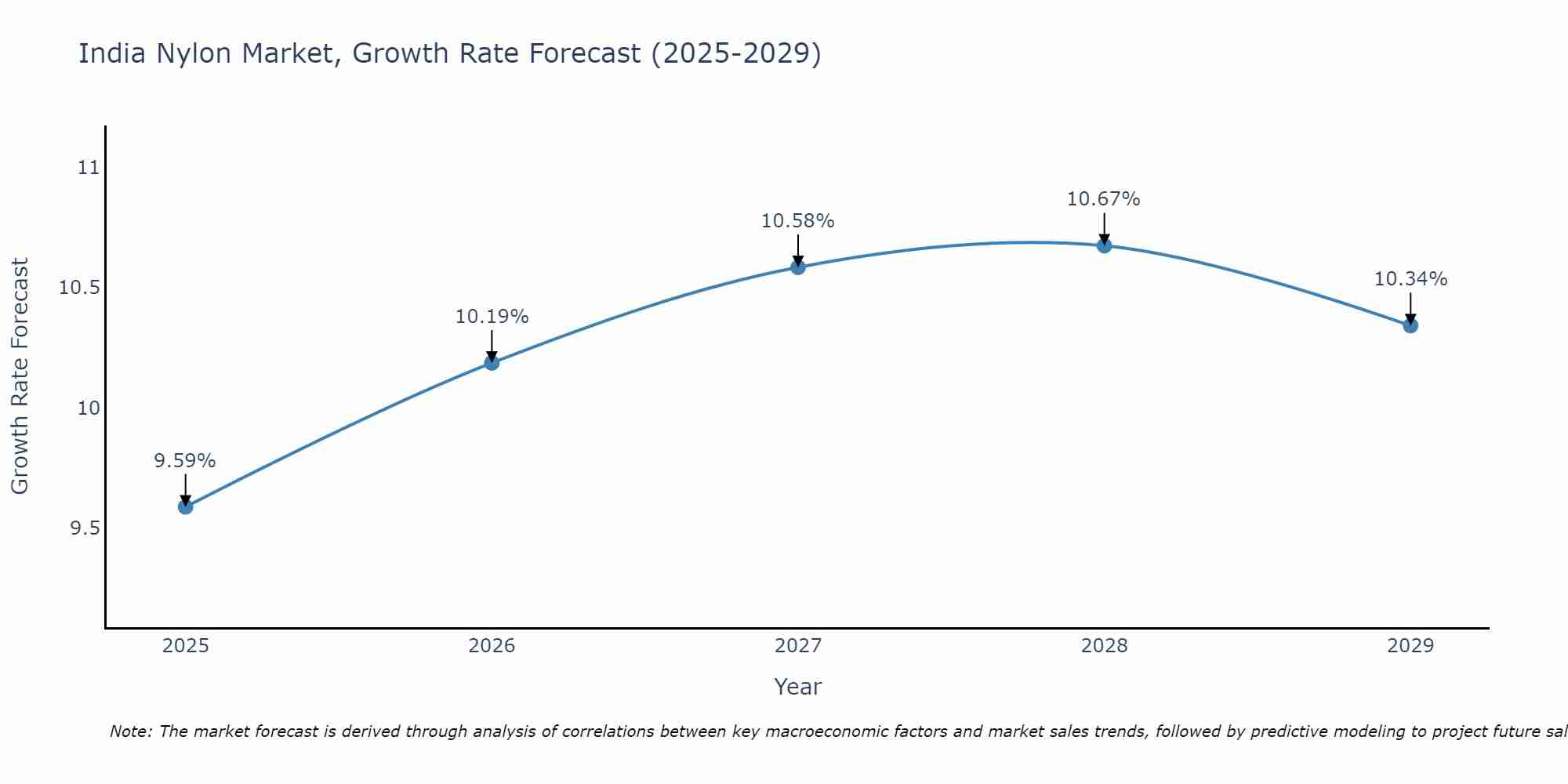
The India Nylon Market is projected to witness mixed growth rate patterns during 2025 to 2029. The growth rate begins at 9.59% in 2025, climbs to a high of 10.67% in 2028, and moderates to 10.34% by 2029.
India Nylon Market Overview
The India nylon market plays a vital role in the textile and industrial sectors. Nylon`s versatility and durability have made it a preferred material for a wide range of products, from clothing and textiles to automotive components and packaging. With a growing middle-class population and industrial development, the demand for nylon products continues to rise.
Drivers of the Market
The India nylon market is driven by the versatile applications of nylon in various industries, including textiles, automotive, and consumer goods. The automotive sector`s need for lightweight, durable components and the textile industry`s demand for synthetic fibers with desirable properties propel the market. Additionally, the expanding middle-class population fuels the demand for nylon-based consumer products.
Challenges of the Market
The India Nylon market contends with challenges such as price volatility in the petroleum-based raw materials used in nylon production. Environmental issues associated with the production process and recycling of nylon also pose significant challenges.
COVID-19 Impact on the Market
The nylon market saw fluctuations in demand due to supply chain disruptions and changing consumer preferences in the fashion and textile industries.
Key Players in the Market
In the India Nylon market, major players hold a substantial share in the production and supply of nylon products, including yarns, textiles, and industrial materials. Key industry participants include Reliance Industries Limited, the Aditya Birla Group, Hyosung India Pvt. Ltd, and Gujarat Polyfilms Pvt. Ltd. These companies are instrumental in meeting the country`s growing demand for nylon-based products across various sectors, such as textiles, automotive, and packaging.
Key Highlights of the Report:
- India Nylon Market Outlook
- Market Size of India Nylon Market, 2024
- Forecast of India Nylon Market, 2031
- Historical Data and Forecast of India Nylon Revenues & Volume for the Period 2021-2031
- India Nylon Market Trend Evolution
- India Nylon Market Drivers and Challenges
- India Nylon Price Trends
- India Nylon Porter's Five Forces
- India Nylon Industry Life Cycle
- Historical Data and Forecast of India Nylon Market Revenues & Volume By Product for the Period 2021-2031
- Historical Data and Forecast of India Nylon Market Revenues & Volume By Nylon 6 for the Period 2021-2031
- Historical Data and Forecast of India Nylon Market Revenues & Volume By Nylon 66 for the Period 2021-2031
- Historical Data and Forecast of India Nylon Market Revenues & Volume By Application for the Period 2021-2031
- Historical Data and Forecast of India Nylon Market Revenues & Volume By Automobile for the Period 2021-2031
- Historical Data and Forecast of India Nylon Market Revenues & Volume By Electrical & Electronics for the Period 2021-2031
- Historical Data and Forecast of India Nylon Market Revenues & Volume By Engineering Plastics for the Period 2021-2031
- Historical Data and Forecast of India Nylon Market Revenues & Volume By Textiles for the Period 2021-2031
- Historical Data and Forecast of India Nylon Market Revenues & Volume By Others for the Period 2021-2031
- India Nylon Import Export Trade Statistics
- Market Opportunity Assessment By Product
- Market Opportunity Assessment By Application
- India Nylon Top Companies Market Share
- India Nylon Competitive Benchmarking By Technical and Operational Parameters
- India Nylon Company Profiles
- India Nylon Key Strategic Recommendations






































