Indonesia Ascorbic Acid Market Size, Share & Growth Rate
The Indonesia Ascorbic Acid Market was estimated at USD 192 Million in 2025 and is projected to reach USD 255 Million by 2032, growing at a CAGR of 4.1% from 2026 to 2032. This upward trajectory can be attributed to the burgeoning demand for nutritional supplements and fortified food products, as consumers increasingly prioritize health and wellness. Additionally, the versatility of ascorbic acid across various sectors, including food & beverage and cosmetics, positions it as a vital ingredient driving market expansion.
Indonesia Ascorbic Acid Market Year-wise Growth Rate and Key Drivers
This graph highlights how the Indonesia Ascorbic Acid Market has steadily grown over the years, supported by major growth factors.
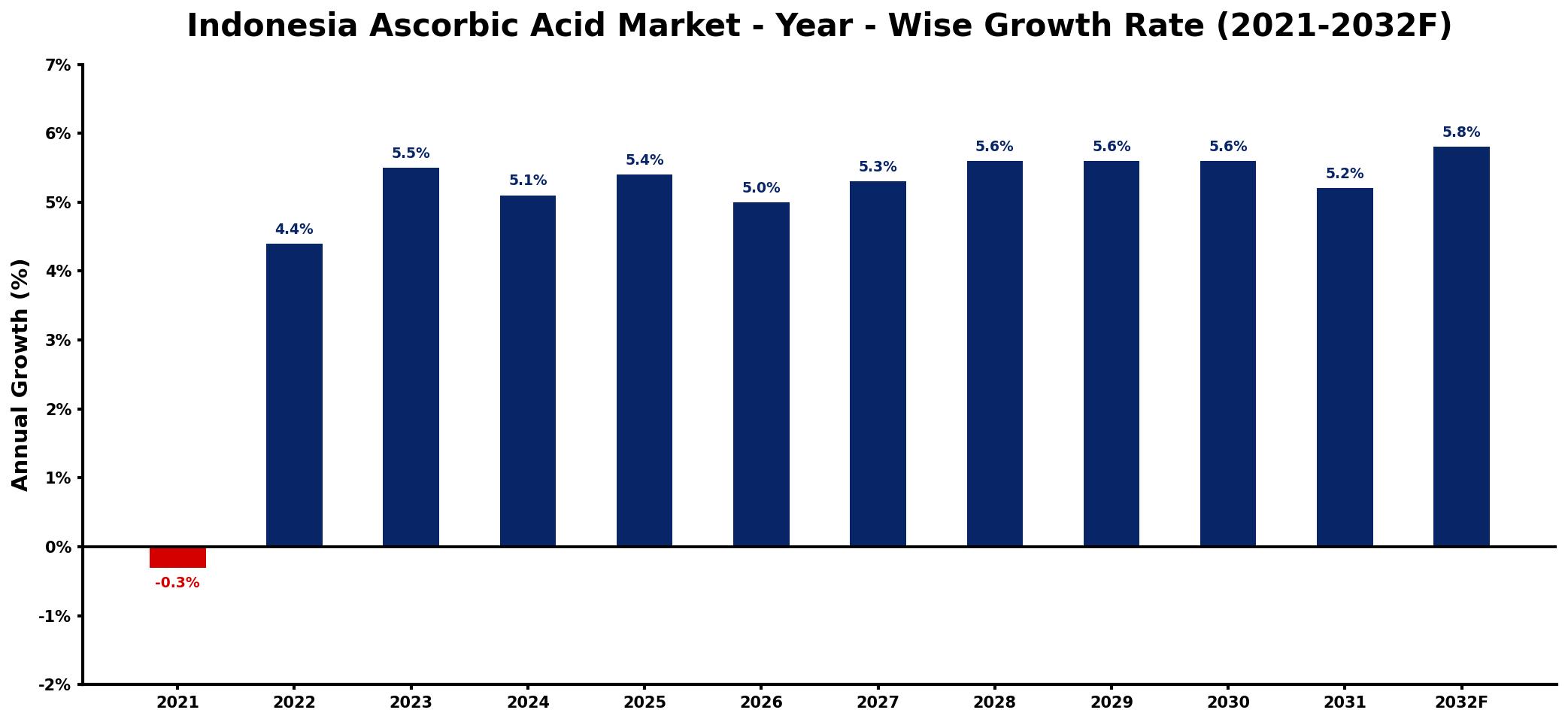
The table below presents the year‑wise growth rates along with the key drivers influencing the market
| Year | Growth Rate | Major Drivers |
| 2021 | -0.3% | decrease in consumer spending habits |
| 2022 | 4.4% | increased health awareness initiatives |
| 2023 | 5.5% | growing demand for dietary supplements |
| 2024 | 5.1% | expansion of food fortification programs |
| 2025 | 5.4% | rising popularity of functional foods |
| 2026 | 5.0% | investments in nutrition research projects |
| 2027 | 5.3% | enhanced distribution network efficiencies |
| 2028 | 5.6% | growth in natural ingredient sourcing |
| 2029 | 5.6% | increased export opportunities emerging |
| 2030 | 5.6% | development of innovative product formulations |
| 2031 | 5.2% | strengthened regulatory support initiatives |
| 2032 | 5.8% | surge in e-commerce sales platforms |
Note: Market size estimations and growth projections presented in this report are based on 6Wresearch's proprietary forecasting methodology, utilizing the latest available industry data, government publications, and primary research inputs.
Indonesia Ascorbic Acid Market Synopsis
The growing trend toward preventative healthcare has significantly boosted the demand for vitamin C-rich products in Indonesia. Consumers are now more inclined to invest in health-enhancing products that feature ascorbic acid, enhancing its popularity across multiple segments. The presence of robust distribution channels, alongside increasing health awareness, further fuels this trend.
Moreover, ascorbic acid's role in pharmaceutical formulations has garnered attention, particularly in the wake of the COVID-19 pandemic. With a rising focus on immune system support, the market is witnessing a surge in products leveraging this potent vitamin. However, navigating stringent regulatory frameworks remains a pivotal concern for manufacturers.
Indonesia Ascorbic Acid Market Key Takeaways
- Strong demand for health supplements and fortified food products is driving market growth.
- Ascorbic acids versatility enhances its application across food, beverages, and cosmetics.
- Regulatory hurdles pose challenges for companies seeking to expand their product offerings.
- Consumer awareness about the health benefits of vitamin C continues to rise.
- Infrastructure developments and increased disposable income will further propel market dynamics.
Evaluation of Restraints in Indonesia Ascorbic Acid Market
Despite its promising growth potential, the Indonesia ascorbic acid market faces significant constraints. One of the primary challenges involves the reliability of raw material supply chains, which can influence both production costs and quality. Fluctuations in the availability of high-quality inputs can lead to inconsistencies in product offerings, subsequently affecting market competitiveness. Moreover, the regulatory landscape presents additional hurdles, as compliance with stringent industry standards can slow down the time-to-market for new products.
Indonesia Ascorbic Acid Market Trends
Key trends shaping the Indonesia ascorbic acid market include the increasing formulation of health products emphasizing clean labels and natural ingredients. As consumers become more discerning, brands are pivoting towards transparency in sourcing and production practices. Additionally, innovative delivery formats such as effervescent tablets and gummies are gaining traction, catering to a broader demographic, including younger consumers seeking convenient health solutions.
Indonesia Ascorbic Acid Market Opportunities
The Indonesian ascorbic acid market is ripe with investment opportunities, particularly in the realm of product innovation. Companies that can develop novel formulations targeting specific health issues, such as stress relief or skin health, are likely to gain a competitive advantage. Furthermore, exploring untapped regions within the archipelago could uncover new customer bases, capitalizing on the growing trend of personalized nutrition tailored to local preferences.
Government Initiatives in the Indonesia Ascorbic Acid Market
The Indonesian government has increasingly focused on promoting health and wellness initiatives, which supports the ascorbic acid market indirectly. Various public health campaigns aimed at enhancing nutritional awareness are conducive to market growth. Additionally, the government encourages investments in the pharmaceutical and nutraceutical sectors through incentives and support programs designed to bolster local manufacturing capabilities.
Future Insights of the Indonesia Ascorbic Acid Market
Looking forward, the Indonesia ascorbic acid market is poised for steady growth through 2026-2032. The convergence of heightened health awareness, rising disposable incomes, and a preference for preventive healthcare strategies will fortify demand. Moreover, advancements in extraction and formulation technologies will likely enhance product efficacy and broaden application possibilities, ensuring that ascorbic acid maintains its relevance across various industries.
Indonesia Ascorbic Acid Market Latest Developments (2025 - 2026)
Recent developments in the ascorbic acid market have seen a marked shift towards sustainable sourcing practices. Companies are increasingly prioritizing eco-friendly production methods and packaging options to appeal to environmentally conscious consumers. Additionally, new partnerships and collaborations are emerging among manufacturers to enhance distribution efficiency, thereby improving product availability in both urban and rural markets.
Indonesia Ascorbic Acid Market - Key Attractiveness of the Report
- 10 Years of Market Numbers
- Historical Data Starting from 2022 to 2025
- Base Year: 2025
- Forecast Data until 2032
- Key Performance Indicators Impacting the Market
- Major Upcoming Developments and Projects
Key Highlights of the Report:
- Indonesia Ascorbic Acid Market Outlook
- Market Size of Indonesia Ascorbic Acid Market, 2025
- Forecast of Indonesia Ascorbic Acid Market, 2032
- Historical Data and Forecast of Indonesia Ascorbic Acid Revenues & Volume for the Period 2022-2032F
- Indonesia Ascorbic Acid Market Trend Evolution
- Indonesia Ascorbic Acid Market Drivers and Challenges
- Indonesia Ascorbic Acid Price Trends
- Indonesia Ascorbic Acid Porter's Five Forces
- Indonesia Ascorbic Acid Industry Life Cycle
- Historical Data and Forecast of Indonesia Ascorbic Acid Market Revenues & Volume By Grade for the Period 2022-2032F
- Historical Data and Forecast of Indonesia Ascorbic Acid Market Revenues & Volume By Food & Pharmaceutical for the Period 2022-2032F
- Historical Data and Forecast of Indonesia Ascorbic Acid Market Revenues & Volume By Industrial for the Period 2022-2032F
- Historical Data and Forecast of Indonesia Ascorbic Acid Market Revenues & Volume By Application for the Period 2022-2032F
- Historical Data and Forecast of Indonesia Ascorbic Acid Market Revenues & Volume By Food & Beverages for the Period 2022-2032F
- Historical Data and Forecast of Indonesia Ascorbic Acid Market Revenues & Volume By Pharmaceutical for the Period 2022-2032F
- Historical Data and Forecast of Indonesia Ascorbic Acid Market Revenues & Volume By Cosmetics for the Period 2022-2032F
- Historical Data and Forecast of Indonesia Ascorbic Acid Market Revenues & Volume By Chemicals for the Period 2022-2032F
- Historical Data and Forecast of Indonesia Ascorbic Acid Market Revenues & Volume By Agriculture for the Period 2022-2032F
- Historical Data and Forecast of Indonesia Ascorbic Acid Market Revenues & Volume By Others for the Period 2022-2032F
- Indonesia Ascorbic Acid Import Export Trade Statistics
- Market Opportunity Assessment By Grade
- Market Opportunity Assessment By Application
- Indonesia Ascorbic Acid Top Companies Market Share
- Indonesia Ascorbic Acid Competitive Benchmarking By Technical and Operational Parameters
- Indonesia Ascorbic Acid Company Profiles
- Indonesia Ascorbic Acid Key Strategic Recommendations






































