indonesia coffee market
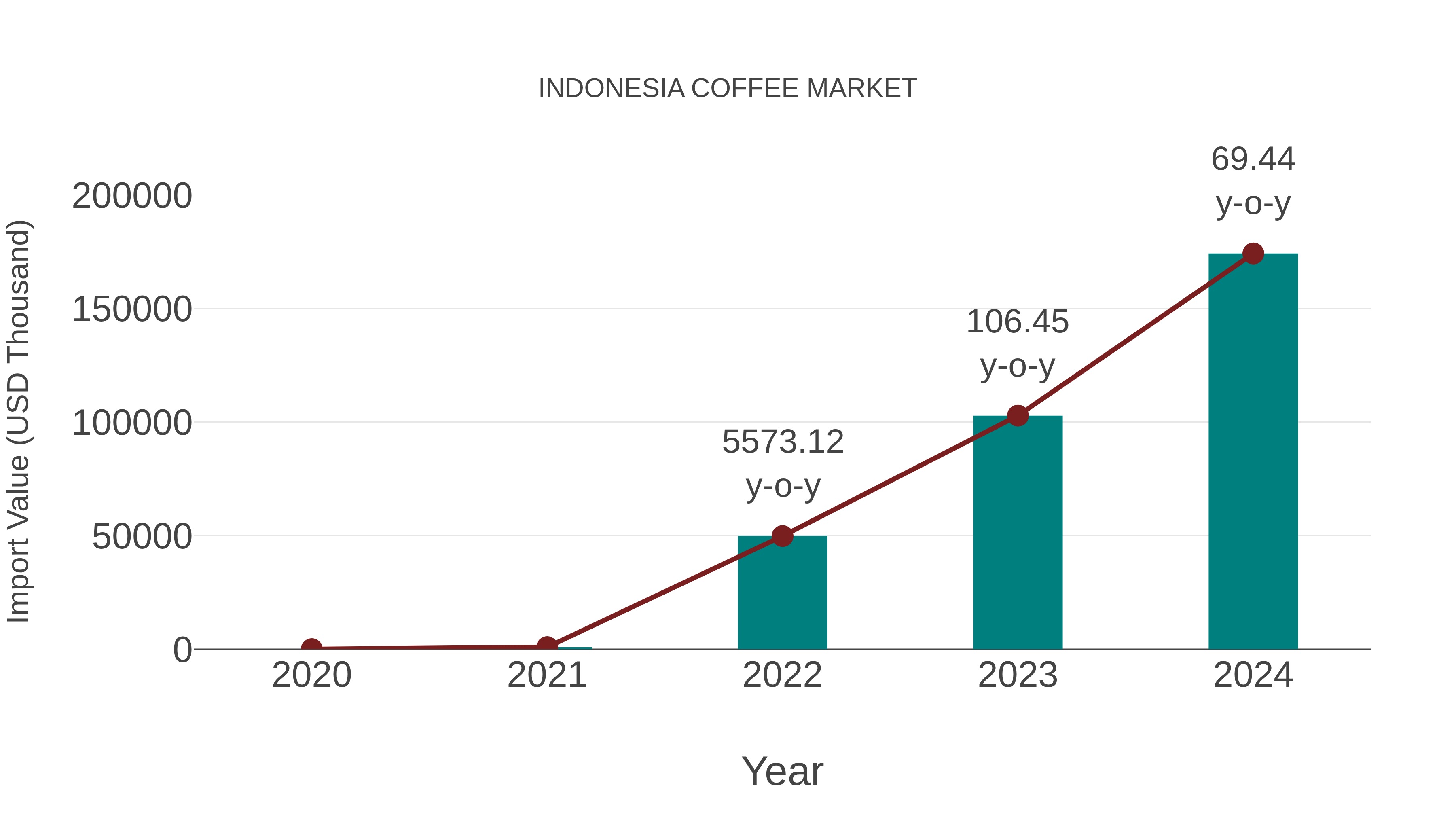
Indonesia Coffee Market Growth Rate
According to 6Wresearch internal database and industry insights, the Indonesia Coffee Market is projected to grow at a compound annual growth rate (CAGR) of 7.6% during the forecast period (2026–2032).
Five-Year Growth Trajectory of the Indonesia Coffee Market with Core Drivers
Below mentioned are the evaluation of years wise growth rate along with key growth drivers:
| Year | Est. Annual Growth (%) | Growth Drivers |
| 2021 | 5.2% | Rebound in coffee demand post-economic stabilization |
| 2022 | 5.9% | Expansion of coffee consumption and the rise of specialty coffee |
| 2023 | 6.5% | Growth in coffee culture and cafe chains across urban regions |
| 2024 | 7.1% | Increased demand for premium coffee products and brewing equipment |
| 2025 | 7.3% | Rising domestic coffee production and international export growth |
Topics Covered in the Indonesia Coffee Market Report
The Indonesia Coffee Market report thoroughly covers the market by product type and distribution channel. The market report provides an unbiased and detailed analysis of ongoing market trends, opportunities/high growth areas, and market drivers, which help stakeholders devise and align their market strategies according to the current and future market dynamics.
Indonesia Coffee Market Highlights
| Report Name | Indonesia Coffee Market |
| Forecast period | 2026–2032 |
| CAGR | 7.6% |
| Growing Sector | Coffee |
Indonesia Coffee Market Synopsis
Indonesia Coffee Market is experiencing a steady growth in recent years, which is majorly due to increased coffee consumption across urban regions and the rise of specialty coffee. With Indonesia being one of the largest producers of coffee in the world, domestic coffee production is increasing, and consumer demand for high-quality coffee products is growing. The expanding coffee culture, especially in cafes, combined with a growing young population and international export demand, are expected to fuel market growth. There is an increasing popularity of coffee pods, instant coffee, and other convenient coffee products, which is further driving demand in the consumer sector.
Evaluation of Growth Drivers in the Indonesia Coffee Market
Below mentioned are some prominent drivers and their influence on market dynamics:
| Drivers | Primary Segments Affected | Why it matters (evidence) |
| Increased Coffee Consumption | Whole-Bean, Ground Coffee, Instant Coffee | Rising coffee culture and preference for high-quality coffee in both urban and rural areas |
| Growth in Coffee Cafe Chains | Whole-Bean, Ground Coffee | Growing presence of cafes and the shift towards premium coffee products |
| Export Demand for Coffee | Whole-Bean, Instant Coffee | Indonesia’s strong coffee production is contributing to rising export opportunities |
| Rising Preference for Instant Coffee | Instant Coffee, Coffee Pods and Capsules | Increased convenience and demand for ready-to-drink coffee options |
| Domestic Coffee Production | Whole-Bean, Ground Coffee, Instant Coffee | Strong coffee-growing regions in Indonesia boost supply and availability |
The Indonesia Coffee Market is projected to grow at a CAGR of 7.6% during the forecast period (2026–2032). Some important factors driving this growth are the increased demand for coffee in both the domestic and international markets and the growing popularity of coffee culture, especially among young consumers. A rise in the expansion of coffee chains and cafes in urban areas in the country, is supporting the Indonesia Coffee Market growth. There are rising technological upgradations such as the rise of coffee pods and instant coffee products, which cater to consumers seeking convenience. The increased international demand for Indonesian coffee, influenced by the country’s strong coffee production, further drives growth.
Evaluation of Restraints in the Indonesia Coffee Market
Below mentioned are some major restraints and their influence on market dynamics:
| Restraints | Primary Segments Affected | What this means (evidence) |
| Price Volatility of Raw Coffee Beans | Whole-Bean, Ground Coffee | Fluctuations in coffee bean prices due to environmental factors can increase costs and limit affordability |
| Competition from Global Coffee Brands | Whole-Bean, Ground Coffee, Instant Coffee | The presence of large international coffee brands limits local brand growth |
| Limited Consumer Awareness on Specialty Coffee | Whole-Bean, Ground Coffee, Coffee Pods and Capsules | Lower awareness and education about premium coffee varieties reduces adoption rates |
| Infrastructural Constraints in Rural Areas | All Segments | Poor transportation and distribution networks in rural areas limit access to high-quality coffee products |
| Dependence on Imported Coffee Equipment | Coffee Pods and Capsules, Instant Coffee | Import dependence for coffee machines and capsules increases product costs |
Indonesia Coffee Market Challenges
Indonesia Coffee Market goes through several challenges that could hamper its growth in the future. These obstacles are related to price volatility of raw coffee beans, limited consumer awareness of specialty coffee products, and competition from global coffee brands could affect market growth. Additionally, infrastructure issues in rural areas and dependency on imports for coffee equipment can impede accessibility and affordability.
Indonesia Coffee Market Trends
There are numbers of major trends present in the Indonesia Coffee Market which include:
- Growing Demand for Specialty Coffee: Urban youth demographic prefers high-quality, freshly brewed coffee. As a result, there is a rise in coffee demand.
- Sustainability and Ethical Sourcing: More consumers are becoming concern about ethically sourced and sustainable coffee. This pushes brands to prioritize eco friendly production practices.
- Rising Shift Towards Premium Instant Coffee: The desire for a high-quality, fast coffee experience by urban population is increasing the demand for premium instant coffee.
Investment Opportunities in the Indonesia Coffee Market
Several investment opportunities exist in the Indonesia Coffee Market, including:
- Rising Expansion of Coffee Export Markets: As Indonesia’s coffee exports continue to rise, to boost global exports, businesses are investing in supply chain infrastructure.
- Emerging Coffee Culture in Urban Areas: There is an increase in investment in local cafes and coffee chains, which offer a high return as coffee culture expands in urban regions.
- Development of Coffee Pods and Capsule Technology: The growing popularity of single-serve coffee solutions presents an opportunity for investing in capsule manufacturing and distribution infrastructure.
Top 5 Leading Players in the Indonesia Coffee Market
Some leading players operating in the market include:
1. Nestlé Indonesia
| Company Name | Nestlé Indonesia |
| Established Year | 1971 |
| Headquarters | Jakarta, Indonesia |
| Official Website | Click Here |
Nestlé offers a wide range of coffee products, including Nescafé instant coffee and coffee capsules, and is one of the leading players in the Indonesian market.
2. Kopi Kenangan
| Company Name | Kopi Kenangan |
| Established Year | 2017 |
| Headquarters | Jakarta, Indonesia |
| Official Website | Click Here |
A rapidly growing local coffee chain that offers a variety of coffee beverages, leveraging Indonesia's growing coffee culture.
3. Starbucks Indonesia
| Company Name | Starbucks Indonesia |
| Established Year | 2002 |
| Headquarters | Jakarta, Indonesia |
| Official Website | Click Here |
Starbucks operates a network of coffee shops across Indonesia, offering premium coffee and beverages to meet the growing demand for specialty coffee.
4. Tuku Coffee
| Company Name | Tuku Coffee |
| Established Year | 2016 |
| Headquarters | Jakarta, Indonesia |
| Official Website | Click Here |
A homegrown coffee company providing specialty coffee and emphasizing sustainability and ethical sourcing.
5. Indofood Sukses Makmur Tbk
| Company Name | Indofood Sukses Makmur Tbk |
| Established Year | 1982 |
| Headquarters | Jakarta, Indonesia |
| Official Website | Click Here |
Indofood is a leading food company that also operates within the coffee sector, offering a variety of instant coffee products.
Government Regulations in the Indonesia Coffee Market
According to Indonesian government data, Indonesia Coffee Market Growth is influenced by regulatory frameworks which are aimed at ensuring product quality and sustainability. For example, the Ministry of Agriculture has established technical guidelines and standards for good agricultural practices (GAP) and post‑harvest handling to help improve product consistency and farmer outcomes. In addition, export regulation frameworks mandate quality requirements and documentation (like Certificates of Origin) to make sure compliance with international trade standards and support global market access.
Future Insights of the Indonesia Coffee Market
The future of Indonesia Coffee Market is set to grow at moderate rate over the forecast period. The market share is estimated to increase as it will be driven by rising consumer incomes, growing urban population, and the expansion of coffee culture. Specialty coffee and the demand for convenient, ready-to-drink options like coffee pods will likely remain significant trends. Besides this, government initiatives to promote local coffee production and export will create a favorable environment for continued market expansion. At the same time, convenience‑oriented formats such as instant coffee and coffee pods are likely to see heightened adoption, driven by busy lifestyles and wider availability through modern retail channels.
Market Segmentation Analysis
The report offers a comprehensive study of the following market segments and their leading categories:
Whole-Bean Coffee to Lead the Market – By Product Type
According to Srishti, Senior Research Analyst, 6Wresearch, Whole-bean coffee is likely to lead the market; this is due to the growing preference for fresh and premium coffee experiences. With an expanding coffee culture, particularly among younger, urban consumers who value high-quality coffee, whole-bean coffee offers a personalized brewing experience.
Off-Trade to Lead the Market – By Distribution Channel
According to Parth, Senior Research Analyst, 6Wresearch, Off-Trade distribution leads the market, which is driven by the growing popularity of retail sales, e-commerce platforms, and supermarkets. Consumers are increasingly purchasing coffee products from convenience-oriented channels such as supermarkets and online stores.
Key attractiveness of the Report
- 10 Years Market Numbers.
- Historical Data Starting from 2022 to 2025.
- Base Year: 2025.
- Forecast Data until 2032.
- Key Performance Indicators Impacting the Market.
- Major Upcoming Developments and Projects.
Key Highlights of the Report:
- Indonesia Coffee Market Outlook
- Market Size of Indonesia Coffee Market, 2025
- Forecast of Indonesia Coffee Market, 2032
- Historical Data and Forecast of Indonesia Coffee Revenues & Volume for the Period 2022 - 2032
- Indonesia Coffee Market Trend Evolution
- Indonesia Coffee Market Drivers and Challenges
- Indonesia Coffee Price Trends
- Indonesia Coffee Porter's Five Forces
- Indonesia Coffee Industry Life Cycle
- Historical Data and Forecast of Indonesia Coffee Market Revenues & Volume By Product Type for the Period 2022 - 2032
- Historical Data and Forecast of Indonesia Coffee Market Revenues & Volume By Whole-Bean for the Period 2022 - 2032
- Historical Data and Forecast of Indonesia Coffee Market Revenues & Volume By Ground Coffee for the Period 2022 - 2032
- Historical Data and Forecast of Indonesia Coffee Market Revenues & Volume By Instant Coffee for the Period 2022 - 2032
- Historical Data and Forecast of Indonesia Coffee Market Revenues & Volume By Coffee Pods and Capsules for the Period 2022 - 2032
- Historical Data and Forecast of Indonesia Coffee Market Revenues & Volume By Distribution Channel for the Period 2022 - 2032
- Historical Data and Forecast of Indonesia Coffee Market Revenues & Volume By On-Trade for the Period 2022 - 2032
- Historical Data and Forecast of Indonesia Coffee Market Revenues & Volume By Off-Trade for the Period 2022 - 2032
- Indonesia Coffee Import Export Trade Statistics
- Market Opportunity Assessment By Product Type
- Market Opportunity Assessment By Distribution Channel
- Indonesia Coffee Top Companies Market Share
- Indonesia Coffee Competitive Benchmarking By Technical and Operational Parameters
- Indonesia Coffee Company Profiles
- Indonesia Coffee Key Strategic Recommendations
Markets Covered
The market report has been segmented and sub-segmented into the following categories
By Product Type
- Whole-Bean
- Ground Coffee
- Instant Coffee
- Coffee Pods
- Capsules
By Distribution Channel
- On-trade
- Off-trade






































