Indonesia Digital Market: Import Trend Analysis
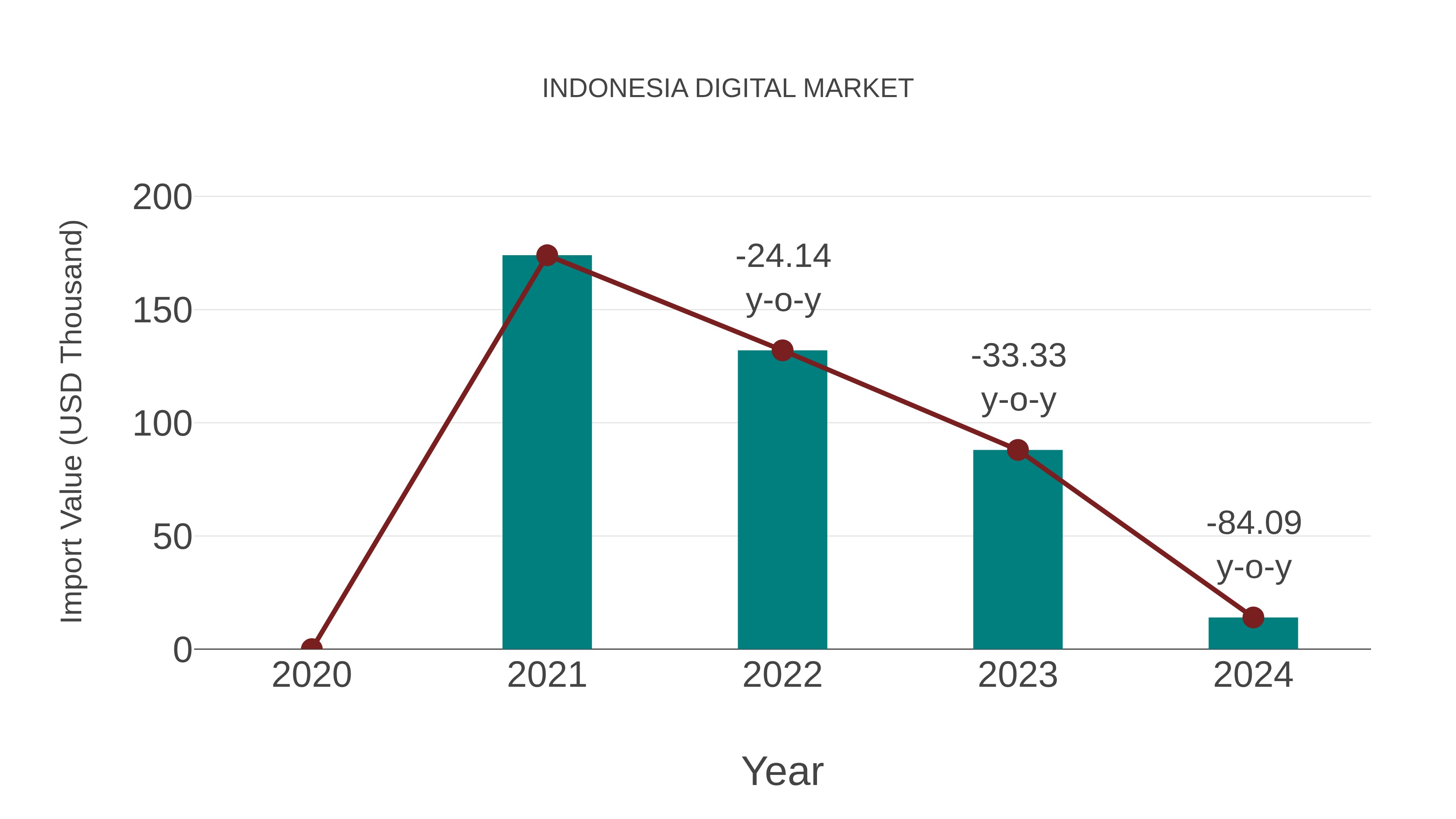
Indonesia`s import trend for the digital market exhibited a notable decline from 2023 to 2024, with a growth rate of -84.09% during this period. The compound annual growth rate (CAGR) for imports from 2020 to 2024 stood at -56.83%. This significant decrease in import momentum could be attributed to shifting demand patterns or alterations in trade policies affecting market stability.
Indonesia Digital Market Overview
Indonesia`s digital market as a whole is a dynamic and rapidly evolving landscape. With the increasing adoption of technology and the digitalization of various sectors, opportunities abound for businesses looking to capitalize on the nation`s digital journey.
Drivers of the Market
The broader digital market in Indonesia is expanding due to increased digital adoption across various industries. The primary driver is the ongoing digital transformation initiatives, which aim to enhance customer experiences, streamline operations, and improve competitiveness in the digital age.
Challenges of the Market
The Digital Market in Indonesia faces challenges related to digital literacy and inclusivity. Bridging the digital divide to ensure that all segments of the population have access to digital services and opportunities is crucial. Additionally, addressing cybersecurity threats in an increasingly digital landscape is a priority.
COVID-19 Impacts on the Market
The digital market in Indonesia experienced a remarkable transformation during the COVID-19 pandemic. Companies accelerated their digital transformation initiatives to adapt to changing consumer behavior and business operations. E-commerce, online entertainment, and digital marketing flourished, while traditional brick-and-mortar businesses had to swiftly pivot to digital platforms.
Key Players of the Makret
The Indonesia Digital Market is marked by a diverse range of players contributing to the digital transformation landscape. Leading companies in this market include Google, Facebook, Twitter, and Alibaba Group. These tech giants provide digital platforms, advertising, and e-commerce services that are integral to Indonesia`s growing digital economy.
Key Highlights of the Report:
- Indonesia Digital Market Outlook
- Market Size of Indonesia Digital Market, 2025
- Forecast of Indonesia Digital Market, 2032
- Historical Data and Forecast of Indonesia Digital Revenues & Volume for the Period 2022-2032F
- Indonesia Digital Market Trend Evolution
- Indonesia Digital Market Drivers and Challenges
- Indonesia Digital Price Trends
- Indonesia Digital Porter's Five Forces
- Indonesia Digital Industry Life Cycle
- Historical Data and Forecast of Indonesia Digital Market Revenues & Volume By Software for the Period 2022-2032F
- Historical Data and Forecast of Indonesia Digital Market Revenues & Volume By CRM Software for the Period 2022-2032F
- Historical Data and Forecast of Indonesia Digital Market Revenues & Volume By Email Marketing Software for the Period 2022-2032F
- Historical Data and Forecast of Indonesia Digital Market Revenues & Volume By Social Media Advertising for the Period 2022-2032F
- Indonesia Digital Import Export Trade Statistics
- Market Opportunity Assessment By Software
- Indonesia Digital Top Companies Market Share
- Indonesia Digital Competitive Benchmarking By Technical and Operational Parameters
- Indonesia Digital Company Profiles
- Indonesia Digital Key Strategic Recommendations






































