Indonesia Flavoured Tea Market: Import Trend Analysis
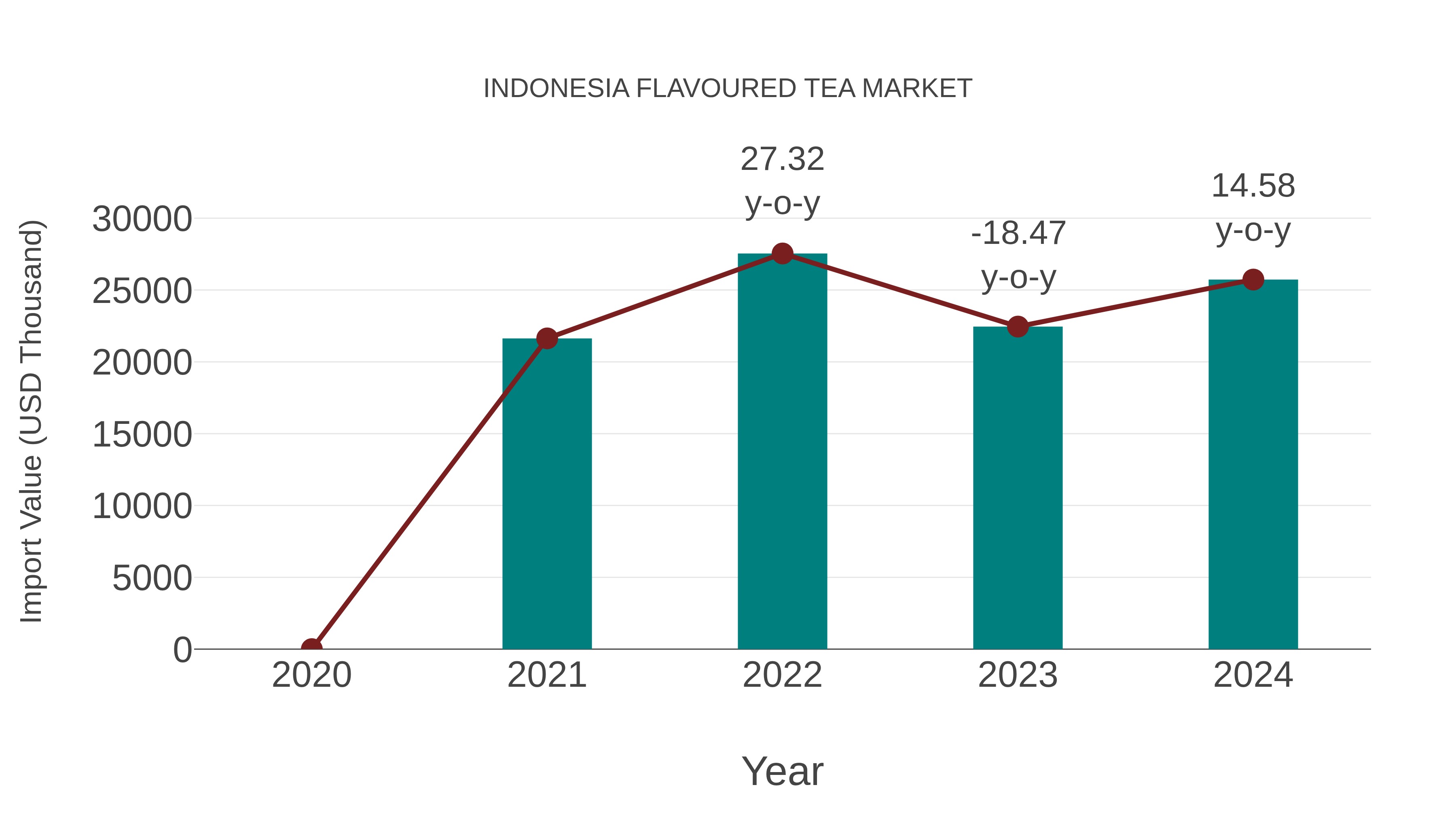
In the Indonesia flavored tea market, the import trend saw significant growth from 2023 to 2024, with a growth rate of 14.58%. The compound annual growth rate (CAGR) between 2020 and 2024 stood at 5.95%. This uptrend can be attributed to shifting consumer preferences towards diverse tea flavors and expanding market stability in the region.
Key Highlights of the Report:
- Indonesia Flavoured Tea Market Outlook
- Market Size of Indonesia Flavoured Tea Market, 2025
- Forecast of Indonesia Flavoured Tea Market, 2032
- Historical Data and Forecast of Indonesia Flavoured Tea Revenues & Volume for the Period 2022-2032F
- Indonesia Flavoured Tea Market Trend Evolution
- Indonesia Flavoured Tea Market Drivers and Challenges
- Indonesia Flavoured Tea Price Trends
- Indonesia Flavoured Tea Porter's Five Forces
- Indonesia Flavoured Tea Industry Life Cycle
- Historical Data and Forecast of Indonesia Flavoured Tea Market Revenues & Volume By Type for the Period 2022-2032F
- Historical Data and Forecast of Indonesia Flavoured Tea Market Revenues & Volume By Loose Leaf Tea for the Period 2022-2032F
- Historical Data and Forecast of Indonesia Flavoured Tea Market Revenues & Volume By CTC Tea for the Period 2022-2032F
- Historical Data and Forecast of Indonesia Flavoured Tea Market Revenues & Volume By Flavour for the Period 2022-2032F
- Historical Data and Forecast of Indonesia Flavoured Tea Market Revenues & Volume By Fruits for the Period 2022-2032F
- Historical Data and Forecast of Indonesia Flavoured Tea Market Revenues & Volume By Flower for the Period 2022-2032F
- Historical Data and Forecast of Indonesia Flavoured Tea Market Revenues & Volume By Herbs and Spices for the Period 2022-2032F
- Historical Data and Forecast of Indonesia Flavoured Tea Market Revenues & Volume By Packaging format for the Period 2022-2032F
- Historical Data and Forecast of Indonesia Flavoured Tea Market Revenues & Volume By Packed for the Period 2022-2032F
- Historical Data and Forecast of Indonesia Flavoured Tea Market Revenues & Volume By Loose for the Period 2022-2032F
- Historical Data and Forecast of Indonesia Flavoured Tea Market Revenues & Volume By Product Type for the Period 2022-2032F
- Historical Data and Forecast of Indonesia Flavoured Tea Market Revenues & Volume By Black Tea for the Period 2022-2032F
- Historical Data and Forecast of Indonesia Flavoured Tea Market Revenues & Volume By Green Tea for the Period 2022-2032F
- Historical Data and Forecast of Indonesia Flavoured Tea Market Revenues & Volume By Herbal Tea for the Period 2022-2032F
- Historical Data and Forecast of Indonesia Flavoured Tea Market Revenues & Volume By Oolong Tea for the Period 2022-2032F
- Historical Data and Forecast of Indonesia Flavoured Tea Market Revenues & Volume By Distribution Channel for the Period 2022-2032F
- Historical Data and Forecast of Indonesia Flavoured Tea Market Revenues & Volume By Online and Offline for the Period 2022-2032F
- Historical Data and Forecast of Indonesia Flavoured Tea Market Revenues & Volume By Supermarkets/Hypermarkets for the Period 2022-2032F
- Indonesia Flavoured Tea Import Export Trade Statistics
- Market Opportunity Assessment By Type
- Market Opportunity Assessment By Flavour
- Market Opportunity Assessment By Packaging format
- Market Opportunity Assessment By Product Type
- Market Opportunity Assessment By Distribution Channel
- Indonesia Flavoured Tea Top Companies Market Share
- Indonesia Flavoured Tea Competitive Benchmarking By Technical and Operational Parameters
- Indonesia Flavoured Tea Company Profiles
- Indonesia Flavoured Tea Key Strategic Recommendations






































