Indonesia Foam Insulation Market: Import Trend Analysis
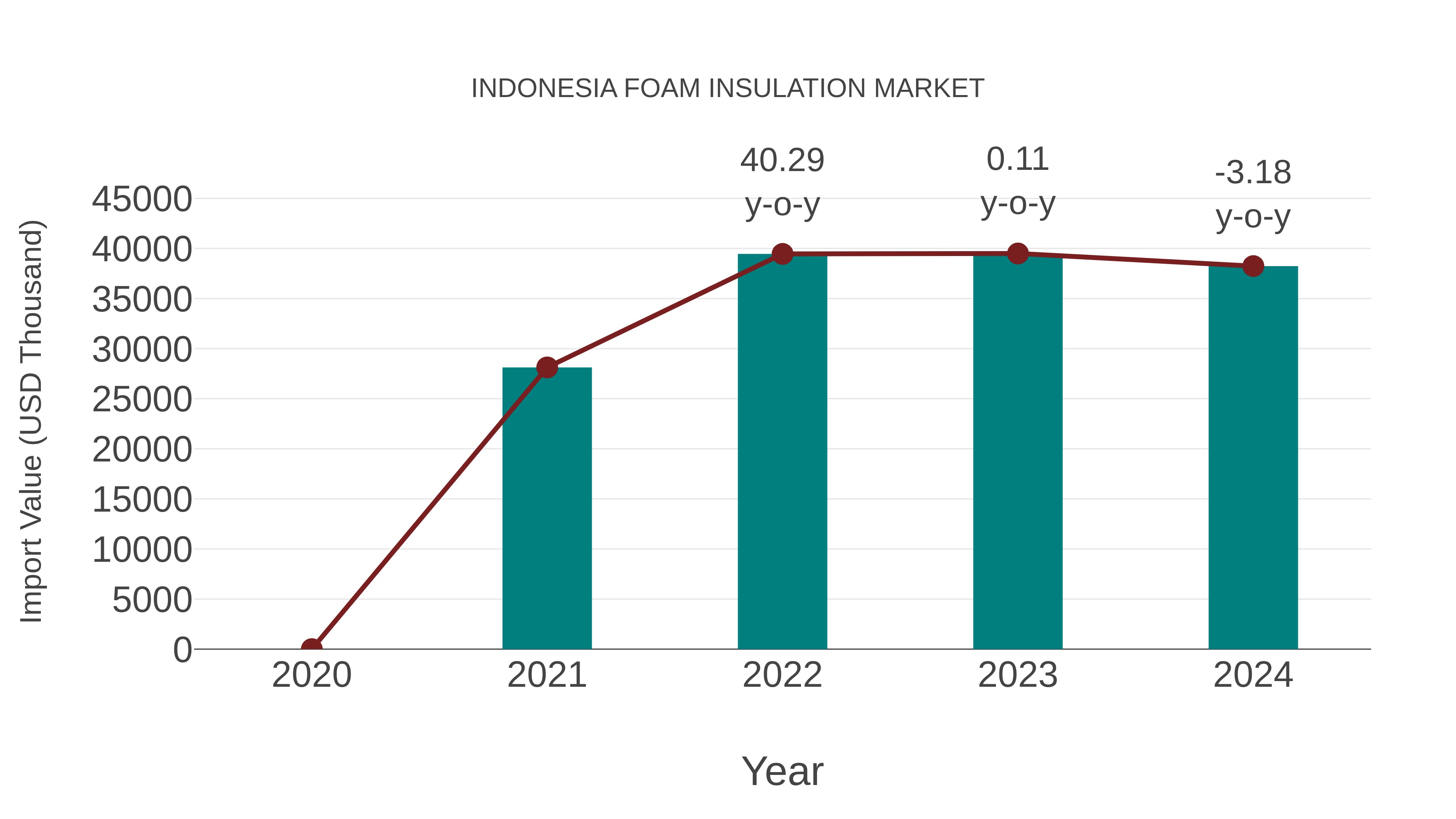
Indonesia`s import trend for the foam insulation market showed a decline from 2023 to 2024, with a growth rate of -3.18%. However, the compound annual growth rate (CAGR) for the period 2020-2024 stood at 10.79%. This decline in import momentum could be attributed to shifts in demand dynamics or changes in trade policies impacting the market stability.
Indonesia Foam Insulation Market Overview
The Indonesia Foam Insulation Market encompasses a broad range of foam materials used in the construction, industrial, and automotive sectors. Foam insulation materials are known for their thermal efficiency and lightweight properties. As Indonesia focuses on energy conservation and sustainable building practices, the demand for foam insulation materials is rising. This market is expected to experience continued growth as it addresses the need for cost-effective and environmentally friendly insulation solutions.
Drivers of the Market
The Indonesia Foam Insulation Market is experiencing a surge in demand due to the growing awareness of energy conservation and sustainability. Industries such as construction, automotive, and manufacturing are increasingly adopting foam insulation materials to meet stringent environmental regulations and reduce energy consumption. This trend is likely to persist as sustainability remains a critical concern.
Challenges of the Market
In the Indonesia foam insulation market, one of the primary challenges is the need to balance the demand for energy-efficient insulation solutions with cost-effectiveness. While foam insulation materials offer excellent thermal performance, their installation and material costs can be relatively high. This poses a challenge, especially in a market where cost considerations can significantly influence construction and renovation decisions.
COVID-19 Impacts on the Market
The COVID-19 pandemic had a mixed impact on the Indonesia foam insulation market. While the construction sector experienced some slowdown due to pandemic-related restrictions and uncertainties, there was a growing awareness of the importance of energy-efficient buildings. This has led to increased interest in foam insulation materials that can enhance energy efficiency. Additionally, as people spent more time at home during lockdowns, some homeowners initiated renovation projects, which included insulating their properties. The market is likely to rebound as the construction industry picks up pace, driven by government initiatives and a renewed focus on sustainability.
Key Players of the Makret
Key players in the foam insulation market in Indonesia might include Owens Corning, Dow Chemical Company, and Saint-Gobain.
Key Highlights of the Report:
- Indonesia Foam Insulation Market Outlook
- Market Size of Indonesia Foam Insulation Market, 2025
- Forecast of Indonesia Foam Insulation Market, 2032
- Historical Data and Forecast of Indonesia Foam Insulation Revenues & Volume for the Period 2022-2032F
- Indonesia Foam Insulation Market Trend Evolution
- Indonesia Foam Insulation Market Drivers and Challenges
- Indonesia Foam Insulation Price Trends
- Indonesia Foam Insulation Porter's Five Forces
- Indonesia Foam Insulation Industry Life Cycle
- Historical Data and Forecast of Indonesia Foam Insulation Market Revenues & Volume By Product Type for the Period 2022-2032F
- Historical Data and Forecast of Indonesia Foam Insulation Market Revenues & Volume By Polystyrene for the Period 2022-2032F
- Historical Data and Forecast of Indonesia Foam Insulation Market Revenues & Volume By Polyurethane & Polyisocyanurate for the Period 2022-2032F
- Historical Data and Forecast of Indonesia Foam Insulation Market Revenues & Volume By Polyolefin for the Period 2022-2032F
- Historical Data and Forecast of Indonesia Foam Insulation Market Revenues & Volume By Elastomeric for the Period 2022-2032F
- Historical Data and Forecast of Indonesia Foam Insulation Market Revenues & Volume By Phenolic for the Period 2022-2032F
- Historical Data and Forecast of Indonesia Foam Insulation Market Revenues & Volume By End Use Industry for the Period 2022-2032F
- Historical Data and Forecast of Indonesia Foam Insulation Market Revenues & Volume By Building & Construction for the Period 2022-2032F
- Historical Data and Forecast of Indonesia Foam Insulation Market Revenues & Volume By Transportation for the Period 2022-2032F
- Historical Data and Forecast of Indonesia Foam Insulation Market Revenues & Volume By Consumer Appliances for the Period 2022-2032F
- Indonesia Foam Insulation Import Export Trade Statistics
- Market Opportunity Assessment By Product Type
- Market Opportunity Assessment By End Use Industry
- Indonesia Foam Insulation Top Companies Market Share
- Indonesia Foam Insulation Competitive Benchmarking By Technical and Operational Parameters
- Indonesia Foam Insulation Company Profiles
- Indonesia Foam Insulation Key Strategic Recommendations






































