Indonesia Fragrance Ingredients Market: Import Trend Analysis
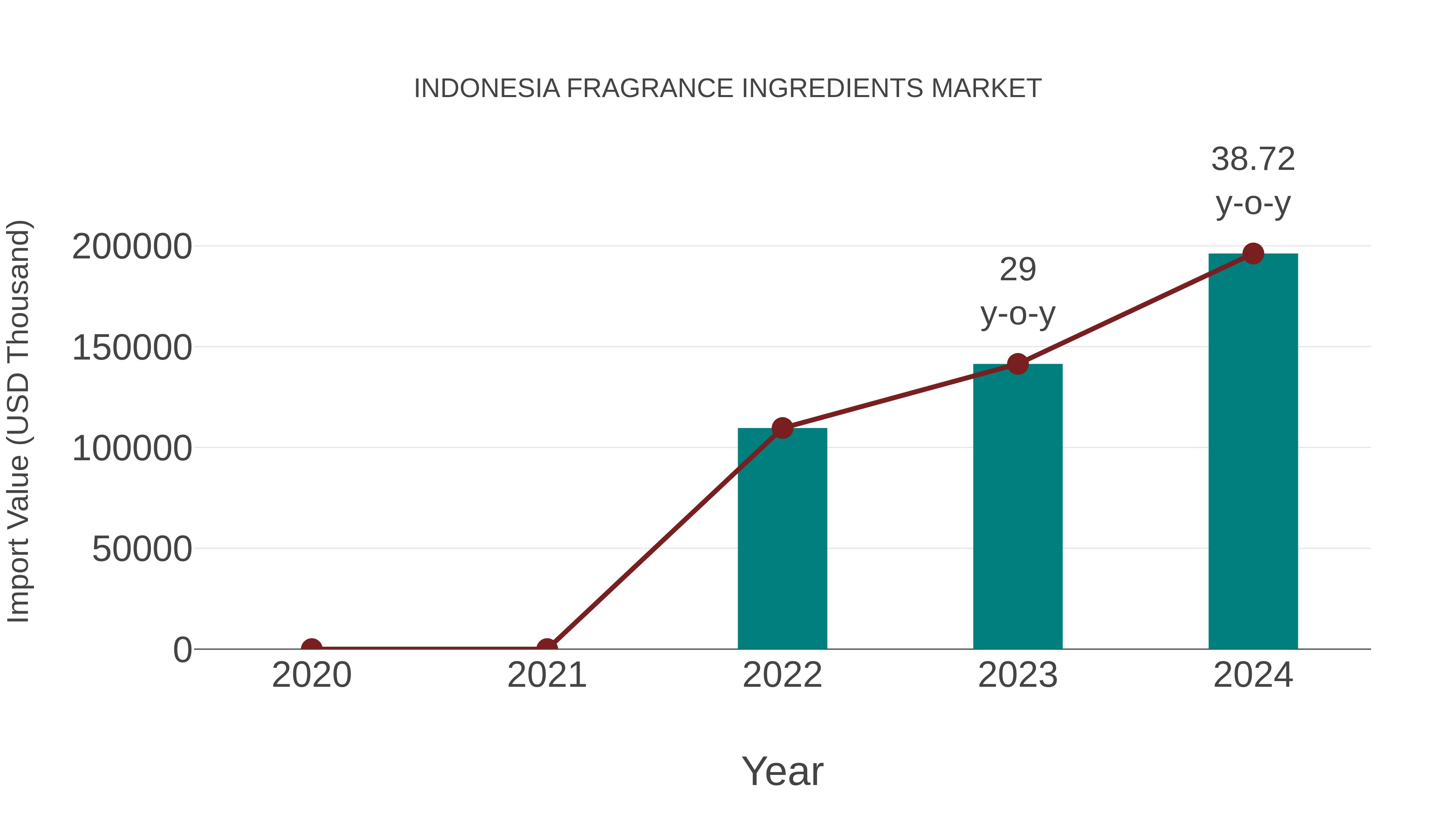
In the Indonesia fragrance ingredients market, the import trend showed significant growth from 2023 to 2024, with a growth rate of 38.72%. The compound annual growth rate (CAGR) from 2020 to 2024 stood at 33.77%. This notable increase in imports can be attributed to a shift in consumer preferences towards premium fragrance products, driving up demand for high-quality ingredients in the market.
Indonesia Fragrance Ingredients Market Overview
The Indonesia Fragrance Ingredients market is experiencing steady growth, driven by the demand for personal care and household products with appealing scents. Fragrance ingredients, including natural and synthetic compounds, are crucial components in perfumes, toiletries, and household cleaners. The market is influenced by changing consumer preferences for unique and long-lasting fragrance experiences.
Drivers of the Market
The fragrance ingredients market in Indonesia is driven by the growing personal care and cosmetics industry. With a rising middle class and a greater emphasis on personal grooming and hygiene, there is a heightened demand for fragrances in various products, including perfumes, lotions, and soaps.
Challenges of the Market
Challenges in the fragrance ingredients market in Indonesia are related to sustainability and raw material sourcing. Sustainability concerns and ethical sourcing practices are becoming increasingly important, requiring companies to invest in responsible sourcing and production methods.
COVID-19 Impacts on the Market
The fragrance ingredients market in Indonesia experienced a mixed impact due to the COVID-19 pandemic. On one hand, the demand for personal care and fragrance products decreased as people stayed home and reduced their use of perfumes and cosmetics. This had a negative effect on the fragrance ingredients market. On the other hand, there was a notable surge in demand for home care and cleaning products, which often contain fragrances. The market for fragrance ingredients used in these products experienced a boost. Manufacturers had to diversify their product offerings to adapt to changing consumer needs. Supply chain disruptions also affected the availability of certain fragrance ingredients.
Key Players of the Makret
The nutraceutical excipients market in Indonesia has been growing, driven by the demand for quality excipients in dietary supplements. Leading companies like PT Adonson Nutraceuticals are actively providing excipient solutions to support the nutraceutical industry.
Key Highlights of the Report:
- Indonesia Fragrance Ingredients Market Outlook
- Market Size of Indonesia Fragrance Ingredients Market, 2025
- Forecast of Indonesia Fragrance Ingredients Market, 2032
- Historical Data and Forecast of Indonesia Fragrance Ingredients Revenues & Volume for the Period 2022-2032F
- Indonesia Fragrance Ingredients Market Trend Evolution
- Indonesia Fragrance Ingredients Market Drivers and Challenges
- Indonesia Fragrance Ingredients Price Trends
- Indonesia Fragrance Ingredients Porter's Five Forces
- Indonesia Fragrance Ingredients Industry Life Cycle
- Historical Data and Forecast of Indonesia Fragrance Ingredients Market Revenues & Volume By Type for the Period 2022-2032F
- Historical Data and Forecast of Indonesia Fragrance Ingredients Market Revenues & Volume By Essential Oils for the Period 2022-2032F
- Historical Data and Forecast of Indonesia Fragrance Ingredients Market Revenues & Volume By Aroma Chemicals for the Period 2022-2032F
- Historical Data and Forecast of Indonesia Fragrance Ingredients Market Revenues & Volume By Application for the Period 2022-2032F
- Historical Data and Forecast of Indonesia Fragrance Ingredients Market Revenues & Volume By Cosmetics & toiletries for the Period 2022-2032F
- Historical Data and Forecast of Indonesia Fragrance Ingredients Market Revenues & Volume By Fine fragrances for the Period 2022-2032F
- Historical Data and Forecast of Indonesia Fragrance Ingredients Market Revenues & Volume By Soaps & detergents for the Period 2022-2032F
- Historical Data and Forecast of Indonesia Fragrance Ingredients Market Revenues & Volume By Others for the Period 2022-2032F
- Indonesia Fragrance Ingredients Import Export Trade Statistics
- Market Opportunity Assessment By Type
- Market Opportunity Assessment By Application
- Indonesia Fragrance Ingredients Top Companies Market Share
- Indonesia Fragrance Ingredients Competitive Benchmarking By Technical and Operational Parameters
- Indonesia Fragrance Ingredients Company Profiles
- Indonesia Fragrance Ingredients Key Strategic Recommendations






































