Indonesia Ginseng Extract Market: Import Trend Analysis
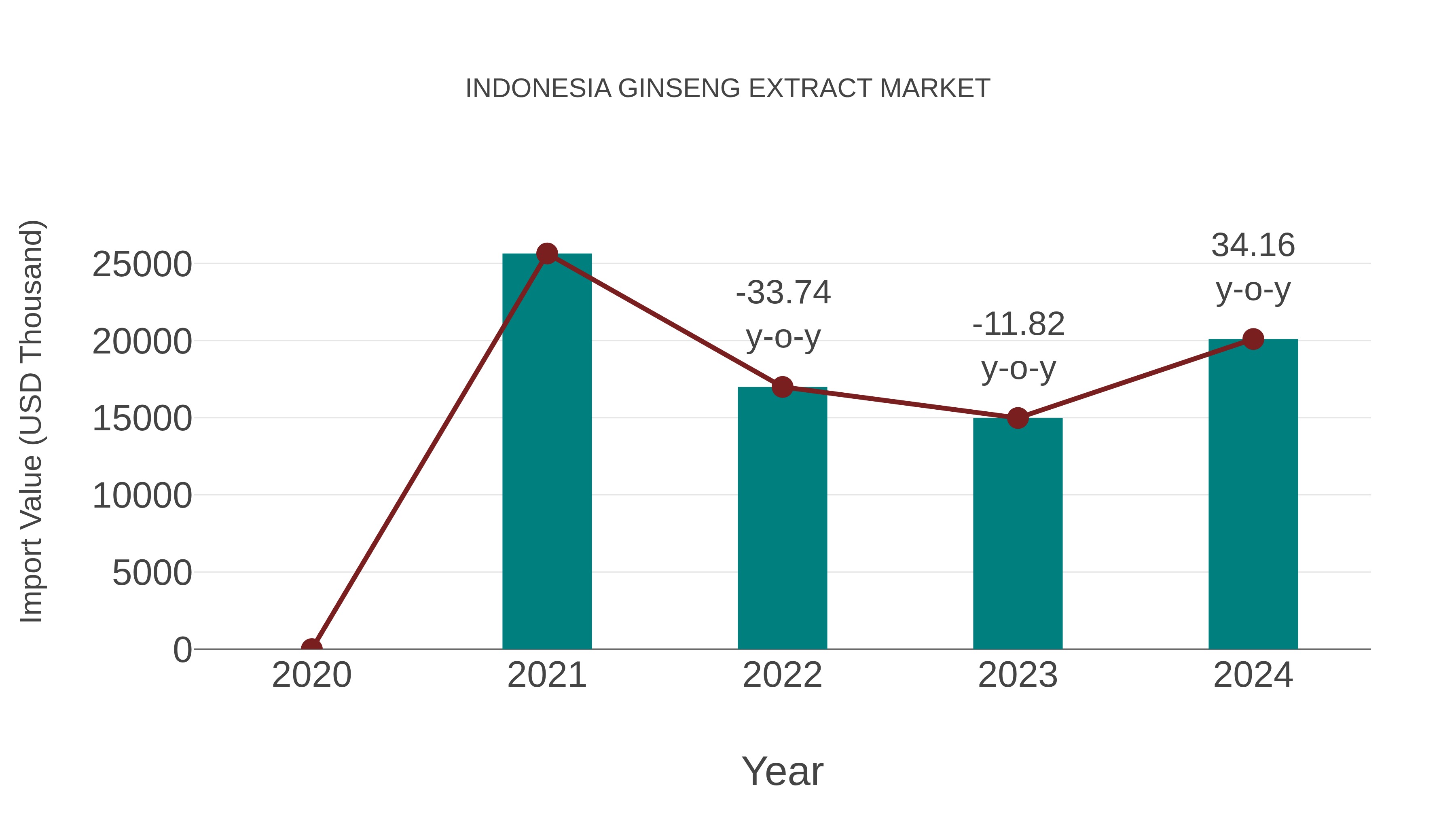
Indonesia`s import trend for ginseng extract in 2024 exhibited a notable growth rate of 34.16% compared to the previous year. However, the compound annual growth rate (CAGR) from 2020 to 2024 stood at -7.8%. This decline in the CAGR could be attributed to shifting consumer preferences towards alternative health products or changes in trade policies affecting imports.
Indonesia Ginseng Extract Market Overview
The Indonesia ginseng extract market is witnessing steady growth due to the rising awareness about the health benefits of ginseng, such as improved cognitive function, increased energy levels, and enhanced immune system. The market is driven by the growing demand for natural and herbal supplements among health-conscious consumers. Additionally, the increasing popularity of traditional Indonesian medicine practices that incorporate ginseng as a key ingredient is boosting market growth. Key players in the Indonesia ginseng extract market are focusing on product innovation, quality control, and expanding distribution networks to cater to a broader consumer base. With a favorable regulatory environment and a strong presence of ginseng cultivation in Indonesia, the market is poised for further expansion in the coming years.
Indonesia Ginseng Extract Market Trends
The Indonesia ginseng extract market is experiencing growth due to the increasing consumer awareness of the health benefits associated with ginseng consumption. There is a rising demand for ginseng extract in various industries such as pharmaceuticals, dietary supplements, and skincare products. Indonesian ginseng extract is known for its high quality and potency, making it a popular choice among consumers. Additionally, the growing interest in natural and herbal remedies has fueled the demand for ginseng extract as a natural health supplement. Manufacturers are also focusing on developing innovative ginseng extract products to cater to the evolving consumer preferences. Overall, the Indonesia ginseng extract market is poised for steady growth in the coming years as consumers continue to prioritize health and wellness products.
Indonesia Ginseng Extract Market Challenges
In the Indonesia ginseng extract market, some key challenges include intense competition from other herbal supplements, limited awareness among consumers about the benefits of ginseng extract, and issues related to product quality and authenticity. The market is also affected by fluctuations in raw material prices and the availability of skilled labor for cultivation and processing. Additionally, regulatory hurdles and compliance with quality standards pose challenges for industry players looking to enter or expand in the market. To succeed in this competitive landscape, companies need to invest in marketing efforts to educate consumers, enhance product quality control measures, and establish strong distribution networks to reach a wider audience effectively.
Indonesia Ginseng Extract Market Investment Opportunities
The Indonesia ginseng extract market presents promising investment opportunities due to the growing demand for natural health products and traditional herbal remedies. With the increasing consumer awareness of the health benefits associated with ginseng, there is a growing market for ginseng extract products in Indonesia. Investors can consider opportunities in ginseng cultivation, extraction technology, product development, and distribution channels to capitalize on this trend. Additionally, partnerships with local farmers and suppliers can help ensure a stable and sustainable supply chain for ginseng extract production. Investing in research and development to explore innovative uses of ginseng extract in the food, beverage, and cosmetic industries can also provide avenues for growth and differentiation in the market.
Indonesia Ginseng Extract Market Government Policy
In Indonesia, government policies related to the ginseng extract market are primarily aimed at promoting sustainable cultivation practices and ensuring product quality. The Ministry of Agriculture regulates the cultivation of ginseng plants, providing guidelines on planting techniques and pesticide use to protect the environment and consumer health. Additionally, the Ministry of Health oversees the production and distribution of ginseng extract products, setting standards for quality control and labeling requirements to safeguard consumer interests. The government also encourages research and development in the ginseng industry through funding and collaboration with academic institutions. Overall, Indonesia`s policies in the ginseng extract market focus on fostering a competitive and sustainable industry while prioritizing consumer safety and product efficacy.
Indonesia Ginseng Extract Market Future Outlook
The Indonesia ginseng extract market is expected to witness steady growth in the upcoming years, driven by increasing consumer awareness regarding the health benefits of ginseng and a growing demand for natural products in the wellness industry. Factors such as rising disposable incomes, changing lifestyles, and a shift towards preventive healthcare are also likely to contribute to the market expansion. Additionally, the growing popularity of traditional medicine and herbal remedies in Indonesia is expected to further boost the demand for ginseng extract products. With an increasing focus on research and development activities to enhance the efficacy and application of ginseng extract, the market is poised for continuous growth and innovation in the coming years.
Key Highlights of the Report:
- Indonesia Ginseng Extract Market Outlook
- Market Size of Indonesia Ginseng Extract Market,2025
- Forecast of Indonesia Ginseng Extract Market, 2032
- Historical Data and Forecast of Indonesia Ginseng Extract Revenues & Volume for the Period 2022-2032F
- Indonesia Ginseng Extract Market Trend Evolution
- Indonesia Ginseng Extract Market Drivers and Challenges
- Indonesia Ginseng Extract Price Trends
- Indonesia Ginseng Extract Porter's Five Forces
- Indonesia Ginseng Extract Industry Life Cycle
- Historical Data and Forecast of Indonesia Ginseng Extract Market Revenues & Volume By Form for the Period 2022-2032F
- Historical Data and Forecast of Indonesia Ginseng Extract Market Revenues & Volume By Powder for the Period 2022-2032F
- Historical Data and Forecast of Indonesia Ginseng Extract Market Revenues & Volume By Liquid for the Period 2022-2032F
- Historical Data and Forecast of Indonesia Ginseng Extract Market Revenues & Volume By Capsules for the Period 2022-2032F
- Historical Data and Forecast of Indonesia Ginseng Extract Market Revenues & Volume By Application for the Period 2022-2032F
- Historical Data and Forecast of Indonesia Ginseng Extract Market Revenues & Volume By Cosmetics & Personal Care for the Period 2022-2032F
- Historical Data and Forecast of Indonesia Ginseng Extract Market Revenues & Volume By Pharmaceuticals for the Period 2022-2032F
- Historical Data and Forecast of Indonesia Ginseng Extract Market Revenues & Volume By Dietary Supplements for the Period 2022-2032F
- Historical Data and Forecast of Indonesia Ginseng Extract Market Revenues & Volume By Food& Beverages for the Period 2022-2032F
- Historical Data and Forecast of Indonesia Ginseng Extract Market Revenues & Volume By Distribution Channel for the Period 2022-2032F
- Historical Data and Forecast of Indonesia Ginseng Extract Market Revenues & Volume By Pharmacies/Drug Stores for the Period 2022-2032F
- Historical Data and Forecast of Indonesia Ginseng Extract Market Revenues & Volume By Hypermarket/Supermarket for the Period 2022-2032F
- Historical Data and Forecast of Indonesia Ginseng Extract Market Revenues & Volume By Online Retailing for the Period 2022-2032F
- Historical Data and Forecast of Indonesia Ginseng Extract Market Revenues & Volume By Health/Beauty Stores for the Period 2022-2032F
- Historical Data and Forecast of Indonesia Ginseng Extract Market Revenues & Volume By Direct Selling for the Period 2022-2032F
- Indonesia Ginseng Extract Import Export Trade Statistics
- Market Opportunity Assessment By Form
- Market Opportunity Assessment By Application
- Market Opportunity Assessment By Distribution Channel
- Indonesia Ginseng Extract Top Companies Market Share
- Indonesia Ginseng Extract Competitive Benchmarking By Technical and Operational Parameters
- Indonesia Ginseng Extract Company Profiles
- Indonesia Ginseng Extract Key Strategic Recommendations






































