Indonesia Methyl Cellulose Market: Import Trend Analysis
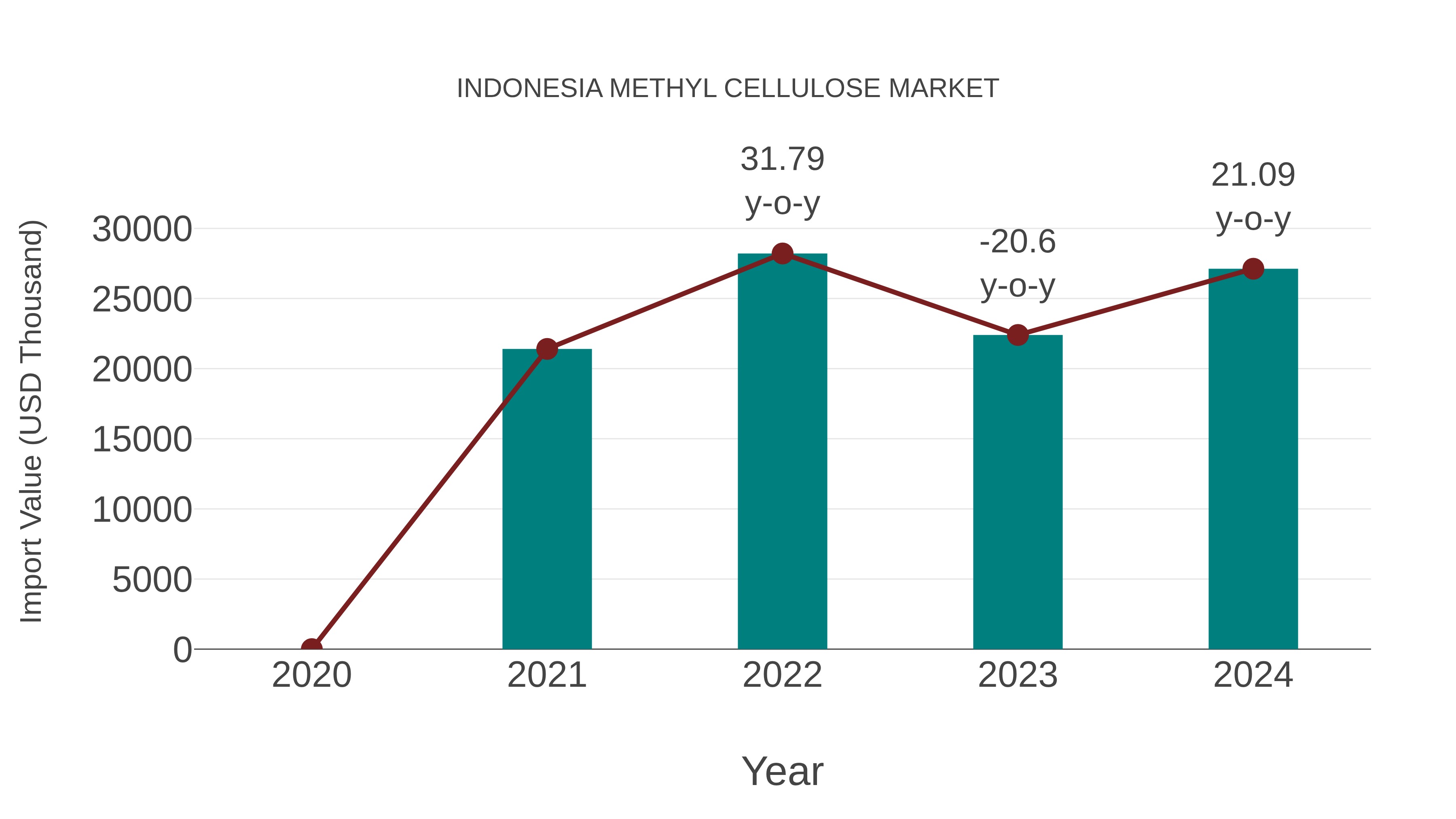
In the Indonesia methyl cellulose market, the import trend showed significant growth from 2023 to 2024, with a growth rate of 21.09%. The compound annual growth rate (CAGR) for imports from 2020 to 2024 stood at 8.21%. This uptrend can be attributed to increased demand for methyl cellulose in various industries, indicating a positive import momentum driven by rising industrial applications.
Indonesia Methyl Cellulose Market Overview
The Indonesia methyl cellulose market is experiencing steady growth due to its widespread applications in various industries such as food and beverage, pharmaceuticals, construction, and personal care. Methyl cellulose is widely used as a thickener, stabilizer, emulsifier, and film-former in these industries, driving the demand for the product. The construction industry, in particular, is a key driver of growth in Indonesia, as methyl cellulose is used in cement-based products to improve workability and water retention. Additionally, the increasing consumer awareness of natural and sustainable products is further fueling the demand for methyl cellulose in the country. Market players are focusing on expanding their product portfolios and investing in research and development to cater to the growing demand for methyl cellulose in Indonesia.
Indonesia Methyl Cellulose Market Trends
In Indonesia, the methyl cellulose market is experiencing steady growth driven by the increasing demand for this versatile compound in various industries. The food and beverage sector is a key driver of the market, with methyl cellulose being used as a thickening and stabilizing agent in products such as dairy, desserts, and sauces. Additionally, the construction industry is also contributing to the growth of the market as methyl cellulose is widely used in dry mix mortars and cement-based products for its water retention and workability properties. Sustainability and eco-friendly formulations are emerging trends in the market, with manufacturers focusing on developing bio-based methyl cellulose products to cater to the growing consumer preference for environmentally friendly solutions. Overall, the Indonesia methyl cellulose market is poised for continued growth due to its diverse applications and increasing awareness of its benefits.
Indonesia Methyl Cellulose Market Challenges
In the Indonesia methyl cellulose market, some challenges include fluctuating raw material prices, increasing competition from alternative products, and regulatory hurdles. The volatility in raw material prices can impact production costs and profit margins for methyl cellulose manufacturers. Additionally, the availability of substitute products in the market, such as guar gum or xanthan gum, poses a competitive threat to the demand for methyl cellulose. Moreover, complying with changing regulations and quality standards in Indonesia can be a challenge for companies operating in the methyl cellulose market. Overall, managing these challenges effectively is crucial for companies to maintain their competitiveness and sustain growth in the Indonesian methyl cellulose market.
Indonesia Methyl Cellulose Market Investment Opportunities
Investment opportunities in the Indonesia methyl cellulose market include the growing demand from various industries such as construction, food and beverage, pharmaceuticals, and cosmetics. With the increasing emphasis on sustainable and eco-friendly products, there is a rising trend towards the use of methyl cellulose as a natural and biodegradable alternative in these sectors. Additionally, the expanding construction industry in Indonesia, driven by infrastructure development projects, provides a lucrative market for methyl cellulose as a key ingredient in cement and mortar applications. Investing in the Indonesia methyl cellulose market offers the potential for high returns due to the country`s economic growth, increasing industrial activities, and the shift towards environmentally friendly products. Conducting thorough market research and understanding the specific needs and trends within each sector can help investors capitalize on these opportunities effectively.
Indonesia Methyl Cellulose Market Government Policy
The Indonesian government does not have specific policies targeting the methyl cellulose market. However, the country`s regulations on food and pharmaceutical products, overseen by the National Agency of Drug and Food Control (BPOM), impact the use and importation of methyl cellulose in these industries. Additionally, Indonesia`s industrial standards and regulations set by the Ministry of Industry may apply to the production and quality control of methyl cellulose used in various applications. Overall, while there are no direct government policies focused solely on the methyl cellulose market in Indonesia, the existing regulatory framework governing related industries can indirectly influence the demand, production, and importation of methyl cellulose in the country.
Indonesia Methyl Cellulose Market Future Outlook
The Indonesia methyl cellulose market is poised for steady growth in the coming years due to the increasing demand for this versatile compound in various industries such as construction, food and beverage, pharmaceuticals, and cosmetics. The rising construction activities and infrastructure development projects in Indonesia are expected to drive the demand for methyl cellulose as a key ingredient in cement-based products. Additionally, the growing adoption of methyl cellulose in food products as a thickening agent and in pharmaceuticals as a binder and stabilizer is further fueling market growth. With the increasing focus on sustainability and environmentally friendly products, the demand for methyl cellulose, which is biodegradable and non-toxic, is anticipated to rise. Overall, the Indonesia methyl cellulose market is likely to witness a positive trajectory in the foreseeable future.
Key Highlights of the Report:
- Indonesia Methyl Cellulose Market Outlook
- Market Size of Indonesia Methyl Cellulose Market,2025
- Forecast of Indonesia Methyl Cellulose Market, 2032
- Historical Data and Forecast of Indonesia Methyl Cellulose Revenues & Volume for the Period 2022-2032F
- Indonesia Methyl Cellulose Market Trend Evolution
- Indonesia Methyl Cellulose Market Drivers and Challenges
- Indonesia Methyl Cellulose Price Trends
- Indonesia Methyl Cellulose Porter's Five Forces
- Indonesia Methyl Cellulose Industry Life Cycle
- Historical Data and Forecast of Indonesia Methyl Cellulose Market Revenues & Volume By Type for the Period 2022-2032F
- Historical Data and Forecast of Indonesia Methyl Cellulose Market Revenues & Volume By Powder for the Period 2022-2032F
- Historical Data and Forecast of Indonesia Methyl Cellulose Market Revenues & Volume By Granules for the Period 2022-2032F
- Historical Data and Forecast of Indonesia Methyl Cellulose Market Revenues & Volume By Liquid for the Period 2022-2032F
- Historical Data and Forecast of Indonesia Methyl Cellulose Market Revenues & Volume By Application for the Period 2022-2032F
- Historical Data and Forecast of Indonesia Methyl Cellulose Market Revenues & Volume By Pharmaceuticals for the Period 2022-2032F
- Historical Data and Forecast of Indonesia Methyl Cellulose Market Revenues & Volume By Food Additives for the Period 2022-2032F
- Historical Data and Forecast of Indonesia Methyl Cellulose Market Revenues & Volume By Coatings for the Period 2022-2032F
- Historical Data and Forecast of Indonesia Methyl Cellulose Market Revenues & Volume By End Use for the Period 2022-2032F
- Historical Data and Forecast of Indonesia Methyl Cellulose Market Revenues & Volume By Construction for the Period 2022-2032F
- Historical Data and Forecast of Indonesia Methyl Cellulose Market Revenues & Volume By Personal Care for the Period 2022-2032F
- Historical Data and Forecast of Indonesia Methyl Cellulose Market Revenues & Volume By Paper & Textiles for the Period 2022-2032F
- Historical Data and Forecast of Indonesia Methyl Cellulose Market Revenues & Volume By Purity Level for the Period 2022-2032F
- Historical Data and Forecast of Indonesia Methyl Cellulose Market Revenues & Volume By High Purity for the Period 2022-2032F
- Historical Data and Forecast of Indonesia Methyl Cellulose Market Revenues & Volume By Industrial Grade for the Period 2022-2032F
- Historical Data and Forecast of Indonesia Methyl Cellulose Market Revenues & Volume By Low Purity for the Period 2022-2032F
- Historical Data and Forecast of Indonesia Methyl Cellulose Market Revenues & Volume By Manufacturing Process for the Period 2022-2032F
- Historical Data and Forecast of Indonesia Methyl Cellulose Market Revenues & Volume By Etherification for the Period 2022-2032F
- Historical Data and Forecast of Indonesia Methyl Cellulose Market Revenues & Volume By Hydroxypropylation for the Period 2022-2032F
- Historical Data and Forecast of Indonesia Methyl Cellulose Market Revenues & Volume By Others for the Period 2022-2032F
- Indonesia Methyl Cellulose Import Export Trade Statistics
- Market Opportunity Assessment By Type
- Market Opportunity Assessment By Application
- Market Opportunity Assessment By End Use
- Market Opportunity Assessment By Purity Level
- Market Opportunity Assessment By Manufacturing Process
- Indonesia Methyl Cellulose Top Companies Market Share
- Indonesia Methyl Cellulose Competitive Benchmarking By Technical and Operational Parameters
- Indonesia Methyl Cellulose Company Profiles
- Indonesia Methyl Cellulose Key Strategic Recommendations






































