Indonesia Modular Kitchen Market: Import Trend Analysis
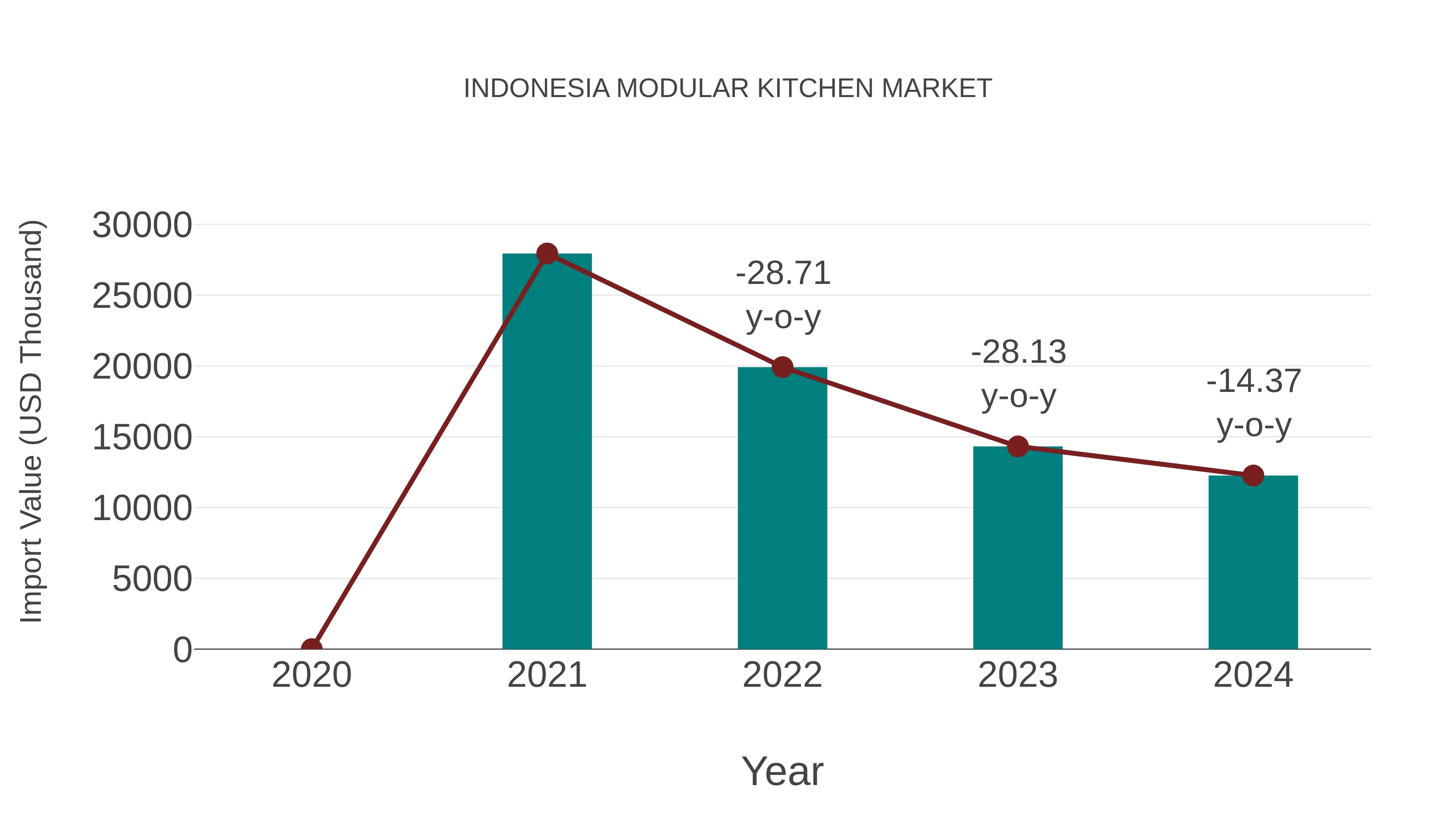
Indonesia`s import trend for the modular kitchen market exhibited a decline from 2023 to 2024, with a growth rate of -14.37% during that period. The compound annual growth rate (CAGR) from 2020 to 2024 stood at -24.01%. This negative momentum could be attributed to shifting consumer preferences towards more cost-effective domestic alternatives or changes in trade policies impacting import volumes.
Indonesia Modular Kitchen Market Synopsis
The modular kitchen market in Indonesia is growing as consumers seek convenient and aesthetically pleasing kitchen solutions. Urbanization and changing lifestyles are driving the demand for modular kitchens, which offer customization, space efficiency, and modern designs. Market players are likely to capitalize on this trend by introducing innovative modular kitchen designs and features.
Drivers of the Market
The Indonesia Modular Kitchen market is on the rise thanks to urbanization, an expanding middle-class population, and changing consumer lifestyles. Modular kitchens offer efficient space utilization, customization options, and modern aesthetics, which appeal to homeowners. Furthermore, growing awareness of the importance of a well-designed kitchen space and increased disposable incomes have contributed to the market`s growth. The convenience and versatility offered by modular kitchens make them a sought-after choice in the Indonesia housing sector.
Challenges of the Market
The Indonesia Modular Kitchen Market faces several obstacles. One challenge is the competition from traditional carpentry, which is deeply ingrained in indonesia culture. Convincing consumers to adopt modular kitchen solutions can be difficult, as many still prefer custom-made carpentry for their kitchens. Moreover, logistics and transportation can be a challenge in Indonesia`s archipelago, affecting the distribution and delivery of modular kitchen components. Manufacturers must focus on marketing, educating consumers, and improving their supply chain to overcome these challenges.
COVID-19 Impact on the Market
The Indonesia Modular Kitchen market is expected to expand with the growing urban population and changing lifestyles. COVID-19 influenced consumer preferences for modular and hygienic kitchen solutions. As people spent more time at home due to lockdowns, the demand for home improvement, including modular kitchens, increased.
Key Players in the Market
Modular kitchens are increasingly popular in Indonesia, with companies like PT. Olympic Furniture Tbk and PT. Ace Hardware Indonesia Tbk offering a wide range of modular kitchen solutions. These companies are addressing the demand for functional and stylish kitchens that maximize space utilization, making them suitable for both modern homes and commercial spaces.
Key Highlights of the Report:
- Indonesia Modular Kitchen Market Outlook
- Market Size of Indonesia Modular Kitchen Market, 2025
- Forecast of Indonesia Modular Kitchen Market, 2032
- Historical Data and Forecast of Indonesia Modular Kitchen Revenues & Volume for the Period 2022-2032F
- Indonesia Modular Kitchen Market Trend Evolution
- Indonesia Modular Kitchen Market Drivers and Challenges
- Indonesia Modular Kitchen Price Trends
- Indonesia Modular Kitchen Porter's Five Forces
- Indonesia Modular Kitchen Industry Life Cycle
- Historical Data and Forecast of Indonesia Modular Kitchen Market Revenues & Volume By Product for the Period 2022-2032F
- Historical Data and Forecast of Indonesia Modular Kitchen Market Revenues & Volume By Floor Cabinet & Wall Cabinets for the Period 2022-2032F
- Historical Data and Forecast of Indonesia Modular Kitchen Market Revenues & Volume By Tall Storage Cabinets for the Period 2022-2032F
- Historical Data and Forecast of Indonesia Modular Kitchen Market Revenues & Volume By Others for the Period 2022-2032F
- Historical Data and Forecast of Indonesia Modular Kitchen Market Revenues & Volume By End-User for the Period 2022-2032F
- Historical Data and Forecast of Indonesia Modular Kitchen Market Revenues & Volume By Residential for the Period 2022-2032F
- Historical Data and Forecast of Indonesia Modular Kitchen Market Revenues & Volume By Commercial for the Period 2022-2032F
- Historical Data and Forecast of Indonesia Modular Kitchen Market Revenues & Volume By Distribution Channel for the Period 2022-2032F
- Historical Data and Forecast of Indonesia Modular Kitchen Market Revenues & Volume By Offline (Contractors, Builders, and Others) for the Period 2022-2032F
- Historical Data and Forecast of Indonesia Modular Kitchen Market Revenues & Volume By Online for the Period 2022-2032F
- Indonesia Modular Kitchen Import Export Trade Statistics
- Market Opportunity Assessment By Product
- Market Opportunity Assessment By End-User
- Market Opportunity Assessment By Distribution Channel
- Indonesia Modular Kitchen Top Companies Market Share
- Indonesia Modular Kitchen Competitive Benchmarking By Technical and Operational Parameters
- Indonesia Modular Kitchen Company Profiles
- Indonesia Modular Kitchen Key Strategic Recommendations






































