Indonesia Oven Market: Import Trend Analysis
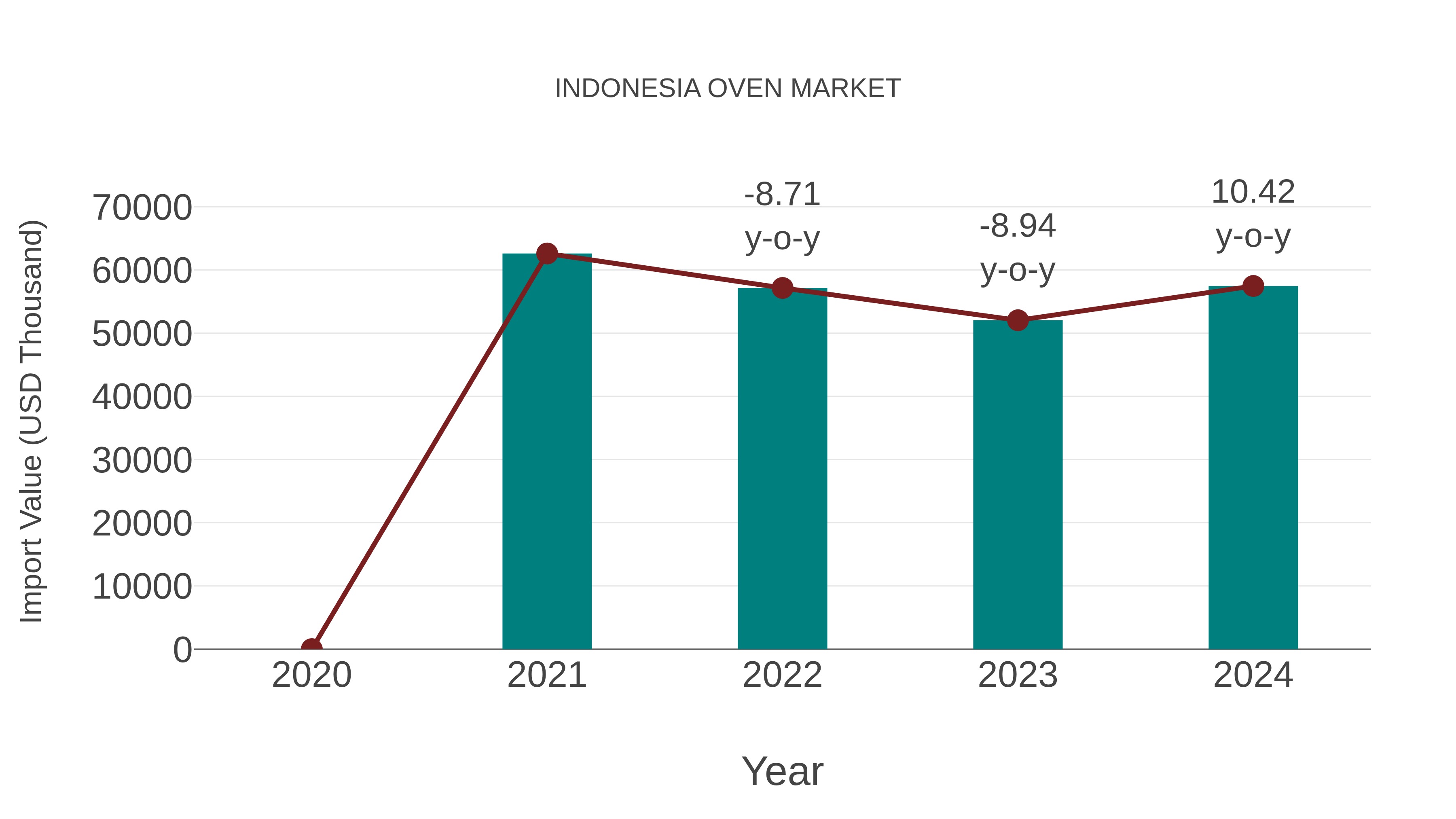
Indonesia`s import trend for the oven market exhibited a growth rate of 10.42% from 2023 to 2024, contrasting with a compound annual growth rate (CAGR) of -2.82% from 2020 to 2024. This shift in momentum could be attributed to evolving consumer preferences, increased demand for energy-efficient appliances, or shifts in trade policies impacting market stability.
Indonesia Oven Market Overview
The Indonesia oven market is experiencing steady growth, driven by increasing urbanization, changing consumer lifestyles, and a growing preference for convenience in cooking. Electric ovens are gaining popularity due to their efficiency and ease of use, particularly in urban areas where space is limited. Gas ovens remain popular in rural areas where access to electricity may be limited. Key players in the market are focusing on product innovations, such as smart ovens with advanced features like Wi-Fi connectivity and voice control, to cater to the evolving consumer demands. The market is also witnessing a trend towards eco-friendly ovens that are energy-efficient and environmentally sustainable. Overall, the Indonesia oven market is poised for further expansion as consumers seek modern cooking solutions that align with their lifestyle preferences.
Indonesia Oven Market Trends and Opportunities
The Indonesia oven market is experiencing growth driven by increasing consumer spending on household appliances and the rising trend of home cooking. There is a growing demand for energy-efficient and multifunctional ovens, particularly among urban consumers seeking convenience and versatility in their kitchens. Manufacturers are focusing on product innovation to offer features such as smart technology, self-cleaning capabilities, and diverse cooking modes to cater to evolving consumer preferences. Additionally, the expansion of e-commerce platforms in Indonesia presents opportunities for oven manufacturers to reach a wider audience and increase market penetration. With a growing middle-class population and changing lifestyles, the Indonesia oven market is poised for continued growth, especially in the premium and high-end segments.
Indonesia Oven Market Challenges
In the Indonesia oven market, some challenges include intense competition from both domestic and international brands, fluctuating raw material prices impacting production costs, and the need to cater to diverse consumer preferences across regions in the country. Additionally, economic uncertainties, such as currency fluctuations and changing consumer spending patterns, can also pose challenges for oven manufacturers and retailers. Furthermore, ensuring product quality and safety standards compliance, especially in the context of evolving regulations, is crucial for companies operating in the market. Lastly, the lack of widespread awareness about the benefits of using ovens for cooking in certain segments of the population may hinder market growth and penetration.
Indonesia Oven Market Drivers
The Indonesia Oven Market is primarily driven by the increasing demand for convenience in cooking and baking among consumers. The growing urbanization and busy lifestyles have led to a rising preference for quick and efficient cooking methods, boosting the sales of ovens in the country. Additionally, the influence of western culinary trends and the popularity of baking and cooking shows have also fueled the demand for ovens in Indonesia. Rising disposable income levels and changing consumer preferences towards modern kitchen appliances further contribute to the growth of the oven market in the country. Manufacturers are also focusing on product innovations, energy efficiency, and advanced features to attract more consumers and stay competitive in the market.
Indonesia Oven Market Government Policy
The Indonesia Oven Market is influenced by government policies aimed at promoting efficiency and sustainability. The government has implemented regulations to ensure energy efficiency in ovens, with standards and labeling requirements in place to guide manufacturers and consumers. Additionally, there are initiatives to support the use of environmentally friendly materials and technologies in oven production, aligning with the country`s goals for reducing carbon emissions and promoting sustainable practices. Importantly, the government also focuses on consumer protection by monitoring product quality and safety standards, ensuring that ovens in the market meet the necessary requirements to safeguard public health and well-being. Overall, these policies create a framework that encourages innovation, quality, and sustainability in the Indonesia Oven Market.
Indonesia Oven Market Future Outlook
The Indonesia oven market is expected to exhibit steady growth in the coming years, driven by factors such as increasing urbanization, rising disposable incomes, and changing consumer lifestyles. The demand for ovens is projected to rise as more households seek convenient cooking solutions and as the food service industry expands. Additionally, technological advancements in oven design, such as energy-efficient models and smart features, are likely to attract consumers looking for more sustainable and user-friendly options. The market is also anticipated to benefit from a growing interest in baking and cooking among Indonesian consumers, leading to a higher demand for specialized ovens. Overall, the Indonesia oven market is poised for growth opportunities, with manufacturers focusing on innovation and product development to cater to evolving consumer preferences.
Key Highlights of the Report:
- Indonesia Oven Market Outlook
- Market Size of Indonesia Oven Market, 2025
- Forecast of Indonesia Oven Market, 2032
- Historical Data and Forecast of Indonesia Oven Revenues & Volume for the Period 2022 - 2032F
- Indonesia Oven Market Trend Evolution
- Indonesia Oven Market Drivers and Challenges
- Indonesia Oven Price Trends
- Indonesia Oven Porter's Five Forces
- Indonesia Oven Industry Life Cycle
- Historical Data and Forecast of Indonesia Oven Market Revenues & Volume By Type for the Period 2022 - 2032F
- Historical Data and Forecast of Indonesia Oven Market Revenues & Volume By Convection for the Period 2022 - 2032F
- Historical Data and Forecast of Indonesia Oven Market Revenues & Volume By Grill for the Period 2022 - 2032F
- Historical Data and Forecast of Indonesia Oven Market Revenues & Volume By Solo for the Period 2022 - 2032F
- Historical Data and Forecast of Indonesia Oven Market Revenues & Volume By Distribution Channel for the Period 2022 - 2032F
- Historical Data and Forecast of Indonesia Oven Market Revenues & Volume By Multi-brand Stores for the Period 2022 - 2032F
- Historical Data and Forecast of Indonesia Oven Market Revenues & Volume By Exclusive Stores for the Period 2022 - 2032F
- Historical Data and Forecast of Indonesia Oven Market Revenues & Volume By E-commerce for the Period 2022 - 2032F
- Historical Data and Forecast of Indonesia Oven Market Revenues & Volume By Other Distribution Channels for the Period 2022 - 2032F
- Historical Data and Forecast of Indonesia Oven Market Revenues & Volume By Structure for the Period 2022 - 2032F
- Historical Data and Forecast of Indonesia Oven Market Revenues & Volume By Built-in for the Period 2022 - 2032F
- Historical Data and Forecast of Indonesia Oven Market Revenues & Volume By Countertop for the Period 2022 - 2032F
- Historical Data and Forecast of Indonesia Oven Market Revenues & Volume By End Users for the Period 2022 - 2032F
- Historical Data and Forecast of Indonesia Oven Market Revenues & Volume By Residential for the Period 2022 - 2032F
- Historical Data and Forecast of Indonesia Oven Market Revenues & Volume By Commercial for the Period 2022 - 2032F
- Indonesia Oven Import Export Trade Statistics
- Market Opportunity Assessment By Type
- Market Opportunity Assessment By Distribution Channel
- Market Opportunity Assessment By Structure
- Market Opportunity Assessment By End Users
- Indonesia Oven Top Companies Market Share
- Indonesia Oven Competitive Benchmarking By Technical and Operational Parameters
- Indonesia Oven Company Profiles
- Indonesia Oven Key Strategic Recommendations






































