Indonesia Packaging Coatings Market: Import Trend Analysis
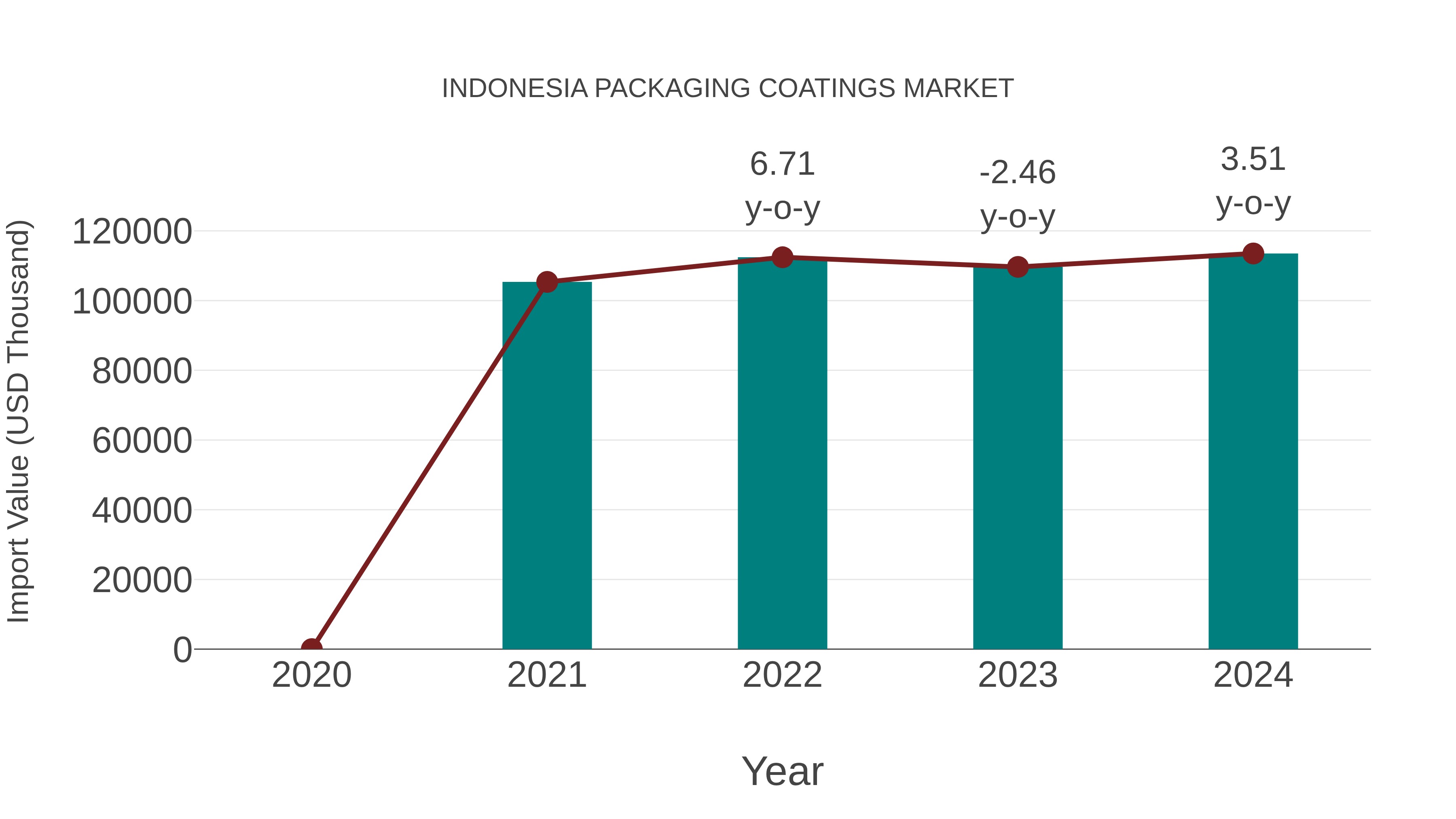
Indonesia`s import trend for the packaging coatings market showed a growth rate of 3.51% from 2023 to 2024, with a compound annual growth rate (CAGR) of 2.52% for the period of 2020-2024. This positive import momentum can be attributed to the increasing demand for quality packaging solutions in response to evolving consumer preferences and the recovery of the market post-pandemic disruptions.
Indonesia Packaging Coatings Market Overview
The Indonesia Packaging Coatings Market is witnessing steady growth driven by the increasing demand for packaged goods in the country. The market is characterized by a diverse range of coatings used for various packaging materials such as metal, plastic, paper, and glass. With the rising awareness about sustainability and environmental concerns, there is a growing preference for eco-friendly coatings that are free from harmful chemicals. Key players in the market are focusing on developing innovative coatings that offer protection, aesthetics, and sustainability to meet the evolving needs of the packaging industry. The market is also influenced by regulatory standards and guidelines related to food safety and packaging materials. Overall, the Indonesia Packaging Coatings Market is poised for further expansion due to the thriving packaging industry and changing consumer preferences.
Indonesia Packaging Coatings Market Trends and Opportunities
The Indonesia Packaging Coatings Market is experiencing a shift towards more sustainable and environmentally friendly coatings, driven by increasing consumer awareness and regulatory requirements. Water-based coatings, which are non-toxic and have lower VOC emissions, are gaining popularity. There is also a growing demand for anti-counterfeiting coatings to protect products from tampering and imitation. Opportunities exist for manufacturers to innovate and develop coatings that offer improved barrier properties, such as enhanced resistance to moisture and oxygen, to prolong the shelf life of packaged products. Additionally, the e-commerce boom in Indonesia is creating opportunities for packaging coatings that provide better protection during transportation and storage. Overall, the market is ripe for companies to invest in research and development to cater to the evolving needs of the packaging industry in Indonesia.
Indonesia Packaging Coatings Market Challenges
In the Indonesia Packaging Coatings Market, challenges such as increasing raw material costs, fluctuating regulatory environment, and growing competition from imported products pose significant hurdles. The volatility in raw material prices impacts the overall production costs for packaging coatings manufacturers, potentially leading to reduced profit margins. Additionally, the evolving regulatory landscape in Indonesia may require companies to invest in compliance measures, further adding to operational costs. Moreover, the presence of imported packaging coatings in the market intensifies competition for local manufacturers, requiring them to innovate and differentiate their products to maintain market share. Addressing these challenges will require strategic pricing strategies, efficient supply chain management, and continuous product development to stay competitive in the Indonesia Packaging Coatings Market.
Indonesia Packaging Coatings Market Drivers
The Indonesia Packaging Coatings Market is primarily driven by the growing demand for packaged consumer goods in the country`s expanding retail sector. With the increasing urbanization and rising disposable income levels of the population, there is a significant shift towards convenience and packaged food products, leading to a higher demand for quality packaging coatings to ensure product protection and shelf appeal. Additionally, stringent government regulations on food safety and environmental sustainability are also propelling the market growth as manufacturers seek eco-friendly and safe coatings for their packaging materials. Furthermore, technological advancements in packaging coatings, such as improved barrier properties and longer shelf life, are further driving the market as companies strive to meet consumer preferences for longer-lasting and visually appealing packaged products.
Indonesia Packaging Coatings Market Government Policy
The Indonesian government has implemented various policies related to the Packaging Coatings Market to ensure safety and environmental sustainability. These policies include regulations on the use of chemical substances in coatings to minimize health risks and protect consumers. Additionally, there are guidelines on the disposal of packaging coatings waste to prevent pollution and promote sustainable practices. The government also encourages the development and adoption of eco-friendly coatings through incentives and support for research and innovation in this sector. Overall, these policies aim to balance the growth of the Packaging Coatings Market with environmental protection and public health considerations in Indonesia.
Indonesia Packaging Coatings Market Future Outlook
The Indonesia Packaging Coatings Market is expected to witness steady growth in the coming years, driven by increasing demand for packaging solutions in industries such as food and beverages, cosmetics, and pharmaceuticals. As consumers become more conscious about sustainability and product safety, there is a growing need for coatings that offer protection, enhance aesthetics, and enable brand differentiation. The market is also likely to benefit from technological advancements in coating materials, leading to innovations in terms of performance and environmental sustainability. Additionally, government regulations promoting eco-friendly packaging solutions are expected to further drive the adoption of packaging coatings in Indonesia. Overall, the market presents opportunities for companies to diversify their product offerings and cater to the evolving needs of the packaging industry in the region.
Key Highlights of the Report:
- Indonesia Packaging Coatings Market Outlook
- Market Size of Indonesia Packaging Coatings Market, 2025
- Forecast of Indonesia Packaging Coatings Market, 2032
- Historical Data and Forecast of Indonesia Packaging Coatings Revenues & Volume for the Period 2022 - 2032F
- Indonesia Packaging Coatings Market Trend Evolution
- Indonesia Packaging Coatings Market Drivers and Challenges
- Indonesia Packaging Coatings Price Trends
- Indonesia Packaging Coatings Porter's Five Forces
- Indonesia Packaging Coatings Industry Life Cycle
- Historical Data and Forecast of Indonesia Packaging Coatings Market Revenues & Volume By Substrate for the Period 2022 - 2032F
- Historical Data and Forecast of Indonesia Packaging Coatings Market Revenues & Volume By Plastic for the Period 2022 - 2032F
- Historical Data and Forecast of Indonesia Packaging Coatings Market Revenues & Volume By Metal for the Period 2022 - 2032F
- Historical Data and Forecast of Indonesia Packaging Coatings Market Revenues & Volume By Paper for the Period 2022 - 2032F
- Historical Data and Forecast of Indonesia Packaging Coatings Market Revenues & Volume By Glass for the Period 2022 - 2032F
- Historical Data and Forecast of Indonesia Packaging Coatings Market Revenues & Volume By Others for the Period 2022 - 2032F
- Historical Data and Forecast of Indonesia Packaging Coatings Market Revenues & Volume By Resin for the Period 2022 - 2032F
- Historical Data and Forecast of Indonesia Packaging Coatings Market Revenues & Volume By Epoxy for the Period 2022 - 2032F
- Historical Data and Forecast of Indonesia Packaging Coatings Market Revenues & Volume By Acrylic for the Period 2022 - 2032F
- Historical Data and Forecast of Indonesia Packaging Coatings Market Revenues & Volume By Polyurethane for the Period 2022 - 2032F
- Historical Data and Forecast of Indonesia Packaging Coatings Market Revenues & Volume By Polyester for the Period 2022 - 2032F
- Historical Data and Forecast of Indonesia Packaging Coatings Market Revenues & Volume By Others for the Period 2022 - 2032F
- Historical Data and Forecast of Indonesia Packaging Coatings Market Revenues & Volume By Formulation for the Period 2022 - 2032F
- Historical Data and Forecast of Indonesia Packaging Coatings Market Revenues & Volume By Water-Based for the Period 2022 - 2032F
- Historical Data and Forecast of Indonesia Packaging Coatings Market Revenues & Volume By Solvent-Based for the Period 2022 - 2032F
- Historical Data and Forecast of Indonesia Packaging Coatings Market Revenues & Volume By Radiation-Cured for the Period 2022 - 2032F
- Historical Data and Forecast of Indonesia Packaging Coatings Market Revenues & Volume By Powder-Based for the Period 2022 - 2032F
- Historical Data and Forecast of Indonesia Packaging Coatings Market Revenues & Volume By Application for the Period 2022 - 2032F
- Historical Data and Forecast of Indonesia Packaging Coatings Market Revenues & Volume By Beverages for the Period 2022 - 2032F
- Historical Data and Forecast of Indonesia Packaging Coatings Market Revenues & Volume By Food Products for the Period 2022 - 2032F
- Historical Data and Forecast of Indonesia Packaging Coatings Market Revenues & Volume By Caps and Closures for the Period 2022 - 2032F
- Historical Data and Forecast of Indonesia Packaging Coatings Market Revenues & Volume By Monobloc and Tubes for the Period 2022 - 2032F
- Historical Data and Forecast of Indonesia Packaging Coatings Market Revenues & Volume By Others for the Period 2022 - 2032F
- Indonesia Packaging Coatings Import Export Trade Statistics
- Market Opportunity Assessment By Substrate
- Market Opportunity Assessment By Resin
- Market Opportunity Assessment By Formulation
- Market Opportunity Assessment By Application
- Indonesia Packaging Coatings Top Companies Market Share
- Indonesia Packaging Coatings Competitive Benchmarking By Technical and Operational Parameters
- Indonesia Packaging Coatings Company Profiles
- Indonesia Packaging Coatings Key Strategic Recommendations






































