Indonesia Processed Pork Market: Import Trend Analysis
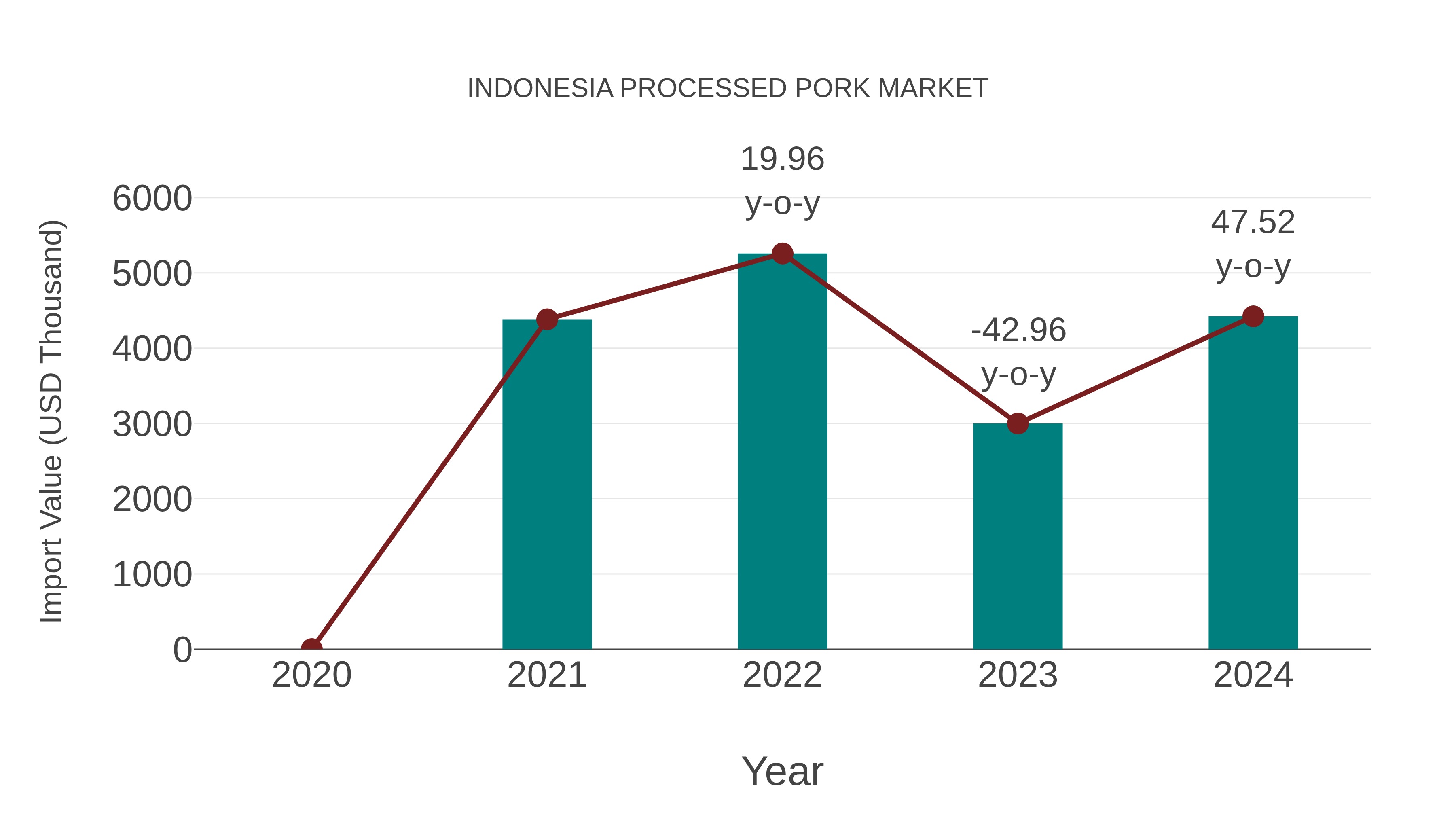
In the Indonesia processed pork market, the import trend showed notable growth from 2023 to 2024, with a 47.52% increase. The compound annual growth rate (CAGR) for imports from 2020 to 2024 stood at 0.31%. This surge in import momentum could be attributed to shifting consumer preferences or changes in trade policies impacting market dynamics.
Indonesia Processed Pork Market Synopsis
The Indonesia processed pork market is witnessing steady growth due to changing consumer preferences and a growing demand for convenience foods. Processed pork products like sausages, bacon, and ham are becoming increasingly popular among Indonesia consumers who are looking for ready-to-cook or ready-to-eat options. As the middle-class population expands and urbanization continues, there is a greater inclination towards processed meat products. However, it`s essential to note that Indonesia has a predominantly Muslim population, and the consumption of pork is subject to religious restrictions. This factor poses a challenge for the growth of the processed pork market, but it still finds a niche among non-Muslim communities and expatriates. The market`s future trajectory will depend on regulatory factors and the ability of manufacturers to cater to diverse consumer preferences.
Drivers of the Market
The Indonesia Processed Pork Market is primarily driven by cultural preferences and culinary traditions. Pork is a staple in Indonesia cuisine, and processed pork products cater to this demand. The market also benefits from increasing disposable incomes, which enable consumers to explore a wider range of processed pork options. However, religious and cultural diversity within the country poses a challenge, as Islamic dietary laws prohibit the consumption of pork. This has led to a segmented market where non-Muslim consumers drive the demand for processed pork products.
Challenges of the Market
The processed pork market in Indonesia faces significant challenges due to religious and cultural factors, as the majority of the population is Muslim and adheres to Islamic dietary laws that prohibit the consumption of pork. This limits the potential consumer base for processed pork products. Additionally, there is a growing awareness of health concerns related to processed meats, including pork, which can impact demand. Strict regulations on labeling, certification, and halal compliance also add complexity to this market.
COVID-19 Impact on the Market
The Indonesian processed pork market has faced significant challenges due to the COVID-19 pandemic. With restrictions on gatherings and dine-in options, the demand for processed pork products, such as sausages and canned pork, has fluctuated. Consumer concerns about meat supply chain disruptions have also affected market dynamics.
Key Players in the Market
The processed pork market in Indonesia is a niche segment, with companies like PT. Sukanda Djaya and PT. Satwa Boga Aneka Rasa being key players, catering to the specific demand for processed pork products.
Key Highlights of the Report:
- Indonesia Processed Pork Market Outlook
- Market Size of Indonesia Processed Pork Market, 2025
- Forecast of Indonesia Processed Pork Market, 2032
- Historical Data and Forecast of Indonesia Processed Pork Revenues & Volume for the Period 2022-2032F
- Indonesia Processed Pork Market Trend Evolution
- Indonesia Processed Pork Market Drivers and Challenges
- Indonesia Processed Pork Price Trends
- Indonesia Processed Pork Porter's Five Forces
- Indonesia Processed Pork Industry Life Cycle
- Historical Data and Forecast of Indonesia Processed Pork Market Revenues & Volume By Meat Product for the Period 2022-2032F
- Historical Data and Forecast of Indonesia Processed Pork Market Revenues & Volume By Cured Meat for the Period 2022-2032F
- Historical Data and Forecast of Indonesia Processed Pork Market Revenues & Volume By Uncured Meat for the Period 2022-2032F
- Historical Data and Forecast of Indonesia Processed Pork Market Revenues & Volume By Pork Meat for the Period 2022-2032F
- Historical Data and Forecast of Indonesia Processed Pork Market Revenues & Volume By Fresh Pork Meat for the Period 2022-2032F
- Historical Data and Forecast of Indonesia Processed Pork Market Revenues & Volume By Processed Pork Meat for the Period 2022-2032F
- Historical Data and Forecast of Indonesia Processed Pork Market Revenues & Volume By Packaging Type for the Period 2022-2032F
- Historical Data and Forecast of Indonesia Processed Pork Market Revenues & Volume By Chilled Processed Meat for the Period 2022-2032F
- Historical Data and Forecast of Indonesia Processed Pork Market Revenues & Volume By Frozen Processed Meat for the Period 2022-2032F
- Historical Data and Forecast of Indonesia Processed Pork Market Revenues & Volume By Canned Processed Meat for the Period 2022-2032F
- Historical Data and Forecast of Indonesia Processed Pork Market Revenues & Volume By Distribution for the Period 2022-2032F
- Historical Data and Forecast of Indonesia Processed Pork Market Revenues & Volume By Supermarket for the Period 2022-2032F
- Historical Data and Forecast of Indonesia Processed Pork Market Revenues & Volume By Convenience Stores for the Period 2022-2032F
- Historical Data and Forecast of Indonesia Processed Pork Market Revenues & Volume By Grocery Stores for the Period 2022-2032F
- Historical Data and Forecast of Indonesia Processed Pork Market Revenues & Volume By Individual Retailers for the Period 2022-2032F
- Historical Data and Forecast of Indonesia Processed Pork Market Revenues & Volume By Online Sales Channel for the Period 2022-2032F
- Indonesia Processed Pork Import Export Trade Statistics
- Market Opportunity Assessment By Meat Product
- Market Opportunity Assessment By Pork Meat
- Market Opportunity Assessment By Packaging Type
- Market Opportunity Assessment By Distribution
- Indonesia Processed Pork Top Companies Market Share
- Indonesia Processed Pork Competitive Benchmarking By Technical and Operational Parameters
- Indonesia Processed Pork Company Profiles
- Indonesia Processed Pork Key Strategic Recommendations






































