Indonesia SIP Trunking Services Market Size & Growth Rate (2026-2032)
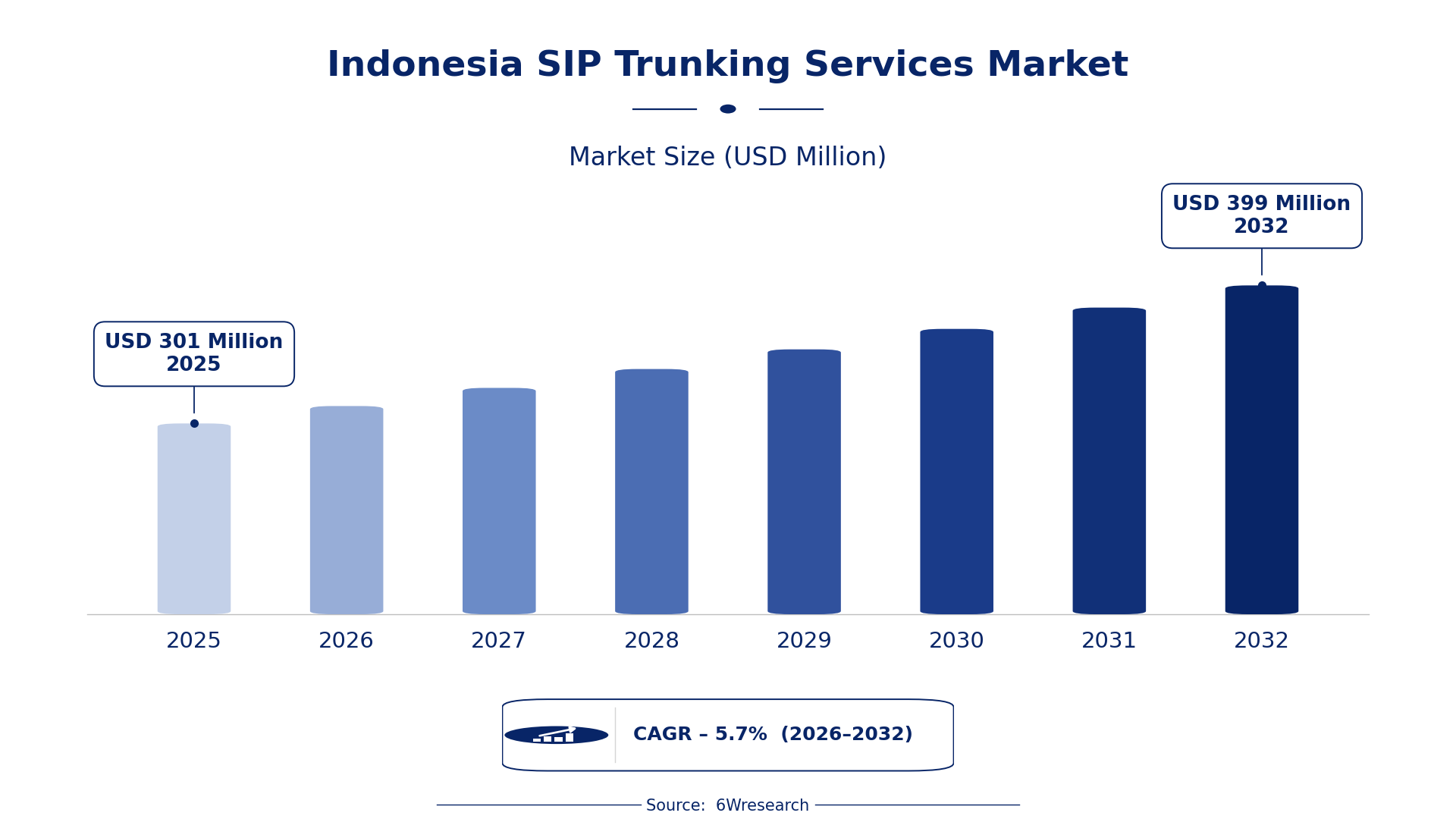
The Indonesia SIP Trunking Services Market was estimated at USD 301 Million in 2025 and is projected to reach USD 399 Million by 2032, growing at a CAGR of 5.7% from 2026 to 2032.
Indonesia SIP Trunking Services Market Synopsis
As companies across Indonesia continue to pivot towards digital solutions, SIP trunking services are gaining traction. The transition from traditional phone lines to IP-based communication systems is not merely a trend; it's a necessity for organizations aiming to reduce costs while enhancing their communication capabilities.
In an environment where remote work has become commonplace, businesses are adopting SIP trunking services to maintain connectivity and reduce operational expenses. The flexibility and scalability of these services make them particularly appealing to enterprises of various sizes in Indonesia.
Indonesia SIP Trunking Services Market Year-wise Growth Rate and Key Drivers
This graph illustrates the annual growth rates of the Indonesia SIP Trunking Services Market from 2021 to 2032, highlighting a steady upward trajectory and projected expansion over the forecast period.
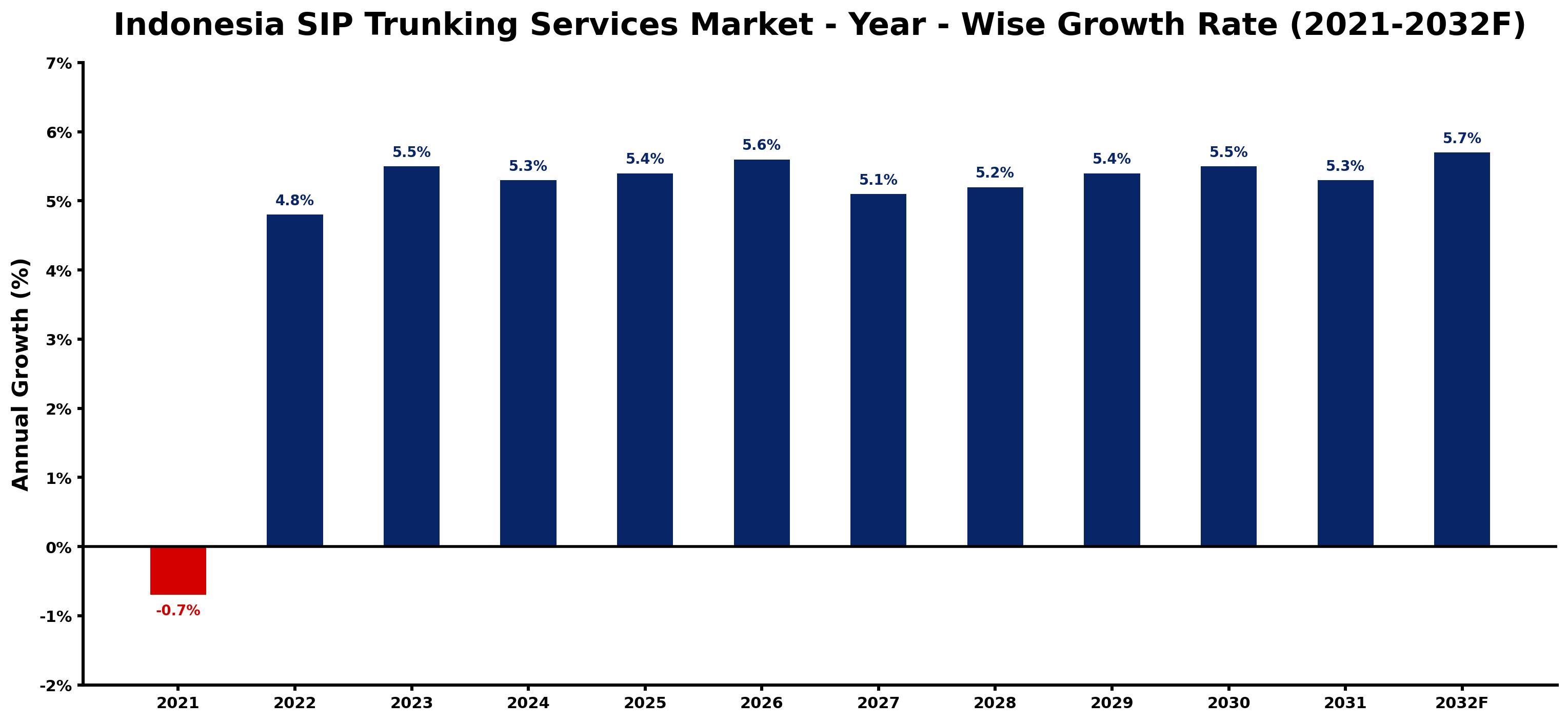
The table below presents the year‑wise growth rates along with the key drivers influencing the market
| Year | Growth Rate | Major Drivers |
| 2021 | -0.7% | Telkom Indonesia's pricing strategy hindered service uptake. |
| 2022 | 4.8% | Adoption of Indonesia's 5G regulations boosting VoIP services |
| 2023 | 5.5% | Surge in e-commerce driving SIP trunk integration needs |
| 2024 | 5.3% | Nationwide internet expansion enhancing communication infrastructure |
| 2025 | 5.4% | Government support for digital transformation in businesses |
| 2026 | 5.6% | Increase in remote work necessitating reliable communication solutions |
| 2027 | 5.1% | Rising SMEs adopting cloud-based telephony solutions |
| 2028 | 5.2% | Enhanced cybersecurity frameworks promoting secure SIP usage |
| 2029 | 5.4% | Growing consumer preference for cost-effective communication options |
| 2030 | 5.5% | Improved inter-island connectivity amplifying market demand |
| 2031 | 5.3% | Increase in digital marketing campaigns highlighting SIP efficiency |
| 2032 | 5.7% | Government initiatives incentivizing tech upgrades for enterprises |
Note: Market size estimations and growth projections presented in this report are based on 6Wresearch's proprietary forecasting methodology, utilizing the latest available industry data, government publications, and primary research inputs.
Indonesia SIP Trunking Services Market Key Takeaways
Below are some of the specific key takeaways from the market, including:
- The shift from traditional telephony to SIP trunking is fundamentally altering how businesses communicate.
- Cost reduction in communication expenses remains a primary driver for SIP trunk adoption.
- Quality of service and interoperability concerns are critical factors influencing market growth.
- Remote work trends during the pandemic accelerated the demand for SIP trunking solutions.
- Major telecom operators in Indonesia are actively enhancing their SIP trunking service offerings.
Evaluation of Restraints in Indonesia SIP Trunking Services Market
Despite the promising growth trajectory of SIP trunking services, certain restraints are impeding broader market penetration. Quality of service remains a pressing concern; many organizations worry about potential disruptions in their communication channels. Security issues related to IP-based communication also act as a barrier, with businesses wary of cyber threats and data breaches. Furthermore, the compatibility of SIP trunking services with existing PBX systems poses challenges for companies looking to transition, as seamless integration is not always guaranteed. Addressing these issues will be crucial for unlocking the full potential of the market.
Indonesia SIP Trunking Services Market Trends
The current wave of digital transformation in Indonesia is creating notable trends within the SIP trunking services market. Businesses are increasingly seeking bundled service offerings that combine SIP trunking with other communication solutions. Additionally, the rise of cloud-based services is fostering a preference for virtualized communication infrastructures. Another trend is the integration of AI and analytics into SIP trunking services, allowing organizations to gain insights into their communication patterns and improve operational efficiency.
Indonesia SIP Trunking Services Market Opportunities
The SIP trunking services market in Indonesia presents substantial opportunities for growth, particularly as businesses continue to modernize their communication frameworks. Enterprises seeking cost-effective solutions that allow for scalability and flexibility can capitalize on these offerings. Moreover, the increasing demand for high-quality voice services in the telecommunications sector signals potential for investment in technology upgrades and infrastructure development.
Government Initiatives in the Indonesia SIP Trunking Services Market
Government policy plays a crucial role in shaping the Indonesia SIP trunking services market. A conducive regulatory environment and initiatives aimed at enhancing digital communication infrastructure are essential for stimulating growth. As the government prioritizes the development of digital solutions, policies that support SIP trunking adoption are increasingly important.
- A regulatory framework established in 2023 mandates enhanced transparency in billing practices for telecom services, benefiting SIP trunking users.
- Currently underway is a national digital infrastructure upgrade programme, aimed at increasing connectivity and service quality across urban and rural areas.
- There are plans for a public-private partnership initiative expected to launch in 2026, focusing on expanding access to SIP trunking services nationwide.
- A recent initiative in 2025 focused on subsidizing small businesses to transition to digital communication technologies, including SIP trunking.
- The government is evaluating the implementation of tax incentives for businesses that invest in digital communication technologies over the next few years.
Future Insights of the Indonesia SIP Trunking Services Market
Looking ahead to 2026-2032, the Indonesia SIP trunking services market is expected to continue its upward trajectory. Companies that embrace innovative communication technologies will likely see enhanced operational efficiencies and improved customer experiences. With ongoing government support and a growing emphasis on digital transformation, the market is set to flourish. As enterprises increasingly recognize the value of flexible communication solutions, the demand for SIP trunking services will remain robust, driving further investments and advancements in the sector.
Indonesia SIP Trunking Services Market Latest Developments
In recent months, the Indonesia SIP trunking services market has witnessed dynamic activity as telecom providers enhance their service offerings. Companies are refining their strategies to meet the evolving needs of businesses amidst shifting communication demands.
- A major telecommunications operator launched an advanced SIP trunking package in Q2 2025, offering enhanced features tailored for SMEs.
- Current initiatives include a partnership between leading technology vendors and local carriers aimed at improving SIP trunking service quality, which is now in its development phase.
- An upgrade to existing SIP trunking infrastructure is planned for late 2026, focusing on integrating AI-driven analytics for better service optimization.
- A service upgrade that began in early 2025 aims to enhance security protocols for SIP trunking, ensuring greater protection against cyber threats.
- A trial project expected to start in mid-2026 will assess the feasibility of deploying SIP trunking in remote areas to improve connectivity.
Indonesia SIP Trunking Services Market - Key Attractiveness of the Report
- 10 Years of Market Numbers
- Historical Data Starting from 2022 to 2025
- Base Year: 2025
- Forecast Data until 2032
- Key Performance Indicators Impacting the Market
- Major Upcoming Developments and Projects
Key Highlights of the Report:
- Indonesia SIP Trunking Services Market Outlook
- Market Size of Indonesia SIP Trunking Services Market, 2025
- Forecast of Indonesia SIP Trunking Services Market, 2032
- Historical Data and Forecast of Indonesia SIP Trunking Services Revenues & Volume for the Period 2022-2032F
- Indonesia SIP Trunking Services Market Trend Evolution
- Indonesia SIP Trunking Services Market Drivers and Challenges
- Indonesia SIP Trunking Services Price Trends
- Indonesia SIP Trunking Services Porter's Five Forces
- Indonesia SIP Trunking Services Industry Life Cycle
- Historical Data and Forecast of Indonesia SIP Trunking Services Market Revenues & Volume By Organization Size for the Period 2022-2032F
- Historical Data and Forecast of Indonesia SIP Trunking Services Market Revenues & Volume By Small Businesses for the Period 2022-2032F
- Historical Data and Forecast of Indonesia SIP Trunking Services Market Revenues & Volume By Mid-sized Businesses for the Period 2022-2032F
- Historical Data and Forecast of Indonesia SIP Trunking Services Market Revenues & Volume By Enterprises for the Period 2022-2032F
- Historical Data and Forecast of Indonesia SIP Trunking Services Market Revenues & Volume By End-user for the Period 2022-2032F
- Historical Data and Forecast of Indonesia SIP Trunking Services Market Revenues & Volume By Verticals (BFSI, High-Tech, Government, Healthcare, Education, Retail, Transportation and Logistics, Manufacturing, Travel and Hospitality) for the Period 2022-2032F
- Historical Data and Forecast of Indonesia SIP Trunking Services Market Revenues & Volume By Wholesale for the Period 2022-2032F
- Indonesia SIP Trunking Services Import Export Trade Statistics
- Market Opportunity Assessment By Organization Size
- Market Opportunity Assessment By End-user
- Indonesia SIP Trunking Services Top Companies Market Share
- Indonesia SIP Trunking Services Competitive Benchmarking By Technical and Operational Parameters
- Indonesia SIP Trunking Services Company Profiles
- Indonesia SIP Trunking Services Key Strategic Recommendations






































