Indonesia Spaghetti Market: Import Trend Analysis
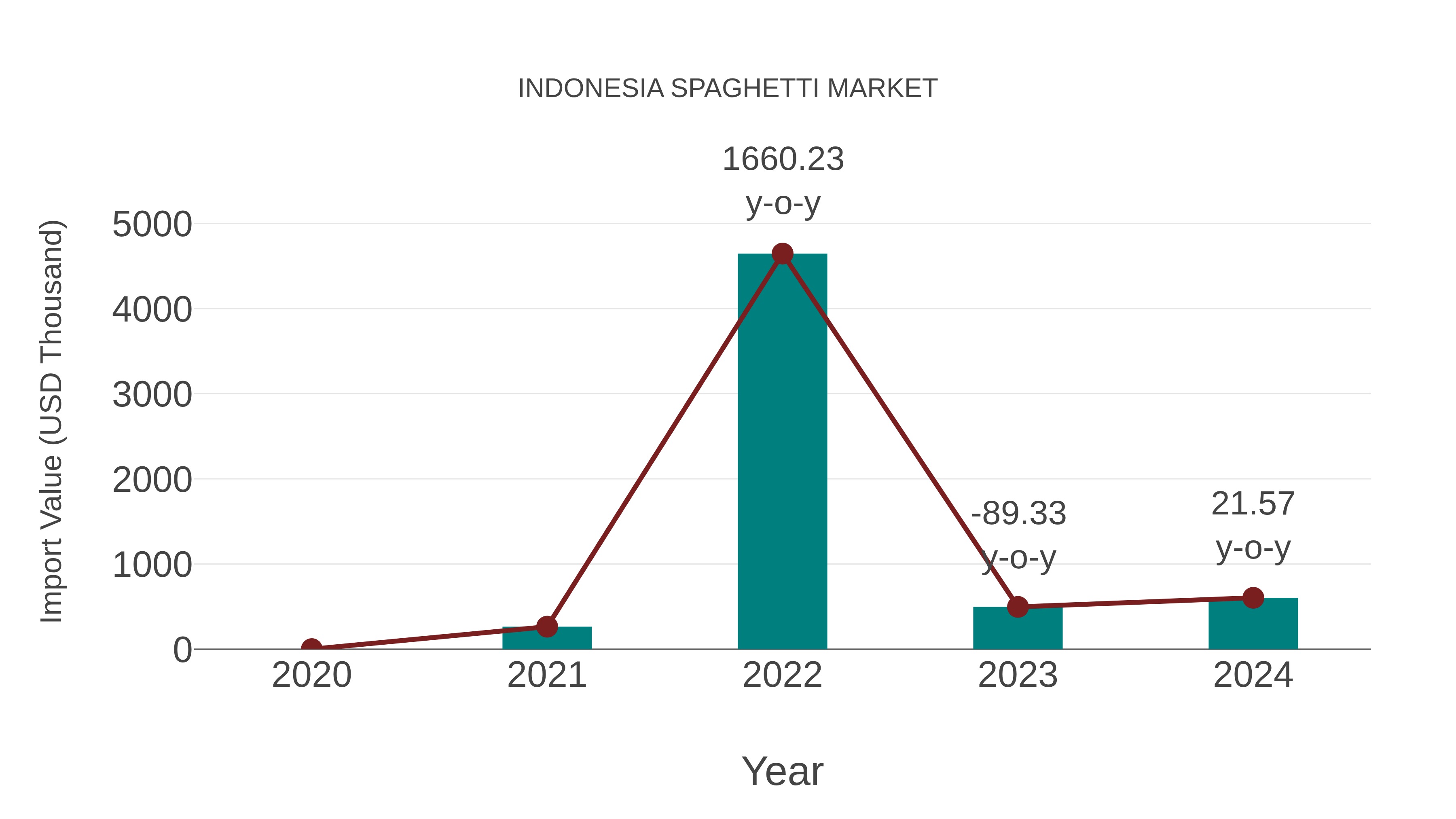
In the Indonesia spaghetti market, the import trend showed significant growth from 2023 to 2024, with a growth rate of 21.57%. The compound annual growth rate (CAGR) for imports between 2020 and 2024 stood at 31.7%. This surge in import momentum could be attributed to shifting consumer preferences towards convenience foods and increased demand for pasta products in the Indonesian market.
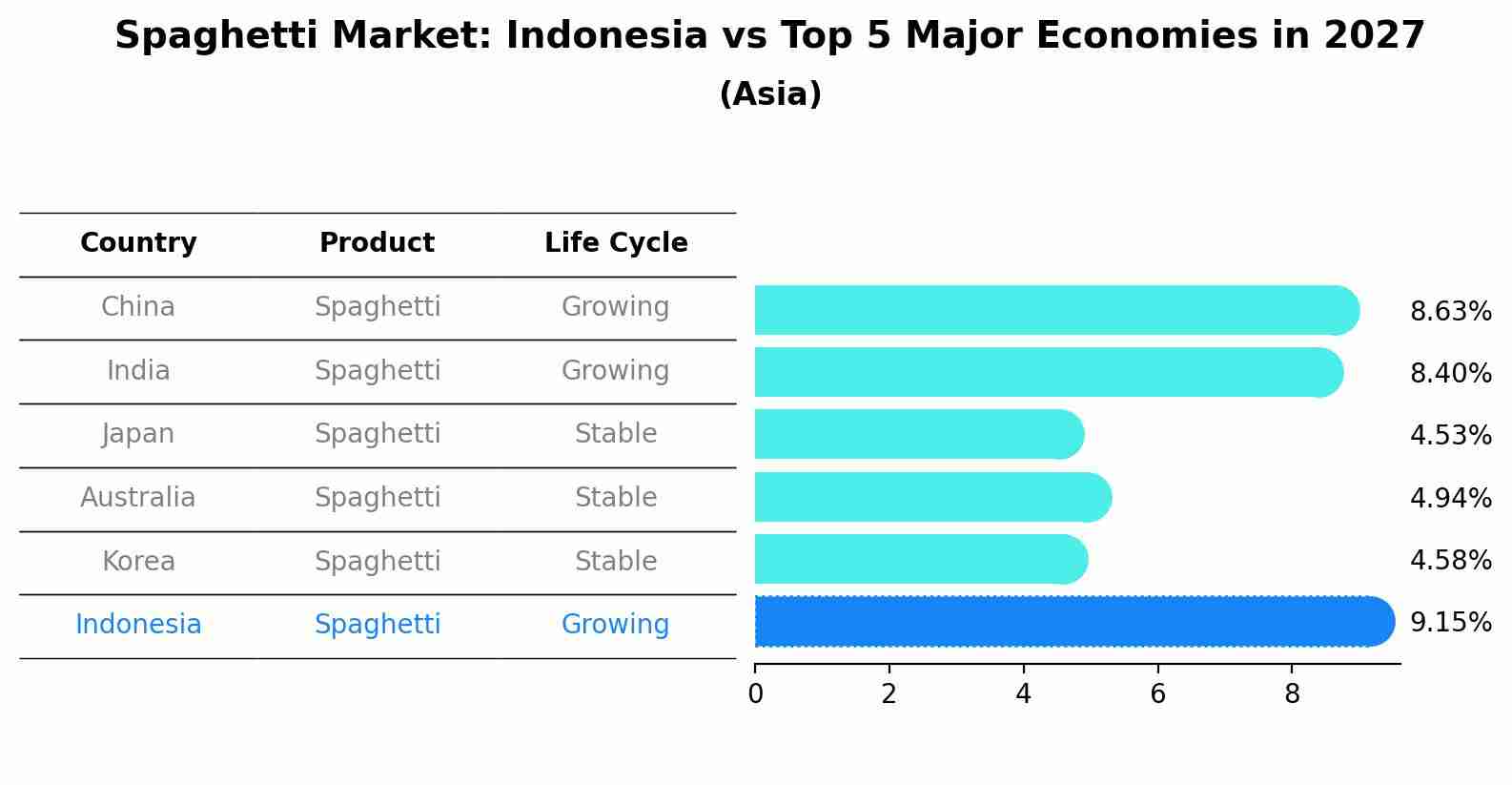
Spaghetti Market: Indonesia vs Top 5 Major Economies in 2027 (Asia)
In the Asia region, the Spaghetti market in Indonesia is projected to expand at a growing growth rate of 9.15% by 2027. The largest economy is China, followed by India, Japan, Australia and South Korea.
Indonesia Spaghetti Market Synopsis
Spaghetti, as a type of pasta, has gained widespread acceptance in Indonesian households and restaurants. The market outlook for spaghetti remains positive due to its versatility and adaptability to various sauces and ingredients, making it a favorite choice for quick and delicious meals.
Drivers of the Market
The spaghetti market in Indonesia is experiencing steady growth, primarily due to the increasing influence of Italian cuisine in the country. Spaghetti is a popular pasta type in Indonesia and is widely used in various recipes, including pasta dishes and casseroles. The ease of preparation and versatility of spaghetti appeal to consumers with varying culinary preferences. Additionally, the growing number of Italian restaurants and the availability of a wide range of spaghetti products in retail stores contribute to the market`s positive outlook.
Challenges of the Market
The spaghetti market in Indonesia faces challenges from other pasta varieties and alternative grain-based noodles. Consumers` shifting preferences towards healthier and diverse options pose a challenge to the traditional spaghetti market. Manufacturers need to innovate and offer healthier versions of spaghetti or diversify their product range to stay competitive. Another challenge is the availability of counterfeit or low-quality spaghetti products in the market, which can affect consumer trust and brand reputation. Implementing stringent quality control measures and maintaining product authenticity is essential to combat this issue. Furthermore, the market may encounter challenges related to the distribution and storage of spaghetti products, especially in regions with limited access to modern retail outlets or proper cold storage facilities.
COVID-19 Impact on the Market
The spaghetti market in Indonesia faced challenges during the pandemic, primarily due to the decline in dine-out occasions. Spaghetti consumption might have shifted more towards home-cooking, but the overall market could have experienced a slowdown.
Key Highlights of the Report:
- Indonesia Spaghetti Market Outlook
- Market Size of Indonesia Spaghetti Market, 2025
- Forecast of Indonesia Spaghetti Market, 2032
- Historical Data and Forecast of Indonesia Spaghetti Revenues & Volume for the Period 2022-2032F
- Indonesia Spaghetti Market Trend Evolution
- Indonesia Spaghetti Market Drivers and Challenges
- Indonesia Spaghetti Price Trends
- Indonesia Spaghetti Porter's Five Forces
- Indonesia Spaghetti Industry Life Cycle
- Historical Data and Forecast of Indonesia Spaghetti Market Revenues & Volume By Product for the Period 2022-2032F
- Historical Data and Forecast of Indonesia Spaghetti Market Revenues & Volume By Fresh for the Period 2022-2032F
- Historical Data and Forecast of Indonesia Spaghetti Market Revenues & Volume By Dried for the Period 2022-2032F
- Historical Data and Forecast of Indonesia Spaghetti Market Revenues & Volume By End Use for the Period 2022-2032F
- Historical Data and Forecast of Indonesia Spaghetti Market Revenues & Volume By Mass Market Retail for the Period 2022-2032F
- Historical Data and Forecast of Indonesia Spaghetti Market Revenues & Volume By Horeca for the Period 2022-2032F
- Historical Data and Forecast of Indonesia Spaghetti Market Revenues & Volume By Distribution Channel for the Period 2022-2032F
- Historical Data and Forecast of Indonesia Spaghetti Market Revenues & Volume By Supermarket and Hypermarket for the Period 2022-2032F
- Historical Data and Forecast of Indonesia Spaghetti Market Revenues & Volume By Convenience Store for the Period 2022-2032F
- Historical Data and Forecast of Indonesia Spaghetti Market Revenues & Volume By Online for the Period 2022-2032F
- Historical Data and Forecast of Indonesia Spaghetti Market Revenues & Volume By Others for the Period 2022-2032F
- Indonesia Spaghetti Import Export Trade Statistics
- Market Opportunity Assessment By Product
- Market Opportunity Assessment By End Use
- Market Opportunity Assessment By Distribution Channel
- Indonesia Spaghetti Top Companies Market Share
- Indonesia Spaghetti Competitive Benchmarking By Technical and Operational Parameters
- Indonesia Spaghetti Company Profiles
- Indonesia Spaghetti Key Strategic Recommendations






































