Indonesia Table Olives Market: Import Trend Analysis
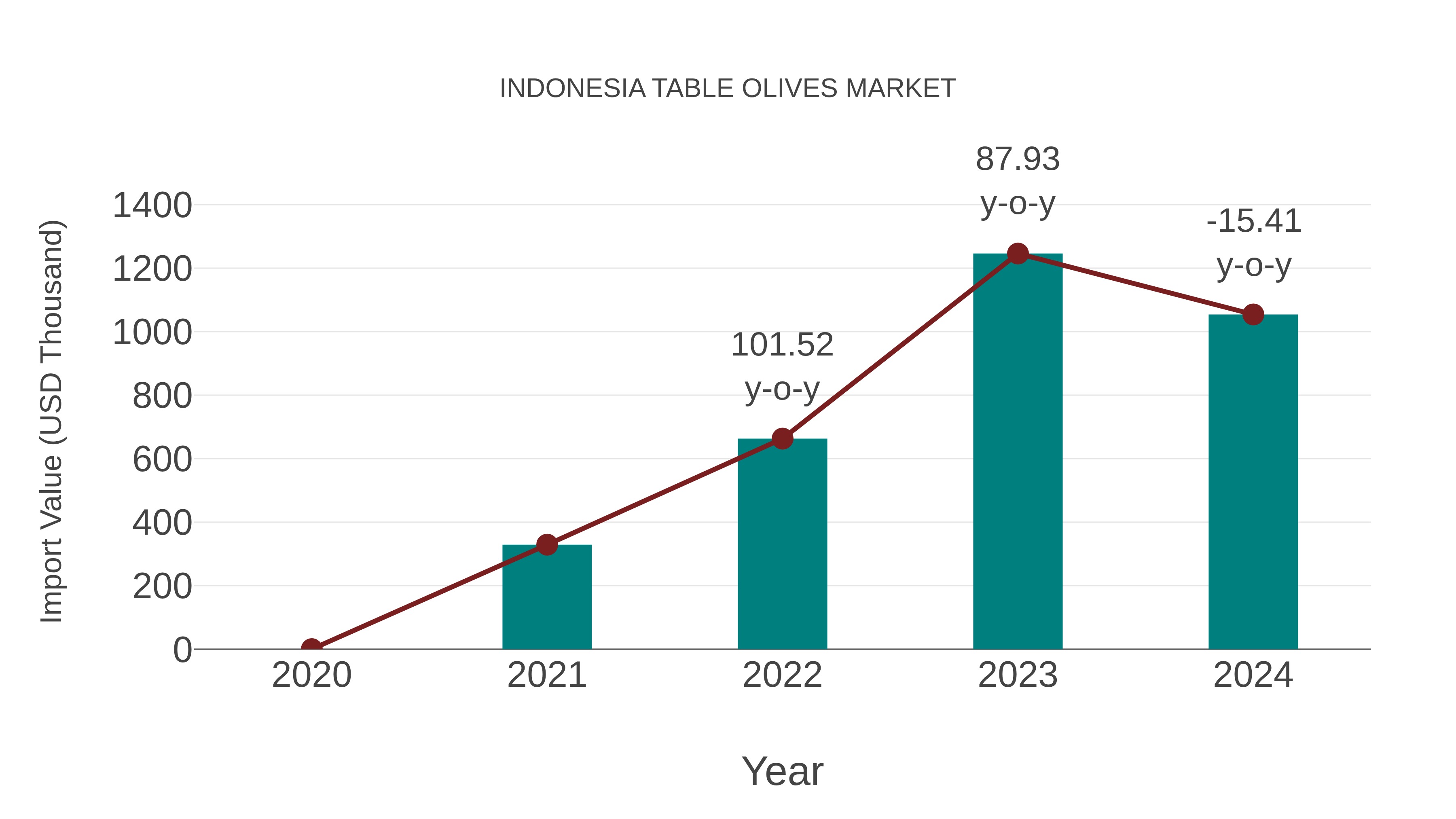
In the Indonesia table olives market, the import trend from 2023 to 2024 experienced a decline of -15.41%. However, the compound annual growth rate (CAGR) from 2020 to 2024 stood at a robust 47.42%. This decline in import momentum may be attributed to shifting consumer preferences or changes in trade policies impacting market stability.
Indonesia Table Olives Market Synopsis
The Indonesia Table Olives Market is experiencing steady growth, driven by increasing consumer awareness of the health benefits associated with olives and the rising popularity of Mediterranean cuisine in the region. The market is primarily dominated by imported table olives, with Spain, Greece, and Italy being the top suppliers. Local production of olives is limited due to the climate conditions in Indonesia not being suitable for large-scale cultivation. Various distribution channels, including supermarkets, specialty stores, and online platforms, contribute to the availability of table olives to consumers across the country. The market is characterized by a wide range of product offerings, including green and black olives in different varieties and packaging formats, catering to diverse consumer preferences. As the demand for healthy and gourmet food products continues to rise, the Indonesia Table Olives Market is expected to witness further growth in the coming years.
Indonesia Table Olives Market Trends
The Indonesia Table Olives Market is experiencing growth due to increasing awareness of the health benefits associated with olives and their rising popularity as a versatile ingredient in local cuisine. Consumers are seeking healthier and more diverse food options, driving demand for table olives in Indonesia. There is also a growing trend towards Mediterranean and Middle Eastern cuisines, where olives are commonly used, further fueling market growth. Opportunities in the market include introducing a wider variety of flavored and stuffed olives to cater to changing consumer preferences, as well as leveraging e-commerce platforms to reach a broader customer base. Additionally, collaborations with restaurants and foodservice providers could help increase the visibility and consumption of table olives in Indonesia.
Indonesia Table Olives Market Challenges
In the Indonesia Table Olives Market, there are several challenges that impact the industry`s growth and development. These challenges include limited awareness and consumption of table olives compared to other traditional Indonesian condiments, such as sambal and soy sauce. Additionally, high import costs for table olives due to limited local production and the need to rely on imports pose a challenge for market players. The lack of standardized quality control measures and inconsistent supply chain practices also hinder the market`s expansion. Furthermore, stiff competition from other snack options and the preference for fresh fruits and local snacks among Indonesian consumers add to the challenges faced by table olive producers and distributors in capturing market share and increasing demand.
Indonesia Table Olives Market Investment Opportunities
The Indonesia Table Olives Market is primarily driven by increasing consumer awareness about the health benefits of olives, such as being rich in antioxidants and healthy fats. Additionally, the rising trend of healthy snacking options and the growing popularity of Mediterranean cuisine in Indonesia are boosting the demand for table olives. The expanding retail sector, including supermarkets and online stores, is also providing greater accessibility to a wider range of table olive products for consumers. Furthermore, the influence of western food culture and the increasing disposable income of the Indonesian population are contributing to the growth of the table olives market in the country. Overall, these factors are driving the demand for table olives in Indonesia and are expected to continue to fuel market growth in the coming years.
Indonesia Table Olives Market Government Polices
The Indonesia Table Olives Market is subject to government policies aimed at promoting sustainable agriculture and food security. The Ministry of Agriculture plays a key role in regulating the production, distribution, and quality of table olives through initiatives such as providing subsidies for farmers, implementing quality control measures, and promoting research and development in the sector. Additionally, import regulations are in place to protect domestic producers and ensure food safety standards are met. The government also encourages the adoption of environmentally friendly practices to support the growth of the table olives industry while safeguarding the country`s natural resources. Overall, government policies in Indonesia aim to stimulate growth in the table olives market while ensuring food safety, sustainability, and competitiveness in the global market.
Indonesia Table Olives Market Future Outlook
The Indonesia Table Olives Market is expected to show steady growth in the coming years, driven by increasing consumer awareness about the health benefits of olives and rising demand for Mediterranean cuisine in the region. The market is likely to benefit from the growing trend of healthy snacking options and the rising popularity of olives as a versatile ingredient in various dishes. Additionally, the increasing disposable income of the Indonesian population is expected to support the market growth as consumers are more willing to spend on premium quality olives. However, challenges such as fluctuating prices of olives due to global market dynamics and the availability of substitute products may impact market growth to some extent. Overall, the Indonesia Table Olives Market is poised for expansion, with opportunities for producers to innovate and cater to evolving consumer preferences.
Key Highlights of the Report:
- Indonesia Table Olives Market Outlook
- Market Size of Indonesia Table Olives Market, 2025
- Forecast of Indonesia Table Olives Market, 2032
- Historical Data and Forecast of Indonesia Table Olives Revenues & Volume for the Period 2022 - 2032F
- Indonesia Table Olives Market Trend Evolution
- Indonesia Table Olives Market Drivers and Challenges
- Indonesia Table Olives Price Trends
- Indonesia Table Olives Porter's Five Forces
- Indonesia Table Olives Industry Life Cycle
- Historical Data and Forecast of Indonesia Table Olives Market Revenues & Volume By Type for the Period 2022 - 2032F
- Historical Data and Forecast of Indonesia Table Olives Market Revenues & Volume By Black Olive for the Period 2022 - 2032F
- Historical Data and Forecast of Indonesia Table Olives Market Revenues & Volume By Green Olive for the Period 2022 - 2032F
- Historical Data and Forecast of Indonesia Table Olives Market Revenues & Volume By Application for the Period 2022 - 2032F
- Historical Data and Forecast of Indonesia Table Olives Market Revenues & Volume By Online Store for the Period 2022 - 2032F
- Historical Data and Forecast of Indonesia Table Olives Market Revenues & Volume By Supermarket for the Period 2022 - 2032F
- Historical Data and Forecast of Indonesia Table Olives Market Revenues & Volume By Convenience Store for the Period 2022 - 2032F
- Historical Data and Forecast of Indonesia Table Olives Market Revenues & Volume By Other for the Period 2022 - 2032F
- Indonesia Table Olives Import Export Trade Statistics
- Market Opportunity Assessment By Type
- Market Opportunity Assessment By Application
- Indonesia Table Olives Top Companies Market Share
- Indonesia Table Olives Competitive Benchmarking By Technical and Operational Parameters
- Indonesia Table Olives Company Profiles
- Indonesia Table Olives Key Strategic Recommendations






































